
15 Inspiring Minimalist Bedroom Designs for a Serene and Simple Lifestyle
Creating a minimalist bedroom means designing a space that prioritizes calm, function, and intentional living over excess decoration and clutter. This approach to bedroom design promotes better sleep, reduces stress, and creates a peaceful retreat that feels both sophisticated and deeply restful.
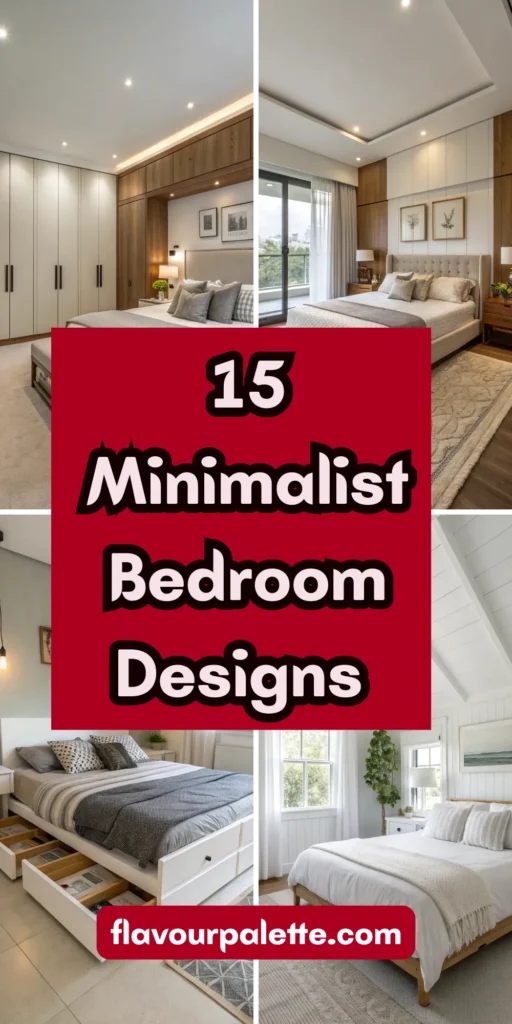
These 15 minimalist bedroom ideas will show you different ways to embrace simplicity while maintaining warmth, comfort, and personal style. Each design approach includes specific furniture choices, color schemes, and organizational strategies to help you create a bedroom that embodies the “less is more” philosophy perfectly.
1. The All-White Sanctuary
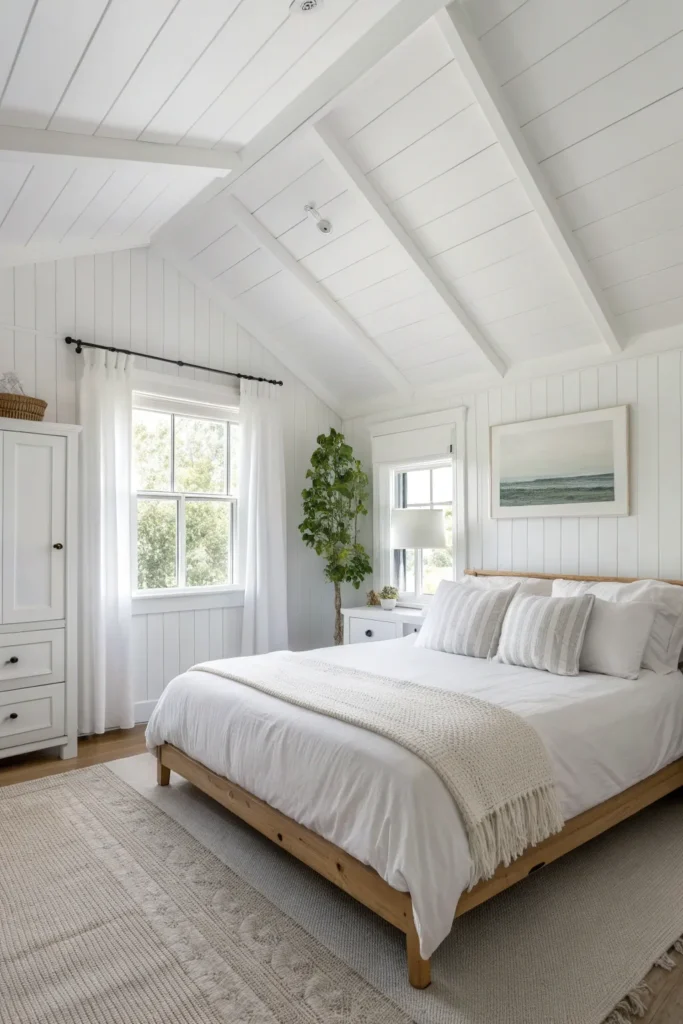
Create ultimate serenity with an entirely white color scheme that maximizes light and creates a clean, peaceful atmosphere.
Key features include:
- Pure white walls, ceiling, and trim throughout the space
- White bedding in natural fabrics like linen or organic cotton
- White or light wood furniture with clean, simple lines
- Minimal window treatments in sheer white or natural fabrics
- Single piece of artwork or one plant for subtle visual interest
- Hidden storage solutions to maintain the pristine appearance
2. The Neutral Earth Tone Retreat
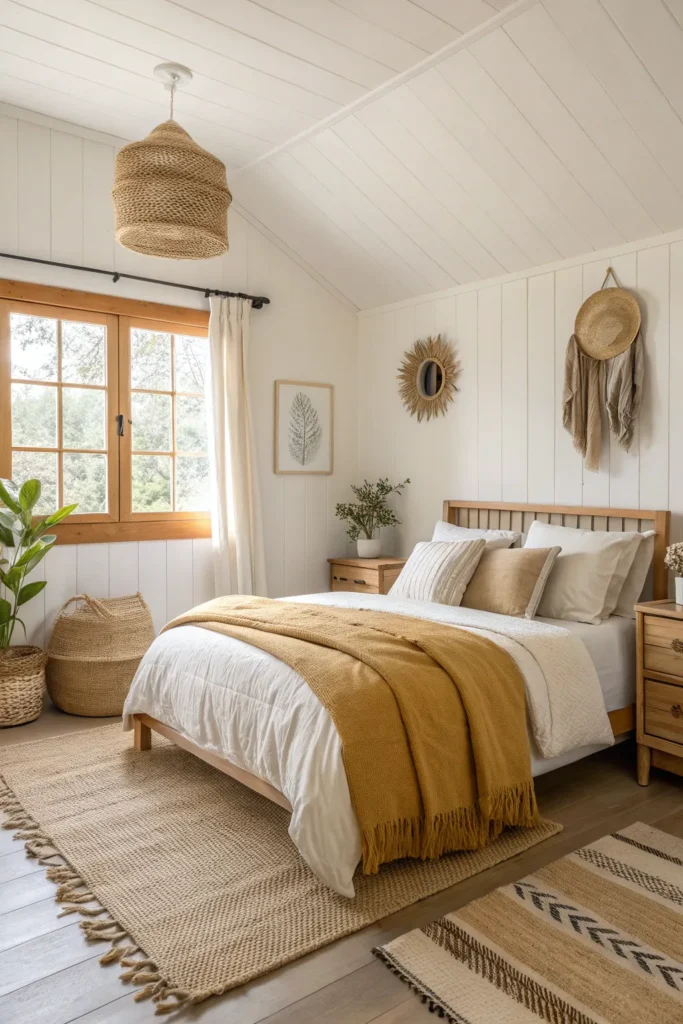
Use warm beige, cream, and soft brown tones to create a minimalist bedroom that feels cozy and inviting.
Main elements:
- Warm white or cream walls as the foundation
- Bedding in natural linen, hemp, or organic cotton
- Light wood furniture in oak, maple, or birch finishes
- Woven textures through baskets, rugs, and throw blankets
- Single potted plant or small succulent collection
- Natural light is emphasized through simple window treatments
3. The Platform Bed Focus
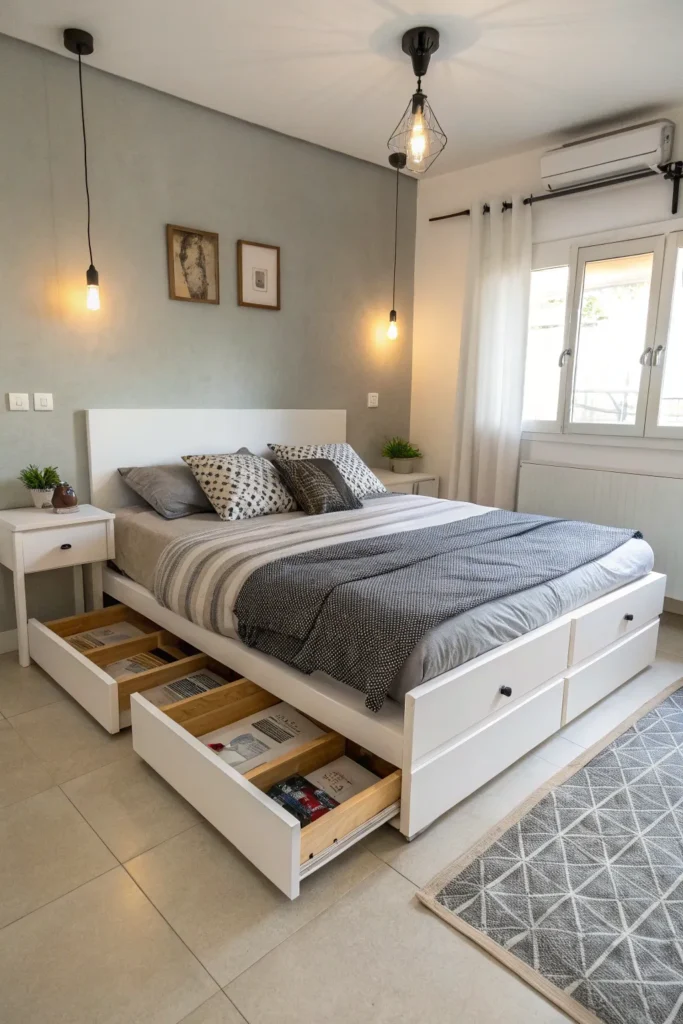
Center the room around a low platform bed that creates clean horizontal lines and emphasizes spacious floor area.
Important details:
- Low-profile platform bed without headboard or footboard
- Built-in side tables integrated into the platform design
- Under-bed storage drawers that maintain the clean silhouette
- Bedding in solid colors without patterns or excessive pillows
- Floor space kept completely clear around the bed
- Minimal lighting from pendant lights or wall-mounted fixtures
4. The Floating Furniture Design
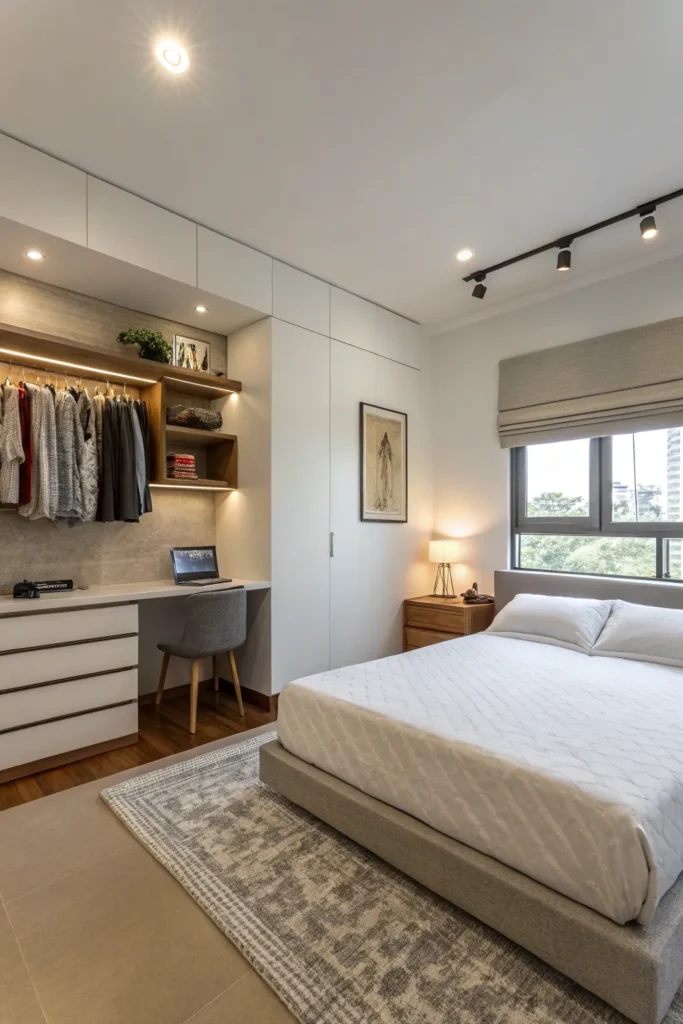
Use wall-mounted furniture to create the illusion of more space while maintaining essential bedroom functions.
Room features:
- Floating nightstands mounted at mattress height
- Wall-mounted lighting instead of table lamps
- Floating desk or vanity if workspace is needed
- Built-in or floating closet system for clothing storage
- Floor kept completely clear except for the area rug
- Clean wall surfaces with minimal or no artwork
5. The Monochromatic Gray Scheme
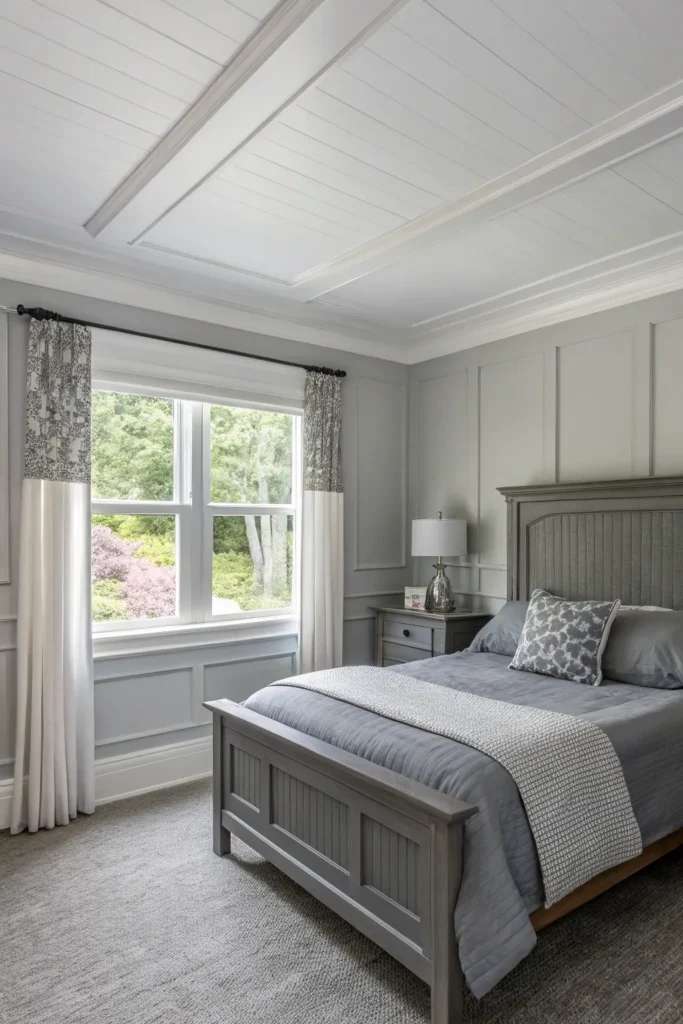
Create sophistication through various shades of gray while maintaining the simplicity of a single color family.
What to add:
- Light gray walls with white trim and ceiling
- Charcoal or medium gray bedding and window treatments
- Gray-stained wood or painted gray furniture pieces
- Single texture variation through fabric choices
- Metallic accents in brushed steel or pewter finishes
- One or two pieces in the same gray family for cohesion
6. The Natural Wood Warmth
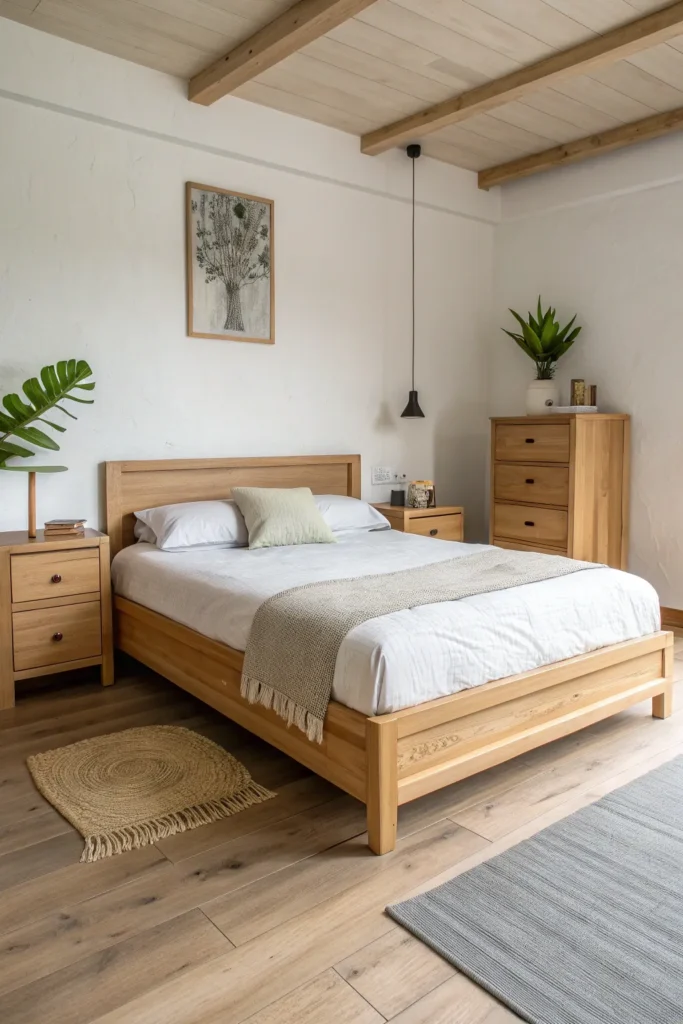
Incorporate light wood elements to add warmth while maintaining clean, minimal aesthetics.
Key elements:
- Light wood bed frame in a simple, rectangular design
- Matching wood nightstands with a single drawer or shelf
- White walls to contrast with natural wood tones
- Natural fiber bedding in white, cream, or soft gray
- Wooden floor with minimal area rug or no rug at all
- Live plant in a simple ceramic or wooden planter
7. The Japanese-Inspired Zen Design
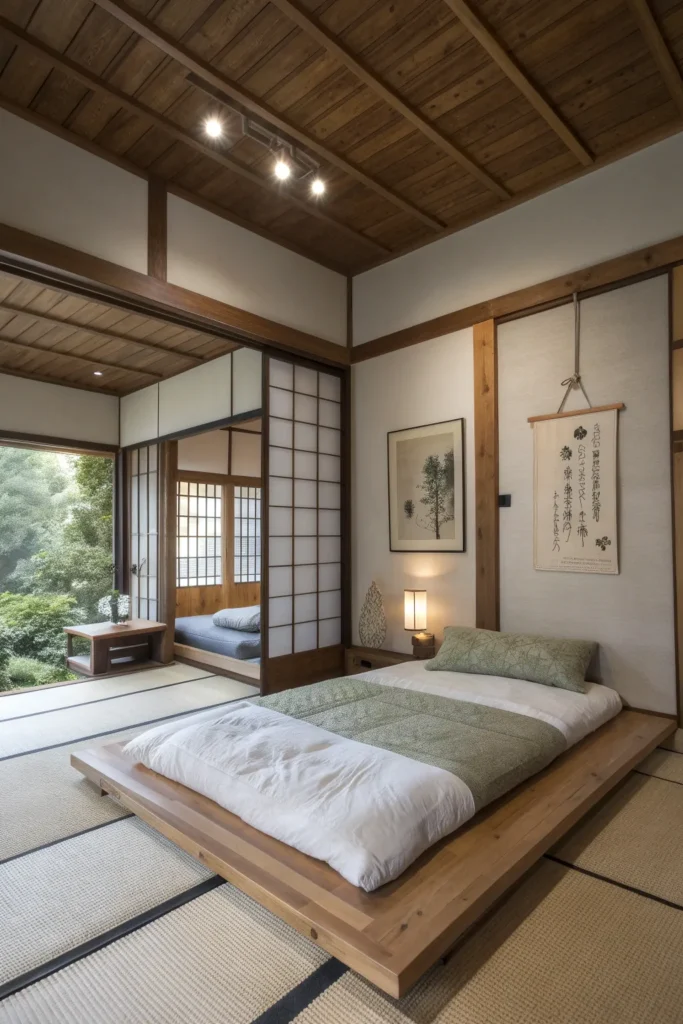
Apply Japanese design principles with low furniture, natural materials, and emphasis on space.
Important touches:
- Low bed or floor mattress on simple platform
- Natural materials like bamboo, rice paper, and wood
- Sliding doors or screens instead of traditional doors
- Single piece of meaningful artwork or calligraphy
- Floor seating cushion for meditation or reading
- Emphasis on negative space and clean surfaces
8. The Built-In Storage Solution
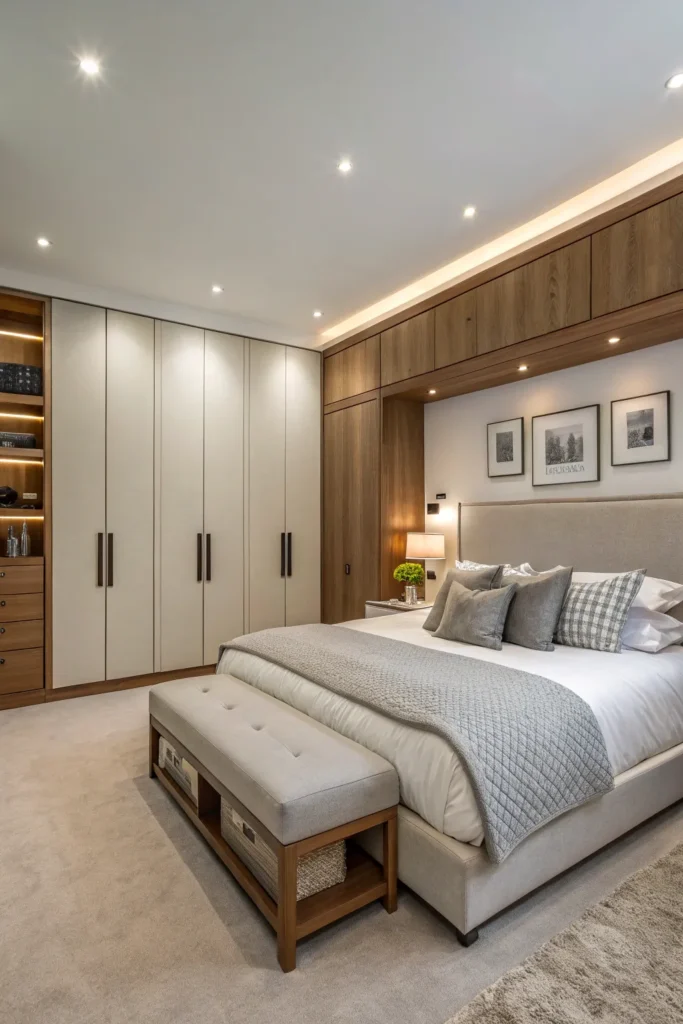
Maximize storage while maintaining clean lines through custom built-in solutions that blend seamlessly with walls.
Mix and match:
- Floor-to-ceiling built-in wardrobes with flush doors
- Recessed shelving that doesn’t protrude into the room
- Built-in bench at the foot of the bed with hidden storage
- Integrated bedside storage within the wall construction
- Hidden electrical outlets and cable management
- Seamless integration that appears part of the architecture
9. The Single Statement Piece
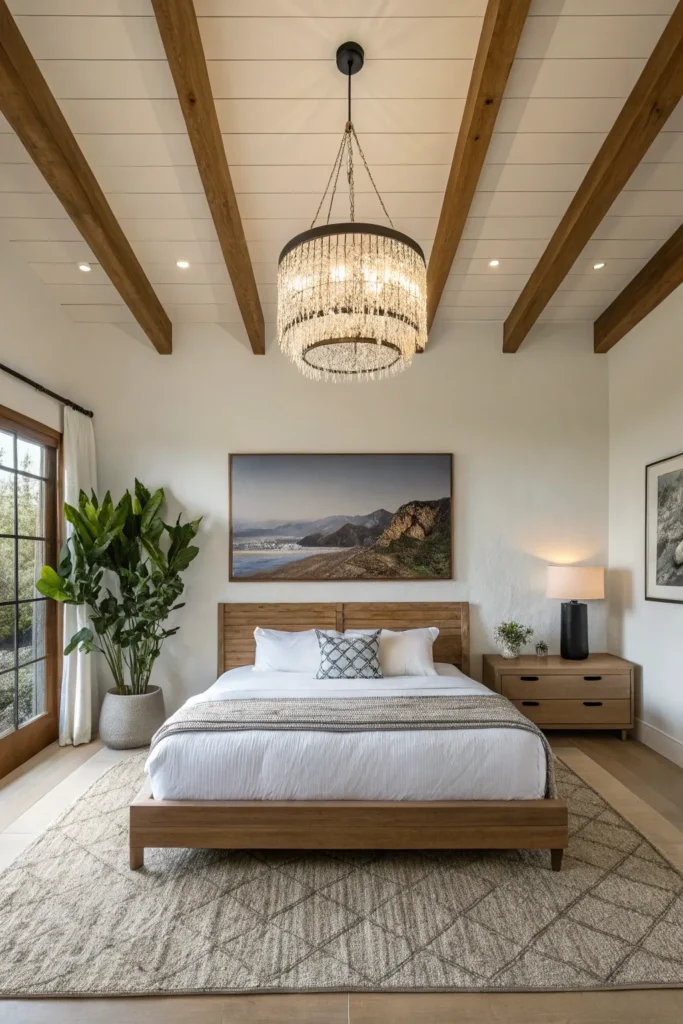
Design the room around one carefully chosen focal point while keeping everything else minimal and understated.
Features:
- One piece of large-scale artwork above the bed
- Statement light fixture as the room’s only decorative element
- Dramatic headboard in natural wood or upholstered fabric
- Single oversized plant in a corner of the room
- Architectural element like exposed beam or interesting window
- Everything else kept simple to emphasize the chosen focal point
10. The Textural Interest Approach
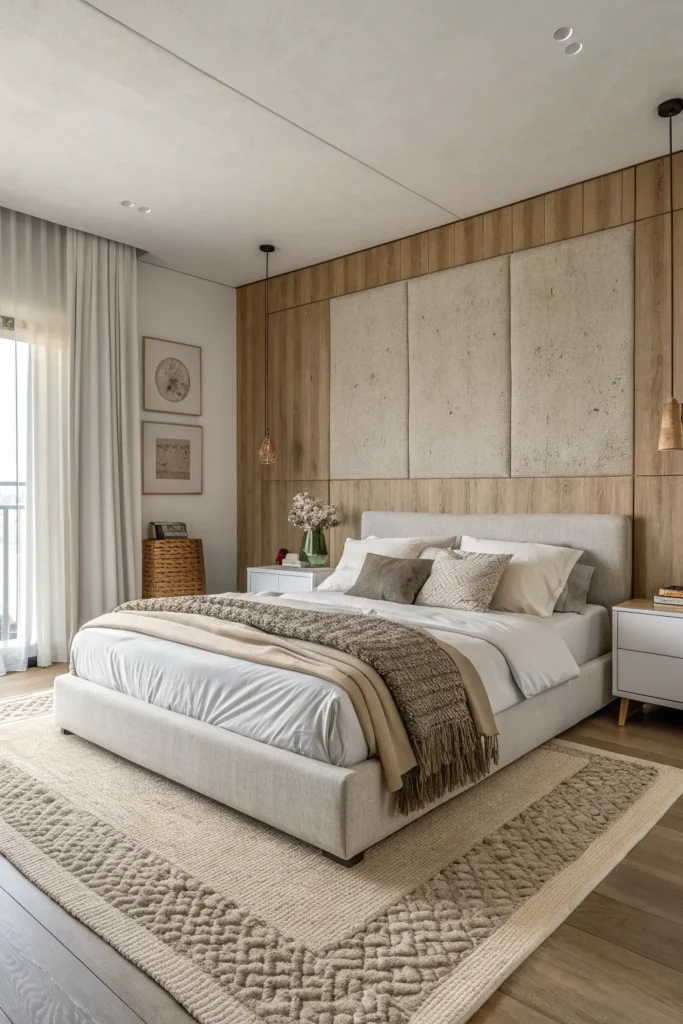
Add visual depth through subtle texture variations while maintaining a monochromatic or neutral color scheme.
Room highlights:
- Variety of natural textures in similar color tones
- Linen sheets, wool throw, jute rug in coordinating neutrals
- Smooth and rough surfaces are balanced throughout the space
- Matte and slightly glossy finishes for subtle contrast
- Natural materials like wood, stone, and organic fibers
- Tactile interest without visual clutter or color distraction
11. The Maximum Natural Light Design
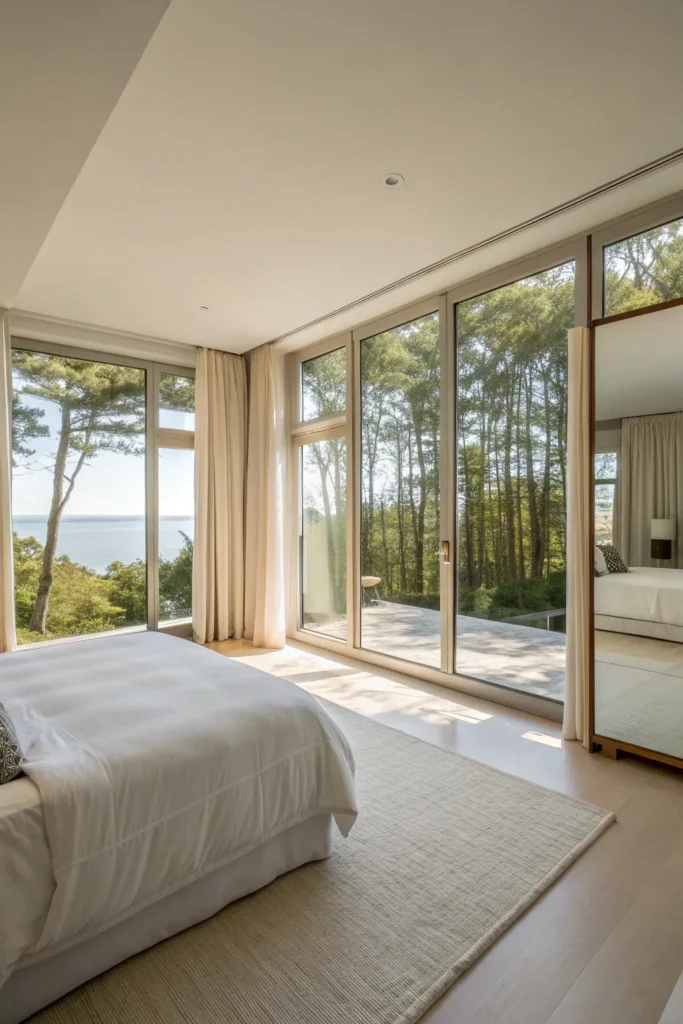
Prioritize natural light as the main design element while keeping artificial lighting minimal and functional.
Key items:
- Large windows left uncovered or with minimal treatments
- Light-colored surfaces that reflect and amplify natural light
- Strategic placement of mirrors to bounce light around the room
- Furniture positioned to not block natural light sources
- Sheer curtains that provide privacy without blocking light
- Light-colored flooring that doesn’t absorb available light
12. The Hidden Technology Integration
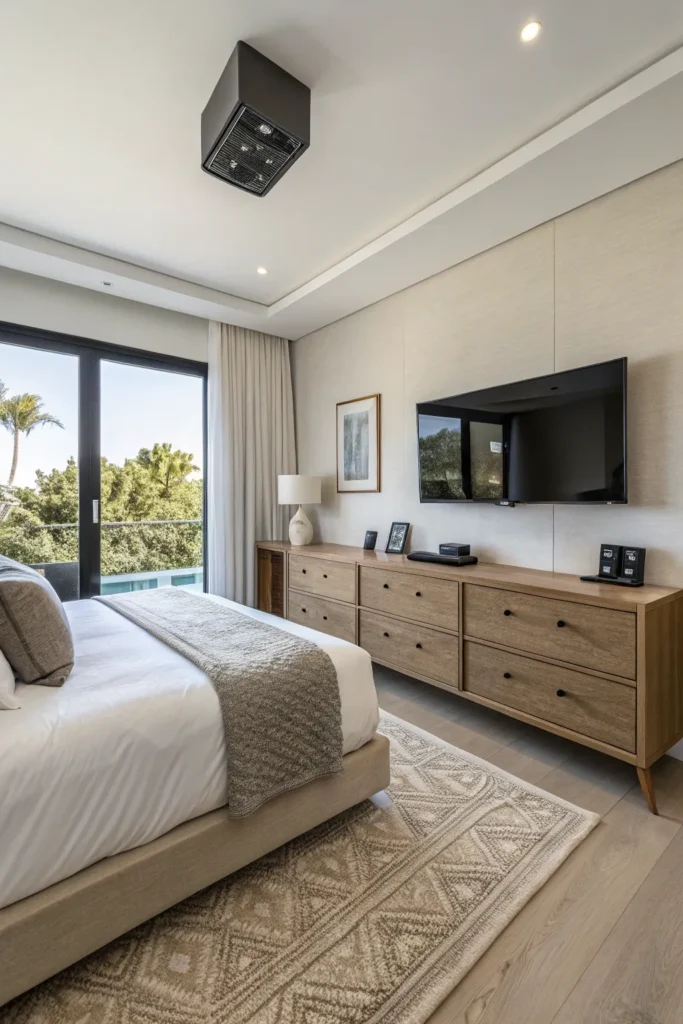
Incorporate necessary technology while keeping it completely hidden from view for a clean, analog atmosphere.
Must-haves:
- Wall-mounted TV that appears when needed, hidden when not
- Charging stations built into nightstands or wall outlets
- Sound system with hidden speakers and wireless connectivity
- Blackout shades that retract completely when not in use
- Smart home controls integrated invisibly into wall switches
- Cable and wire management that keeps everything hidden
13. The Capsule Closet Bedroom
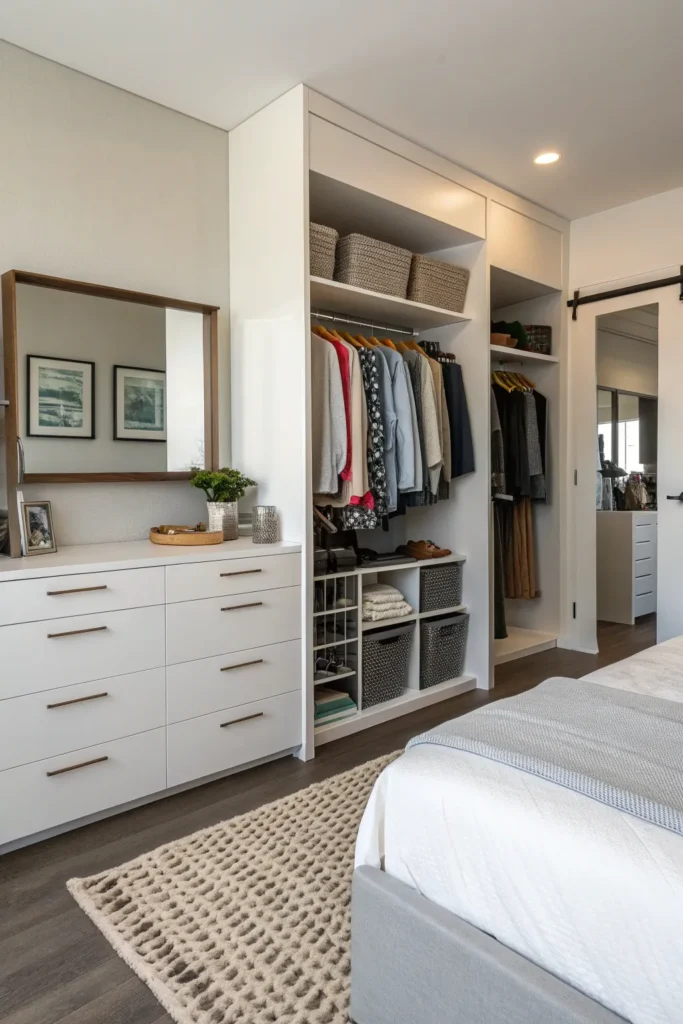
Design storage solutions that support a minimalist wardrobe and eliminate clothing clutter from bedroom spaces.
What to include:
- Streamlined closet system with only essential clothing
- Quality hangers and organizational systems for efficiency
- Hidden laundry hamper that doesn’t add visual clutter
- Mirror that serves function without decorative framing
- Minimal dresser or no dresser if closet space is adequate
- Everything related to clothing kept organized and hidden
14. The Single Color Plus White Palette
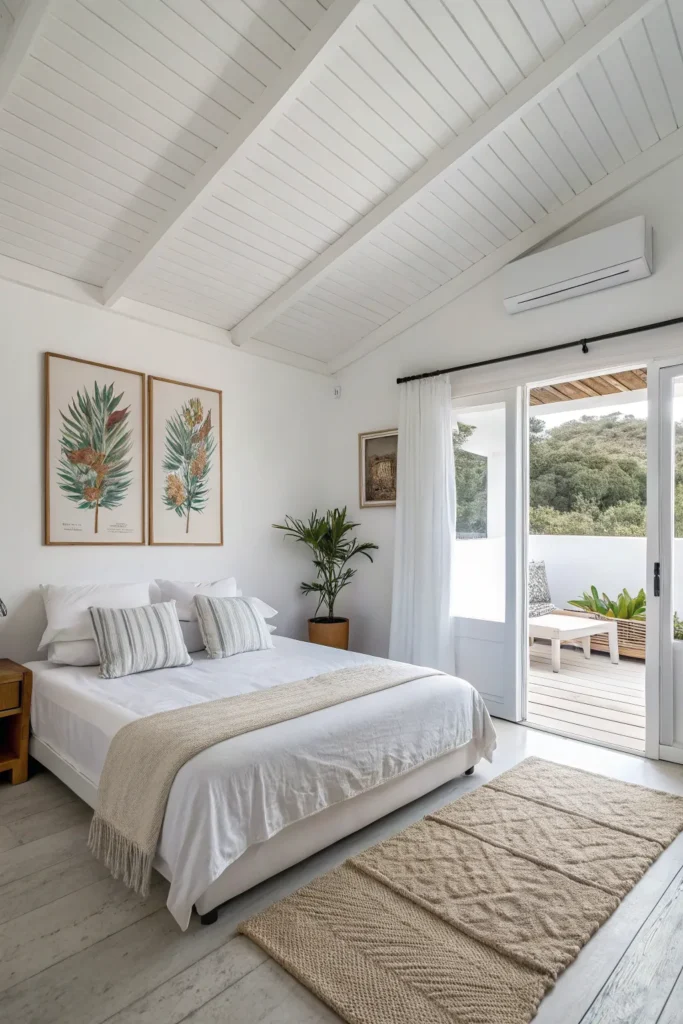
Choose one accent color to pair with white throughout the entire room for controlled visual interest.
Features:
- Predominantly white room with single color for accents
- Chosen color used sparingly in bedding, artwork, or plant
- All other elements kept in white or natural materials
- Restraint in applying the accent color to maintain minimalism
- Quality over quantity in colored elements chosen
- Seasonal ability to change the single accent color easily
15. The Perfectly Proportioned Space
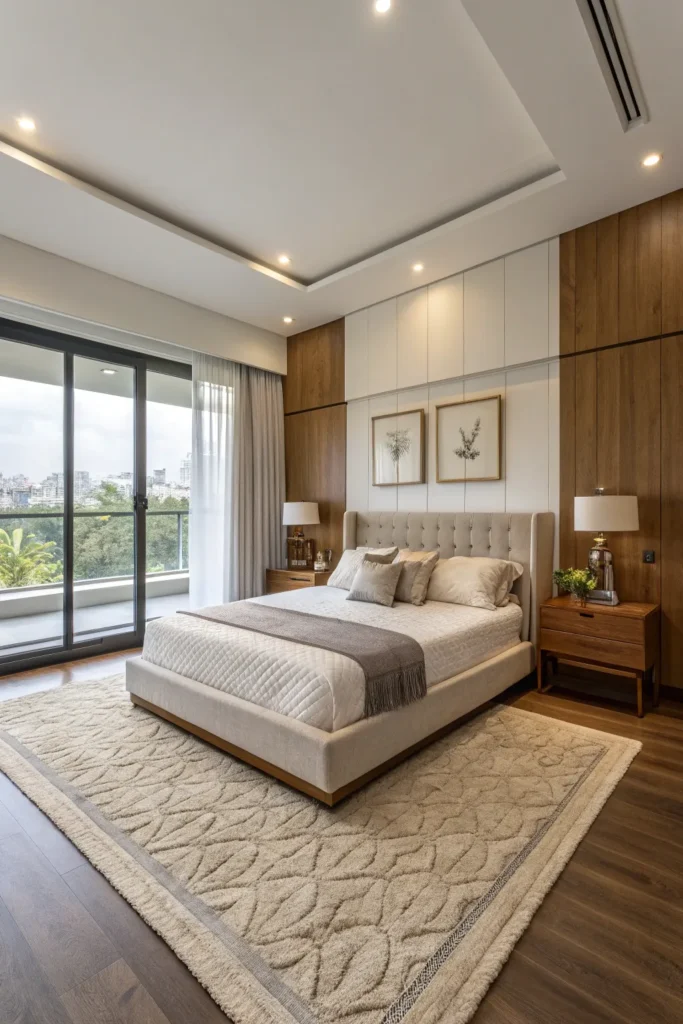
Focus on mathematical precision and perfect proportions in furniture placement and room layout.
Features:
- Furniture scaled appropriately to room size
- Symmetrical or asymmetrical balance achieved intentionally
- Equal spacing and proper proportions throughout
- Nothing oversized or undersized for the space
- Visual weight distributed evenly around the room
- Golden ratio or other design principles applied consciously
Creating Your Perfect Minimalist Bedroom
Each of these minimalist bedroom ideas offers a complete approach to creating a space that embodies simplicity, calm, and intentional living. The key is understanding that minimalism isn’t about deprivation, but rather about choosing only the elements that truly serve your needs and bring you joy.
Think about your personal relationship with your possessions and your bedroom routine. What items do you actually use daily, and what creates unnecessary visual or mental clutter? The goal is to create a space that supports rest, reflection, and rejuvenation without distractions.
Remember, minimalist design is highly personal. What feels minimal and peaceful to one person might feel stark to another. Start by decluttering and removing items that don’t serve a clear purpose, then gradually add back only the elements that contribute to your sense of peace and comfort.
The most successful minimalist bedrooms combine thoughtful design choices with disciplined maintenance habits. These ideas provide the foundation for creating a serene retreat, but your commitment to keeping the space uncluttered and purposeful will determine how well the minimalist aesthetic serves your daily life and long-term wellbeing.