15 Elegant Garden Screen Ideas for a Stylish Outdoor Divide
Privacy in a garden is one of those things that is easy to take for granted until you don’t have it, at which point it becomes almost impossible to think about anything else.
The sensation of being watched while trying to sit quietly with a book, or of hosting a gathering under the eyes of neighbors on three sides, or of looking out from a carefully decorated terrace into the unmediated visual noise of whatever lies beyond the property boundary — these are experiences that diminish the garden’s capacity to function as the restorative, pleasurable space it is supposed to be.
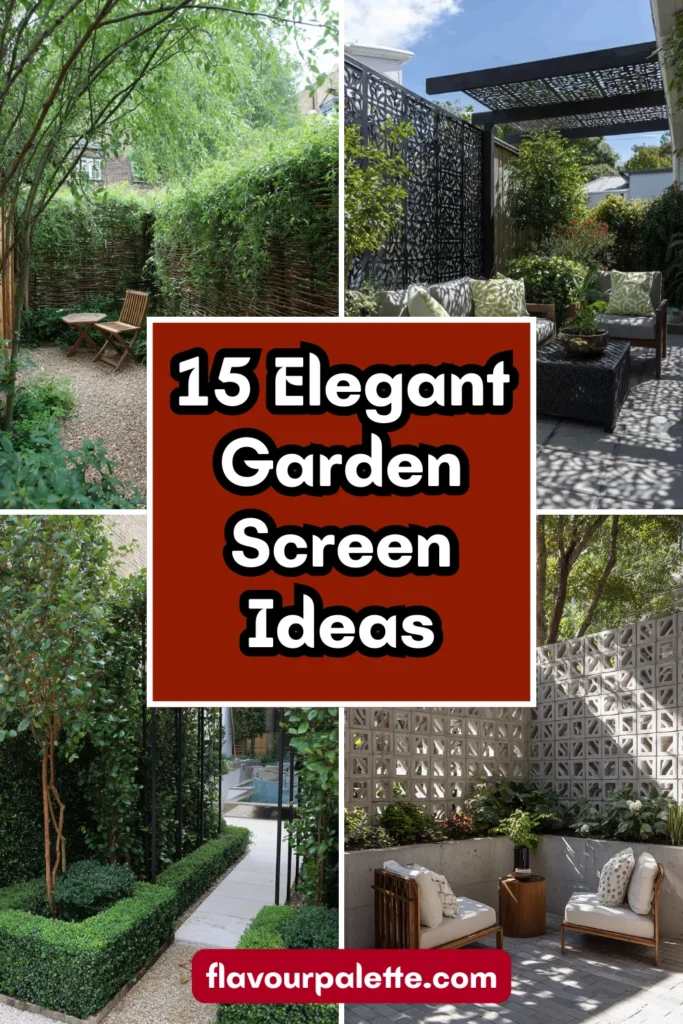
Garden screens address this problem, but the best ones do considerably more than solve it.
They divide space with architectural confidence, create rooms within rooms in the outdoor environment, support climbing plants that add further layers of beauty, and function as design statements in their own right — objects with visual presence and material quality that contribute positively to the garden’s overall aesthetic rather than simply blocking an unwanted view.
The difference between a garden screen that merely provides privacy and one that genuinely elevates the space it occupies is entirely a matter of design intention. Here are fifteen ideas that combine both functions with elegance.
1. The Classic Trellis Panel in Painted Timber
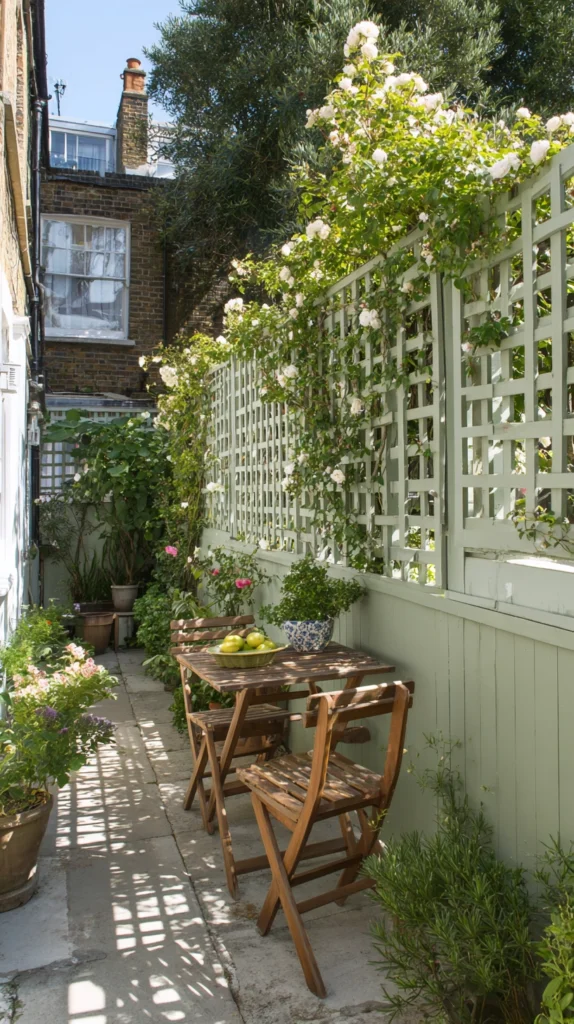
The painted timber trellis panel is the garden screen’s most enduring and most versatile form, and its longevity in garden design is entirely deserved.
A well-made trellis — constructed from substantial timber rather than the thin, flexible lattice that characterizes budget versions — has genuine architectural presence and provides the ideal support structure for climbing plants that will eventually become as much a part of the screen as the timber itself. The painting of the trellis is where the design decision lies.
Sage green, slate blue, soft white, deep forest green, and the dark near-black of very dark gray are all classic trellis colors that work in different garden contexts, and the choice should be informed by the planting that will grow against and through it, the color of any adjacent walls or fencing, and the overall palette of the garden.
A trellis painted in a carefully chosen color and planted with roses, clematis, or jasmine becomes one of the garden’s most beautiful features within two to three seasons of installation and improves every year thereafter.
2. Bamboo and Reed Screening for Natural Texture

Rolled bamboo and reed screening — available in panels of varying heights and densities — is one of the most practically accessible and visually warm garden screening options available, combining the natural texture of plant material with the structural performance of a proper barrier.
Against a timber or metal frame, bamboo screening has an organic quality that suits naturalistic, tropical-inspired, and contemporary gardens equally well, and its warm honey and straw tones provide a visual background that makes green planting look particularly vivid and healthy.
Reed screening has a slightly finer texture than bamboo and a softer tone, making it suitable for more delicate planting schemes. Both materials weather to a silver-gray over time if left untreated, which suits some garden aesthetics beautifully and can be extended or modified with a treatment of teak oil or exterior wood stain if the original color is preferred.
3. Corten Steel Panels for Contemporary Drama
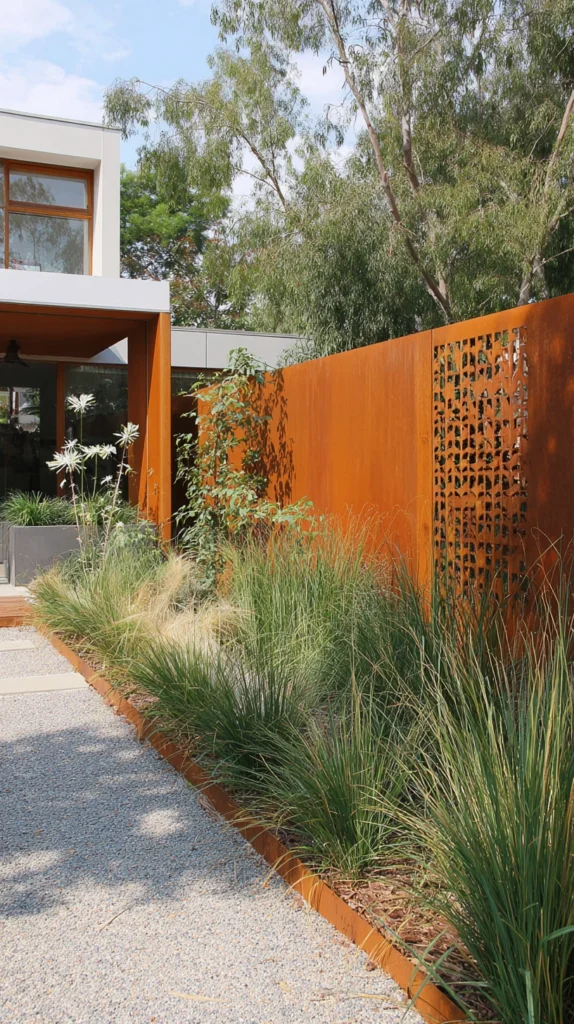
Corten steel — the weathering steel that develops a rich, stable rust-red patina as it oxidizes — brings to the garden a material presence that is simultaneously industrial and organic, modern and ancient-feeling.
As a screen material, Corten panels can be fabricated in virtually any size, shape, and pattern, from simple solid panels with a single cut-out motif to complex laser-cut designs that create extraordinary shadow patterns when the sun moves across them.
The warm amber and rust tones of weathered Corten harmonize beautifully with terracotta, stone, and warm brick, and make an unexpectedly good backdrop for green planting — the contrast between the rusty steel and the fresh green of climbing or adjacent plants is one of the great color combinations in contemporary garden design. Corten panels require no maintenance once their patina has stabilized and will remain structurally sound for decades with zero intervention.
4. Living Willow Screens for Organic Character
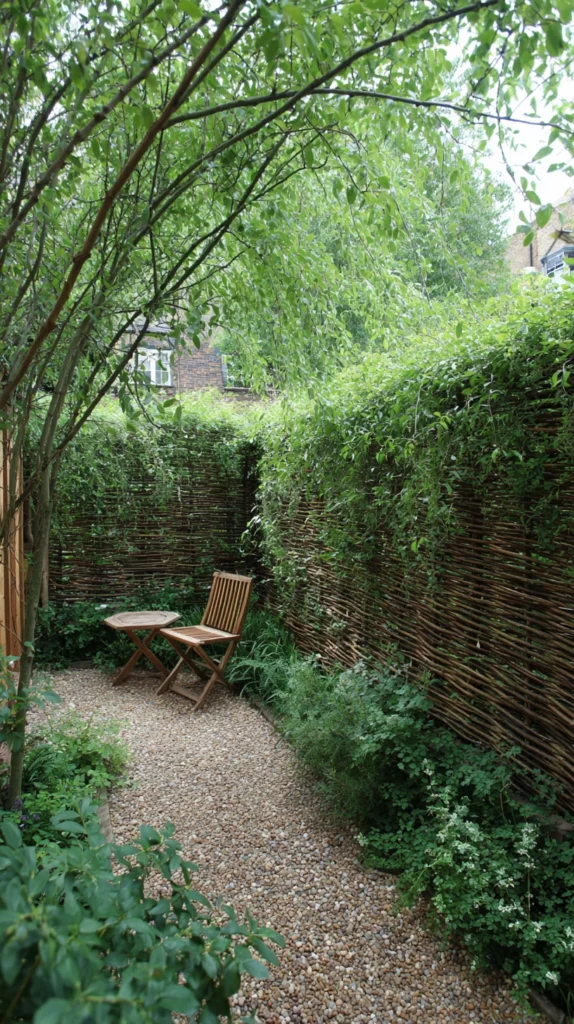
A living willow screen — constructed from freshly cut willow rods pushed into moist ground and woven into a lattice pattern that then takes root and continues to grow — is one of the most genuinely extraordinary garden features available, because it transforms over time from a constructed object into a living one in a way that no other screen material can replicate.
Willow roots prolifically from cuttings, and a newly constructed living screen will have leafed out within a single growing season, creating a dense, green, animate boundary that moves in the wind, changes with the seasons, and improves in density and character with every passing year.
Living willow screens require annual cutting and weaving to maintain their structure and prevent them from becoming simply a row of trees, but this maintenance is both straightforward and satisfying — more craft than chore — and the resulting screen has a handmade, deeply natural quality that all manufactured alternatives can only approximate.
5. Slatted Hardwood Screens for Architectural Elegance
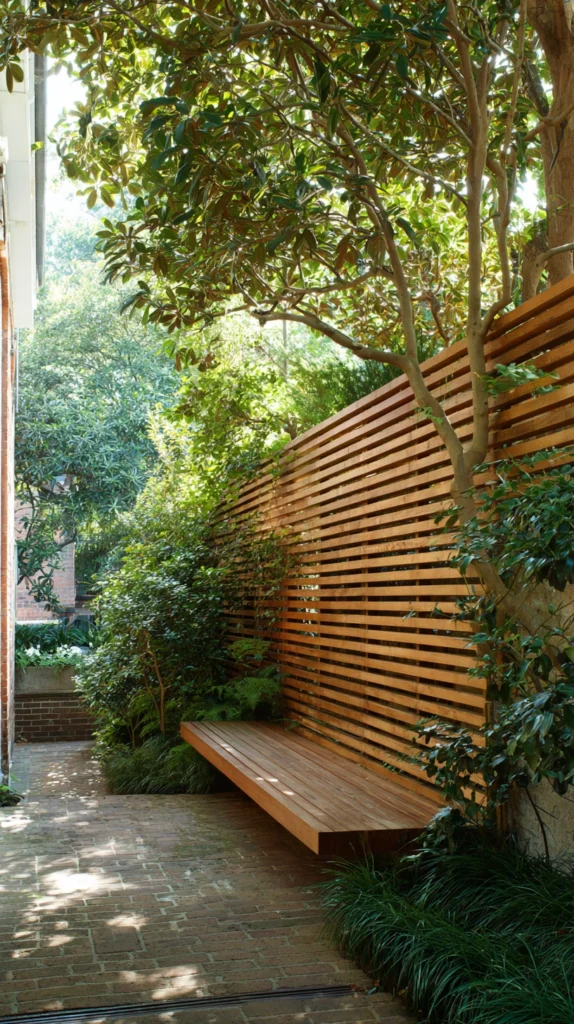
The slatted hardwood screen — a series of parallel timber slats fixed horizontally or vertically within a rigid frame, with the gap between slats calibrated to balance privacy with airflow and visual permeability — is the contemporary garden designer’s most refined screening solution.
The elegance of the slatted screen lies in its precision: the exact width of the slats, the exact dimension of the gap between them, and the exact species and finish of the timber all contribute to an effect that can range from the rustic warmth of rough-sawn cedar to the architectural refinement of smooth, oiled hardwood in iroko or teak.
Vertical slats read as more formal and urban; horizontal slats are more relaxed and domestic. Both orientations create interesting light and shadow patterns that change throughout the day as the sun’s angle changes, giving the screen a kinetic quality that solid panel alternatives cannot offer.
6. Gabion Walls Planted with Climbers
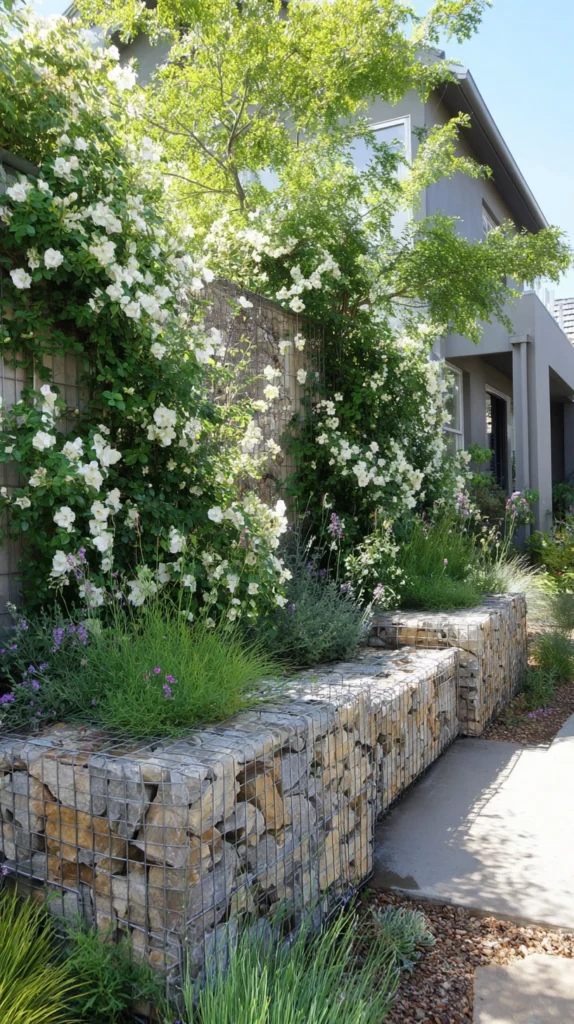
The gabion — a wire cage filled with stones, gravel, or recycled material — is a civil engineering solution that garden designers have adopted with enthusiasm over the past two decades for its combination of structural solidity, visual texture, and extraordinary versatility.
A gabion wall used as a garden screen brings the weight and permanence of a masonry boundary without the skill or cost of bricklaying, and its textured surface — whether filled with smooth river pebbles, rough local stone, recycled glass, or a mixture of materials — has a material richness that block walls rarely achieve.
Gabion screens work particularly well in contemporary and naturalistic gardens, and when combined with climbing plants — roses, clematis, or wall shrubs planted at their base and trained up their face — they acquire a beauty that goes well beyond their functional origins. The combination of hard stone and soft plant material is one of garden design’s most reliably successful contrasts.
7. Pleached Tree Screens for Formal Elegance
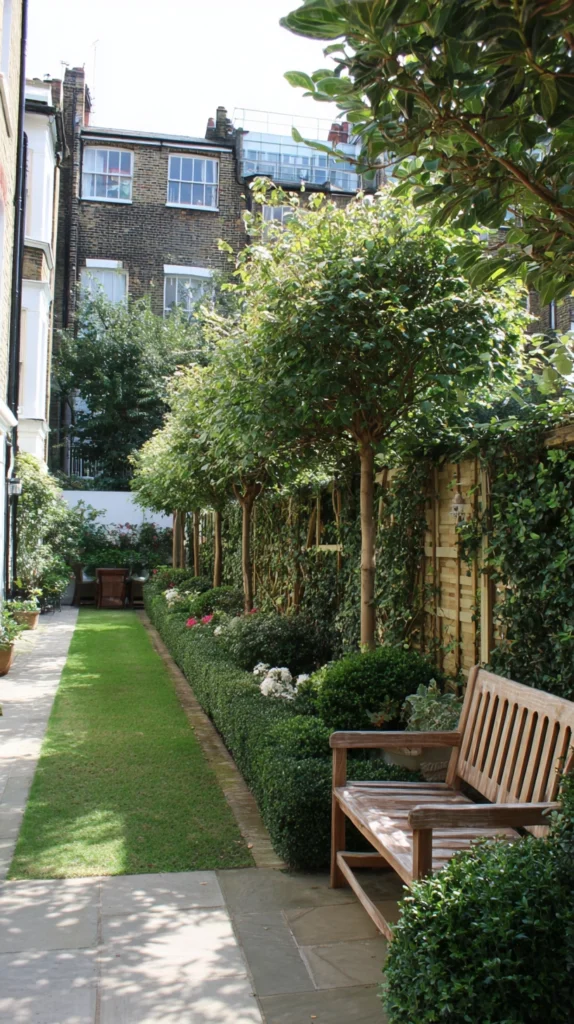
Pleaching — the technique of training trees on a flat plane by tying their branches to a horizontal framework and pruning out all growth that falls outside the desired shape — produces one of the most formally elegant screening solutions available in garden design.
A row of pleached hornbeams, limes, or field maples creates a screen of living foliage raised on clear trunks, producing privacy at head height and above while leaving the lower portion of the garden open and visually connected.
The effect is architectural in the most literal sense — these are living columns supporting a living wall, and the precision of their form in winter, when the branching structure is fully visible, is as beautiful as the dense green canopy of summer. Pleached trees are available pre-trained from specialist nurseries, making them an immediately effective screening solution despite their sophisticated appearance.
8. Painted Metal Screens with Cut-Out Patterns
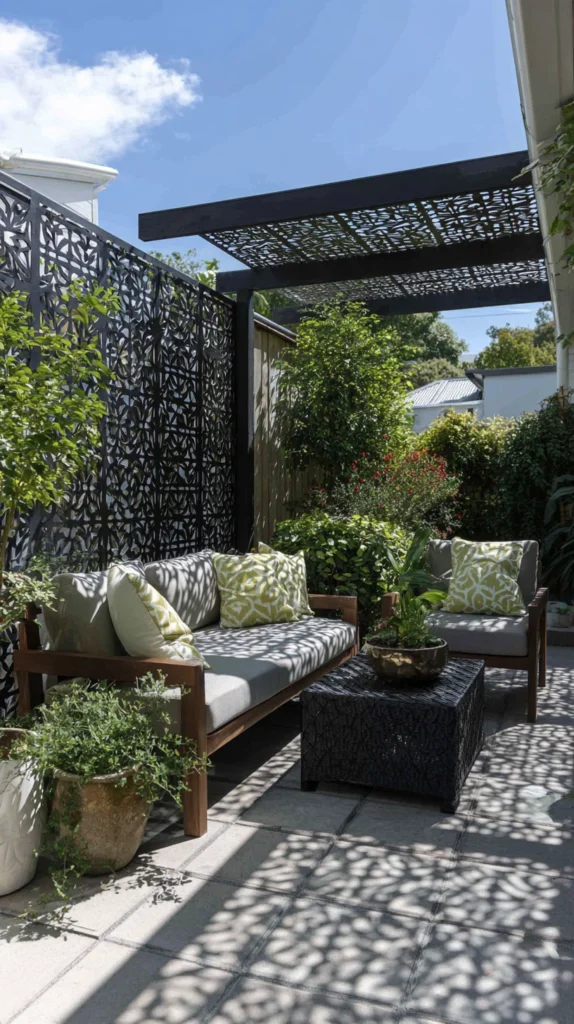
Powder-coated metal screens with laser-cut or pressed decorative patterns bring a graphic quality to garden screening that timber and masonry cannot replicate, and in the right garden context, the shadow patterns they cast on paving, walls, and planting are as beautiful as the screens themselves.
The pattern choice is critical — geometric patterns in Islamic or Moorish tradition, simple botanical motifs, abstract organic forms — and should relate to the garden’s overall design language rather than existing in isolation.
Dark colors — matte black, deep charcoal, forest green, dark navy — tend to make metal screens recede visually, allowing the pattern to register as a play of light and shadow rather than a solid barrier. Lighter colors — warm white, pale gold, soft gray — give the screen more visual presence and make it a stronger design statement within the garden composition.
9. Glass Panel Screens for Urban Gardens
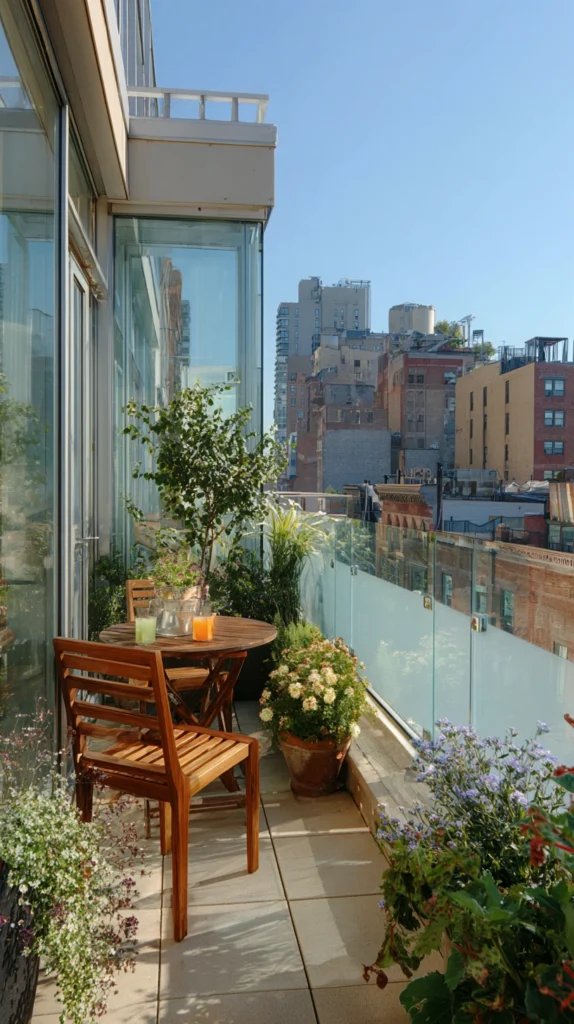
In a small urban garden where enclosure is necessary but where screening with solid material would create an oppressive sense of confinement, toughened glass panels offer privacy from specific sightlines while maintaining the feeling of openness and light that small spaces depend on.
Clear glass panels on a steel or timber frame provide wind protection without a visual barrier — useful on exposed rooftop terraces and elevated gardens where wind is as much a problem as overlooking.
Frosted or acid-etched glass provides privacy while diffusing rather than blocking light, creating a glowing, luminous boundary that is particularly beautiful in the evening when light on one side of the screen illuminates it from within.
Glass panels age very gracefully, requiring only occasional cleaning to maintain their performance, and their transparency means they never make a small garden feel smaller.
10. Espalier Fruit Trees as Productive Screens
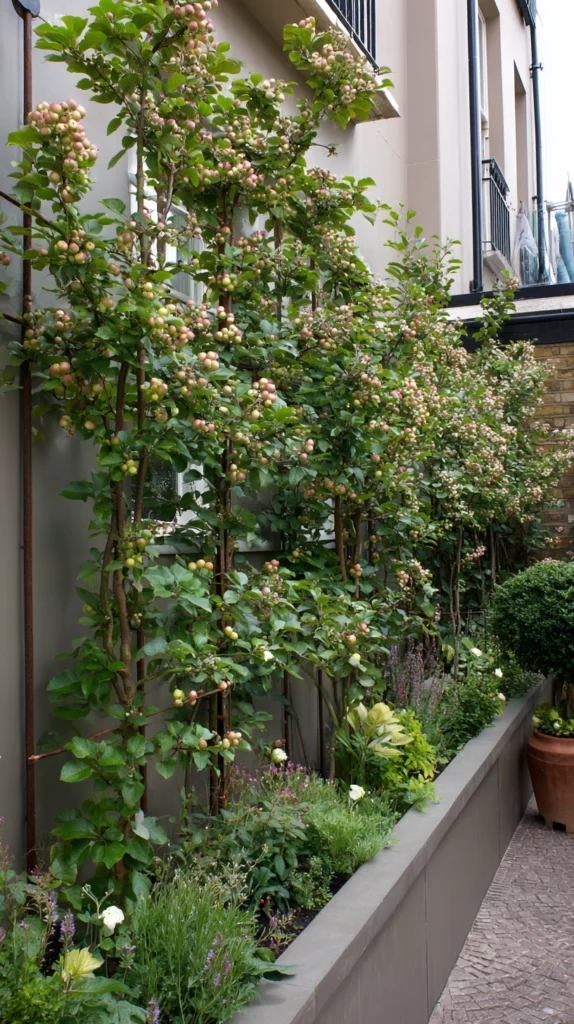
The espalier — a fruit tree trained flat against a wall or freestanding framework in a symmetrical pattern of horizontal tiers — is one of garden design’s oldest and most elegant techniques, combining productive fruit growing with a formally beautiful screen that changes dramatically through the seasons.
In spring, an espalier apple or pear in blossom is one of the most spectacular sights a garden can offer, its tiers of white or pink flowers arranged with the geometric precision of a living architectural drawing. In summer, it provides dense leaf cover. In autumn, it carries fruit.
In winter, the training structure is fully revealed, and the abstract beauty of the branch pattern against a wall is as satisfying as any purely ornamental design. Espalier trees require more annual maintenance than most other screening options, but the combination of beauty, productivity, and year-round seasonal interest makes the investment entirely worthwhile.
11. Woven Hazel Hurdles for Rustic Warmth
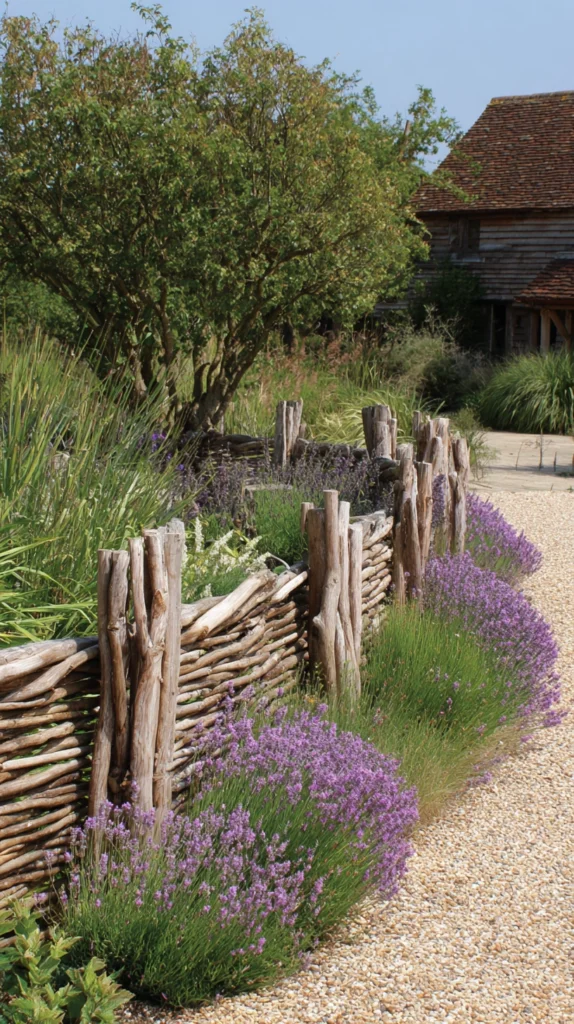
The hazel hurdle — a panel of interwoven hazel stems traditionally made by hurdle-makers working from coppiced woodland — is one of England’s oldest garden enclosure solutions, and its persistence in the contemporary garden reflects its genuine and irreplaceable qualities.
The texture of woven hazel is extraordinarily rich — the variation in thickness and color between individual stems, the pattern of the weave, the way the material weathers from pale gold through silver-gray — and no manufactured product replicates it convincingly.
Hazel hurdles work as freestanding screens supported on pointed posts, as backdrop panels behind planted borders, or as temporary seasonal divisions within a larger garden space. They have a finite lifespan of eight to fifteen years, depending on conditions, but their low cost and complete biodegradability make replacement straightforward and guilt-free.
12. Pergola Screens with Climbing Plants
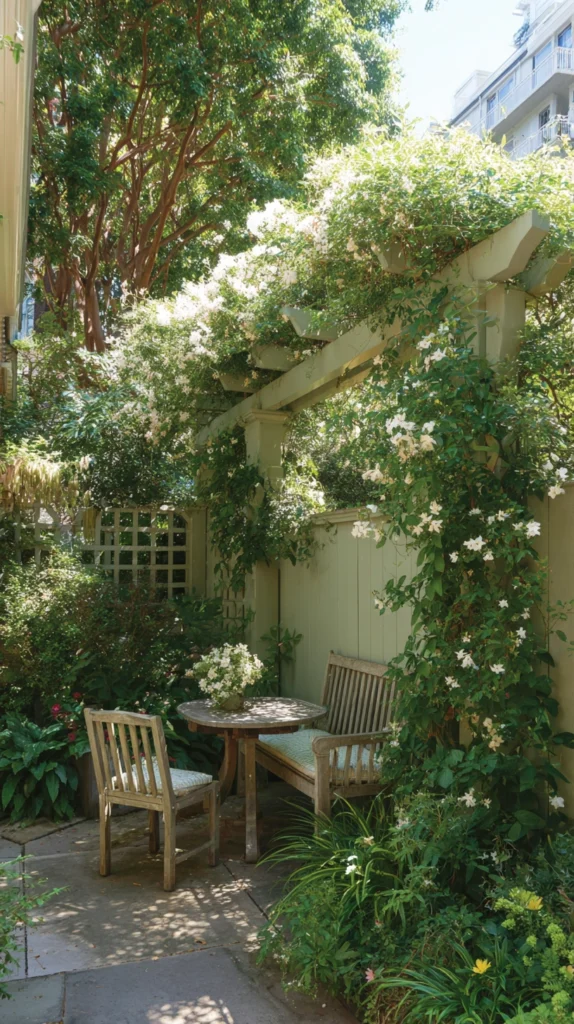
A pergola structure used as a garden screen — with solid or slatted side panels supporting an overhead framework through which climbing plants grow to create an enclosed, roofed corridor — combines the functions of privacy screen, shelter, and planted feature in a single architectural element.
The pergola screen works particularly well as a boundary between a seating area and the rest of the garden, creating a defined room that is simultaneously open to the air and visually separated from its surroundings.
Wisteria, climbing roses, jasmine, and grapevines are the classic pergola climbers, each bringing their own season of peak performance to the structure. The carpentry should be robust enough to carry the considerable weight of mature climbing plants — undersized timbers flex and eventually fail under the load — and the posts should be properly set in concrete or on metal post holders.
13. Concrete Block Screens with Geometric Patterning
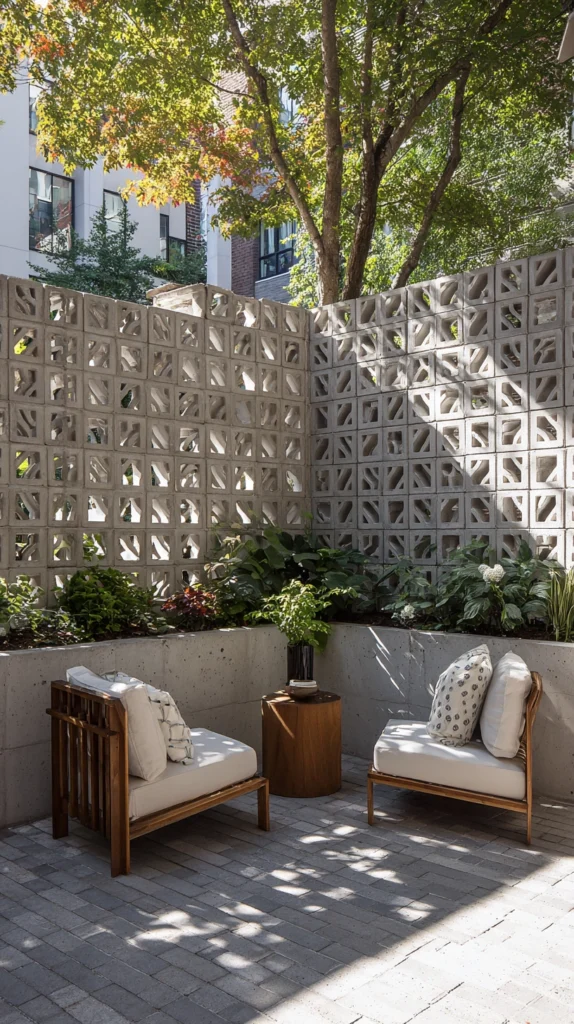
The decorative concrete screen block — a molded concrete unit with a geometric pattern pressed into its face, stacked without mortar in a screen wall — was a defining feature of mid-century domestic architecture and has returned to contemporary garden design with a confidence that reflects both its genuine aesthetic merit and the broader revival of interest in mid-century modernism.
Screen block walls create fascinating light and shadow patterns, provide partial visual screening while maintaining airflow, and have a graphic quality that suits contemporary, Mediterranean, and modernist garden aesthetics particularly well.
The blocks are available in a range of geometric patterns and can be painted in any exterior paint color — white and cream are the most classic choices, while darker colors give the screen a more dramatic, contemporary character. They are also one of the most affordable permanent screening solutions available.
14. Mixed Material Screens for Layered Interest
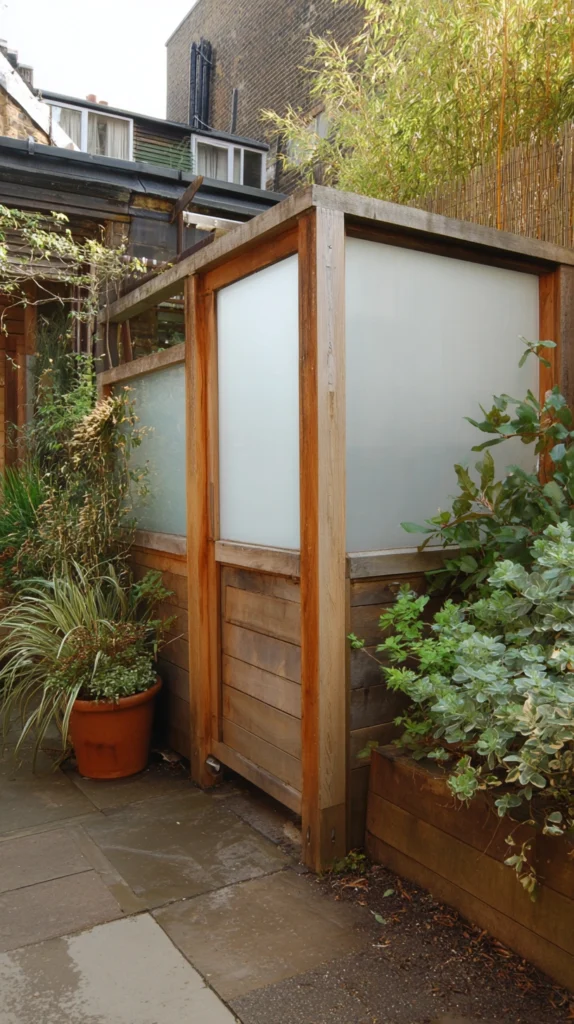
Some of the most successful garden screens in contemporary design combine two or more materials within a single structure — timber framing with metal mesh infill panels, stone piers supporting timber slatted sections, steel posts carrying woven bamboo panels — creating a material richness that single-material screens cannot achieve and a design complexity that rewards attention.
The mixed material approach also has a practical dimension: different materials can be deployed where their specific properties are most relevant, with structural materials carrying loads and decorative materials contributing visual texture.
A screen that combines the warm timber of its frame with the translucency of its frosted glass or the organic texture of its woven bamboo insert creates a boundary with genuine design sophistication, one that tells a more interesting material story than any single-material alternative.
15. The Planted Hedge Screen Elevated with Structure
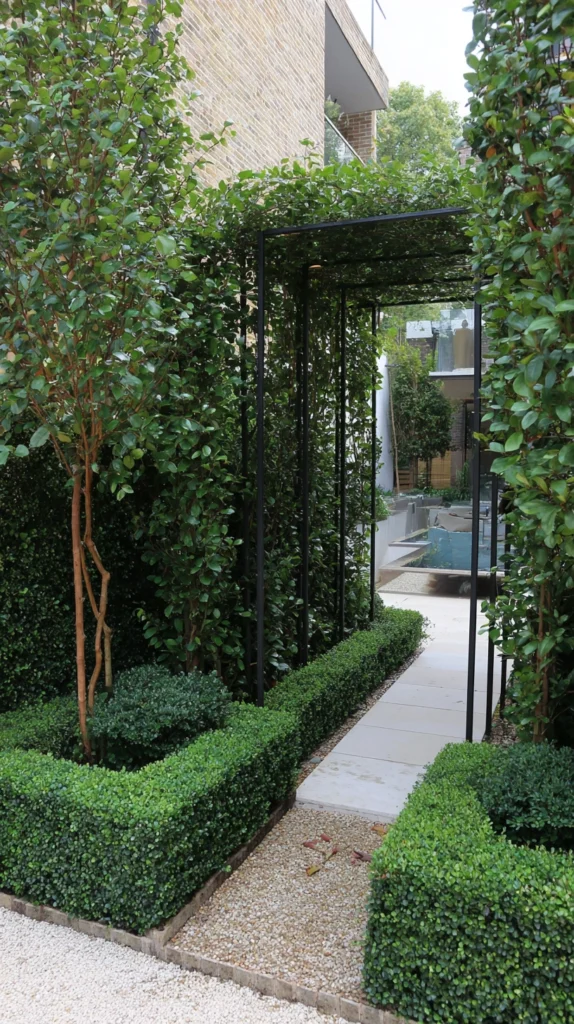
The garden hedge — that most traditional of English garden enclosures — becomes something more interesting and more immediately effective when combined with a structural element that provides screening before the hedge has reached its mature height and continues to add architectural interest once it has.
A simple timber or metal framework planted with a fast-growing hedge species — yew for formal gardens, hornbeam for a softer effect, Portuguese laurel for year-round evergreen density — gives the hedge a structural partner that does the privacy work immediately while the plant material grows.
Once the hedge reaches the top of the frame and is clipped level with it, the combination of living green surface and structural edge creates a boundary of extraordinary crispness and refinement. This approach combines the permanence and low maintenance of a mature hedge with the immediacy of a constructed screen, resulting in a garden boundary that is both deeply traditional and entirely contemporary.