15 Garden Pathway Ideas That Look Straight From Pinterest
A well-designed garden pathway does more than guide you through your outdoor space—it shapes how the entire garden feels. The right path adds structure, improves flow, and turns everyday movement into a visual experience.
Pinterest-worthy garden paths balance beauty with function, combining thoughtful materials, natural surroundings, and practical layout choices.
Modern garden pathways today are not just decorative. They are designed to handle weather, foot traffic, and maintenance needs while still looking stylish year-round. Whether your garden is large or compact, formal or relaxed, a carefully planned path can elevate the entire landscape.
These 15 garden pathway ideas focus on designs that look stunning in photos while remaining practical for real-life gardens.
1. Stepping Stone Pathways With Natural Spacing
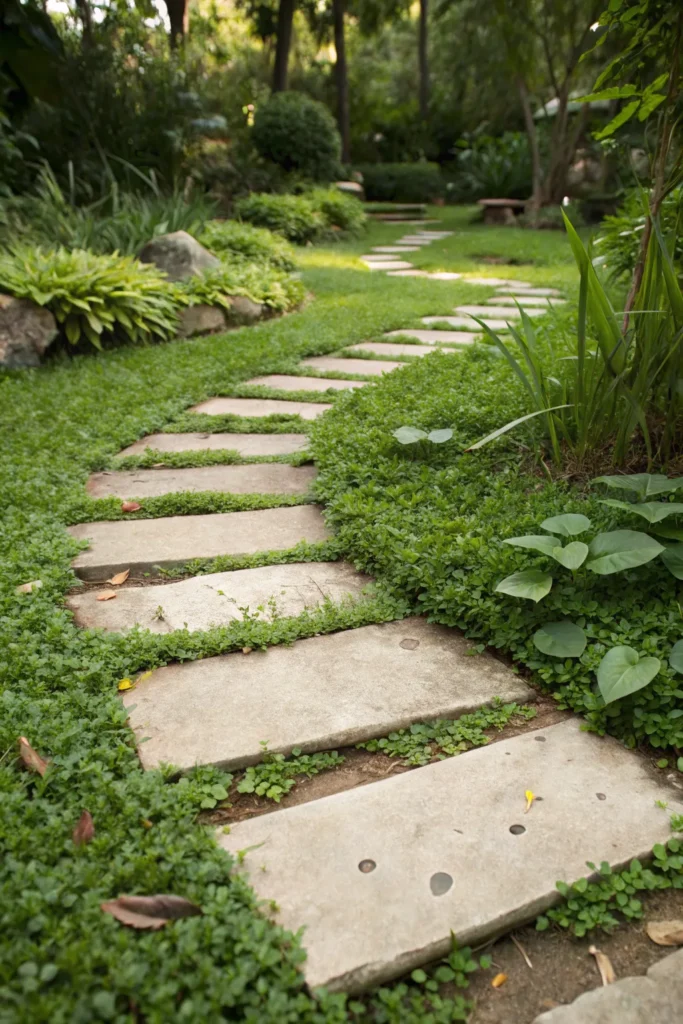
Stepping stone pathways are a classic favorite for a reason. Individual stones set into grass, gravel, or ground cover create a relaxed, organic look that feels effortless.
For a modern approach, use stones with clean edges and consistent sizing, spaced evenly for comfortable walking. This style works well in informal gardens and is easy to adapt to curved layouts. Proper spacing ensures safety while maintaining a light, Pinterest-ready aesthetic.
2. Gravel Paths With Defined Edges
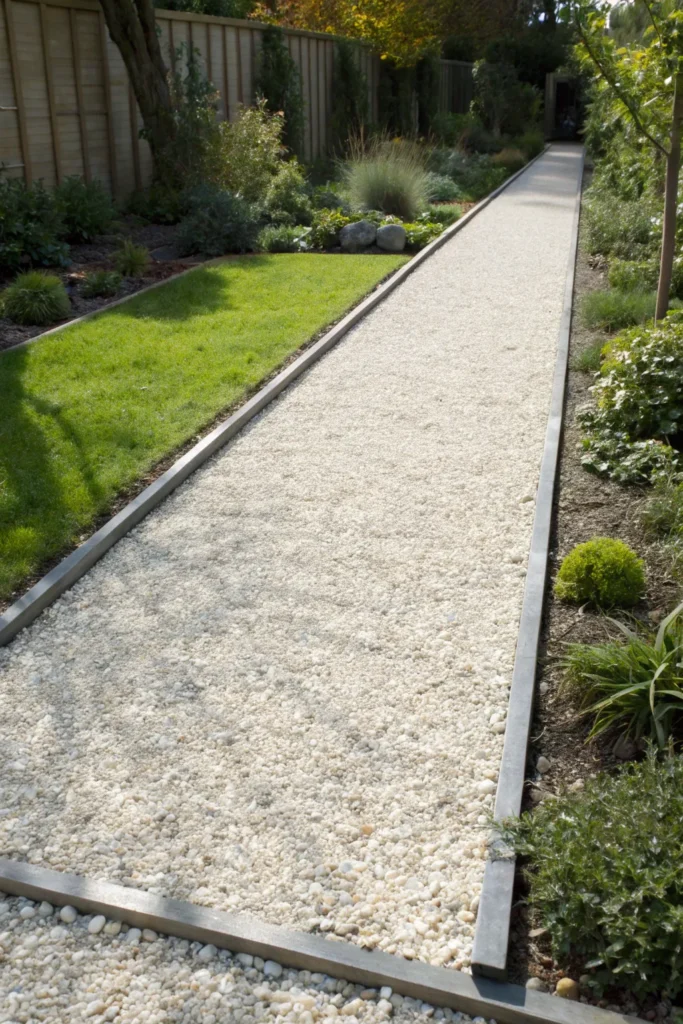
Gravel pathways offer a clean, minimalist look while remaining budget-friendly and easy to install. When paired with clear edging—such as metal, stone, or brick—the path feels intentional and polished.
Choose fine gravel for comfort underfoot and good drainage. Defined edges prevent spreading and keep the path looking neat, even with frequent use.
3. Stone Slab Walkways for Modern Gardens
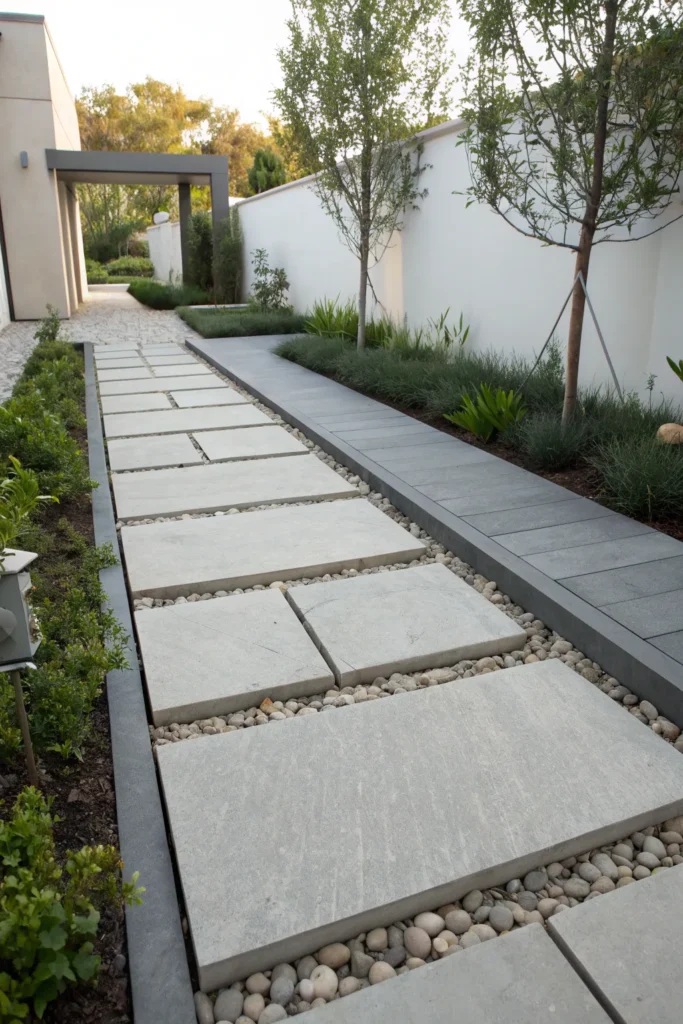
Large stone slabs create a sleek, modern pathway that feels architectural and refined. This design works especially well in contemporary landscapes and minimalist gardens.
Spacing slabs slightly apart allows rainwater to drain and softens the overall look. Stone slabs are durable, low-maintenance, and visually striking, making them ideal for high-traffic areas.
4. Brick Pathways With a Timeless Appeal
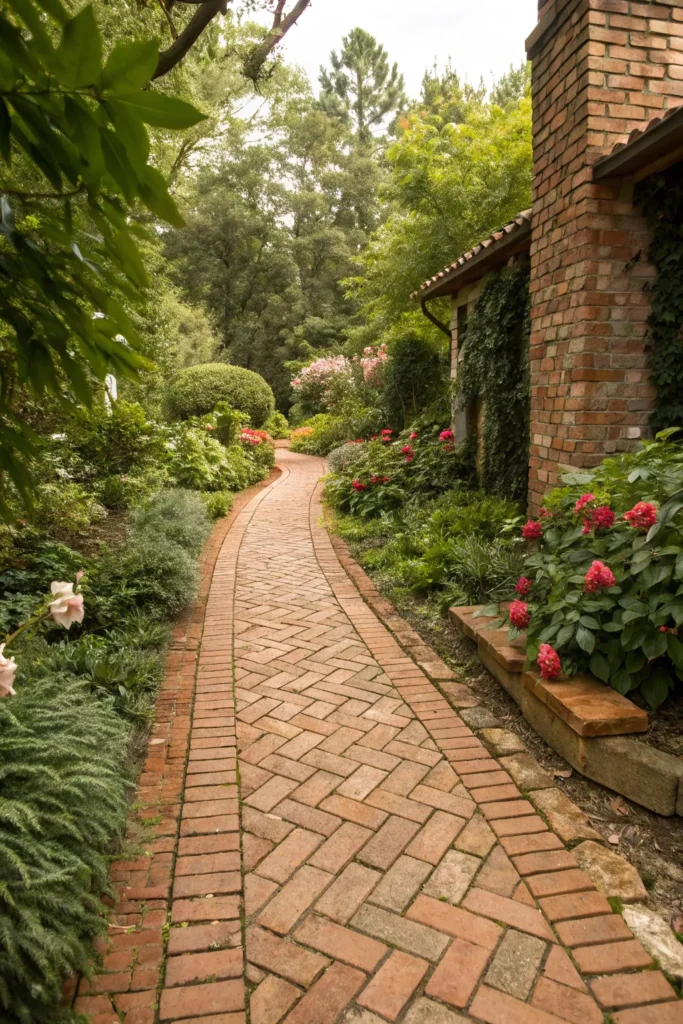
Brick garden paths bring warmth and character to outdoor spaces. Their rich tones and subtle texture add visual interest without overwhelming the garden.
Lay bricks in classic patterns such as herringbone or running bond for added durability. Brick pathways are practical, long-lasting, and develop a beautiful patina over time.
5. Curved Pathways That Encourage Exploration
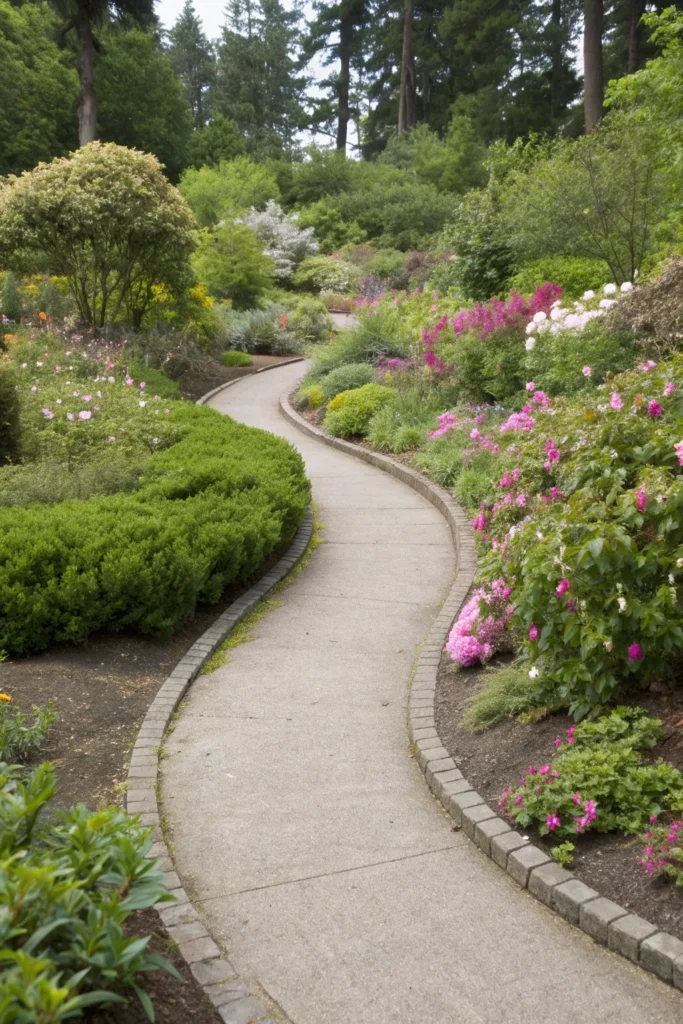
Curved garden paths feel inviting and natural. Rather than revealing the entire garden at once, gentle curves create a sense of discovery and depth.
This design works well in both large and small gardens. Curves soften hard lines and make the landscape feel more dynamic and visually engaging.
6. Concrete Walkways With a Soft Finish
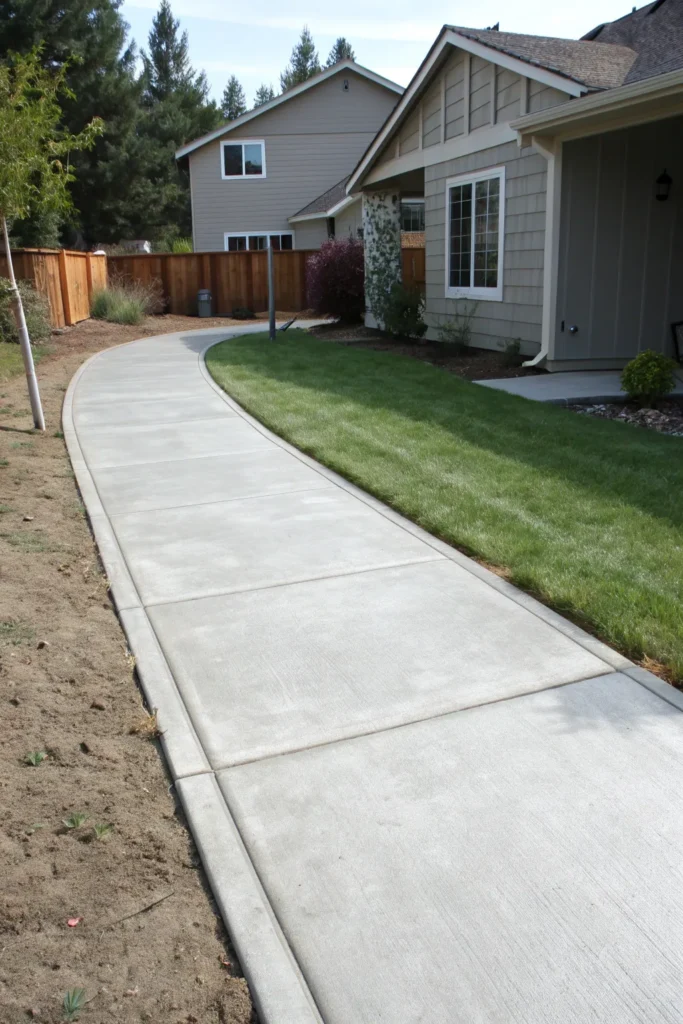
Concrete pathways are incredibly versatile and practical. With modern finishing techniques, concrete can feel warm and stylish rather than industrial.
Opt for broom-finished or lightly textured concrete to improve traction. Concrete paths are durable, easy to maintain, and suitable for contemporary outdoor spaces.
7. Wooden Boardwalk-Style Paths
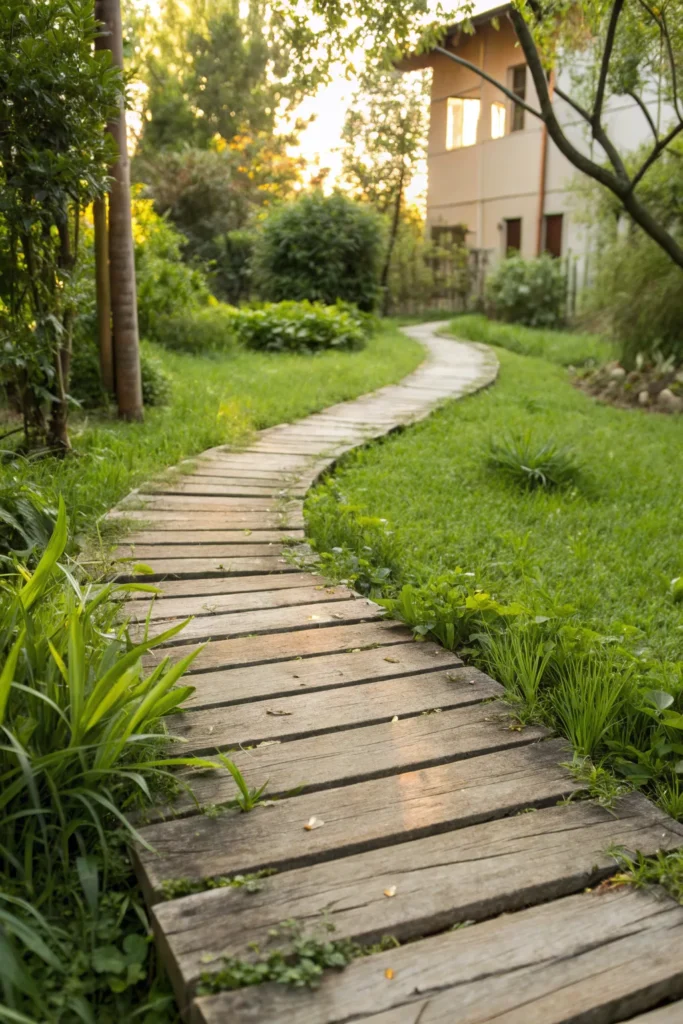
Wooden pathways bring warmth and a natural feel to the garden. They work particularly well in areas with uneven ground or moisture issues.
Use weather-resistant wood or composite decking to ensure longevity. Raised boardwalk paths also help protect plants and improve drainage, making them both functional and visually appealing.
8. Grass-Inset Stone Pathways
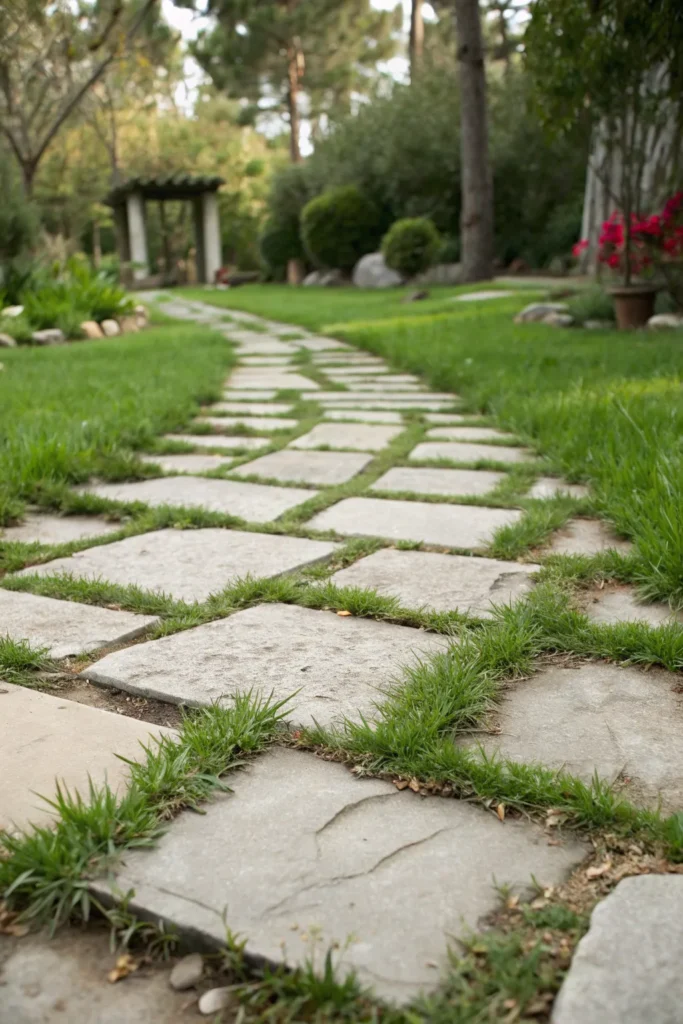
Combining stone with grass creates a soft, balanced look that blends structure with nature. Grass-inset paths feel fresh and relaxed while still providing a clear walking route.
This style is best for low-traffic areas and gardens with regular maintenance. Proper edging keeps the grass tidy and prevents overgrowth.
9. Modern Paver Pathways
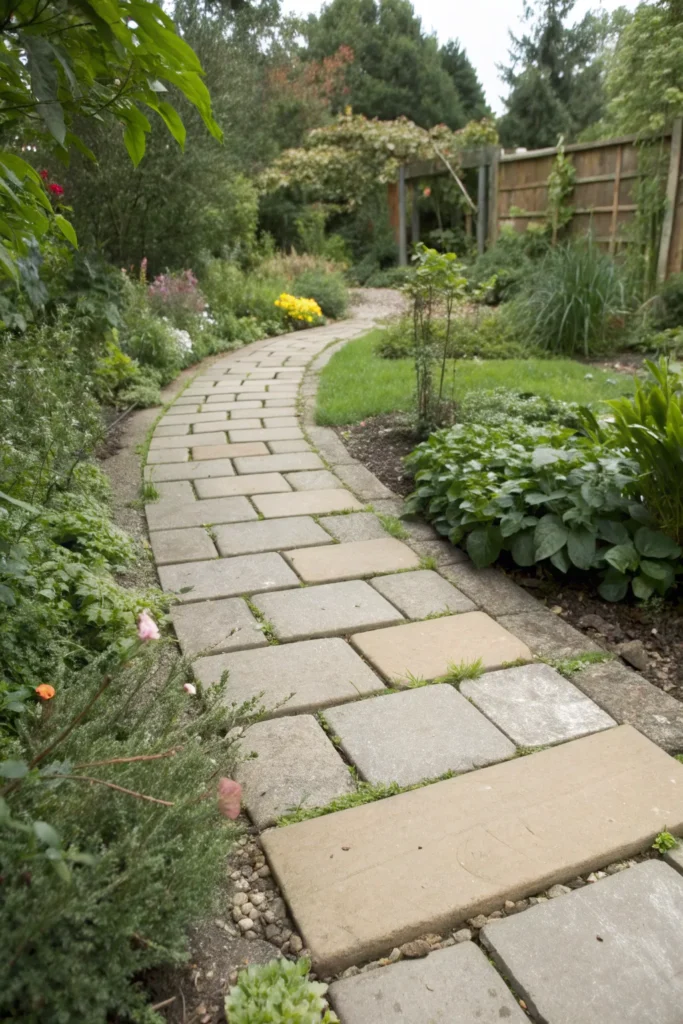
Concrete or porcelain pavers offer clean lines and consistent shapes, making them ideal for modern gardens. Available in various colors and finishes, pavers are highly customizable.
Install them with minimal spacing for a sleek look or wider gaps filled with gravel or ground cover for added texture. Pavers are durable and easy to replace if needed.
10. Pathways Framed With Low Plantings
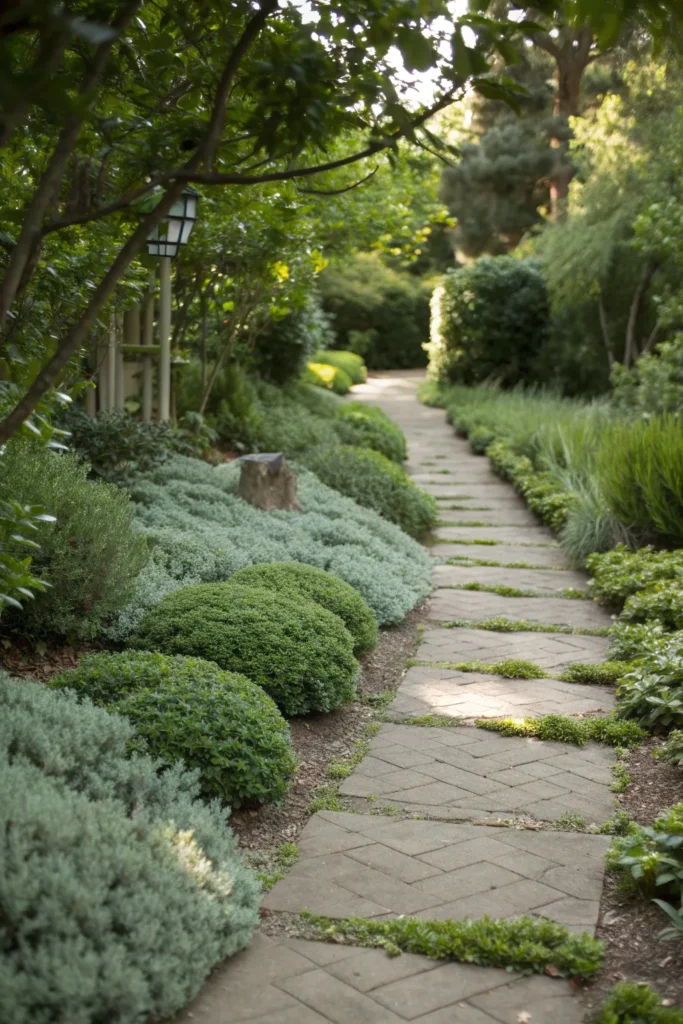
Framing a pathway with low plants enhances its visual appeal while guiding movement. Ornamental grasses, lavender, or ground cover plants soften the edges.
This approach adds color and texture while keeping the path clearly defined. Choose plants that are easy to maintain and suited to your climate.
11. Pebble Mosaic Pathways for Artistic Flair
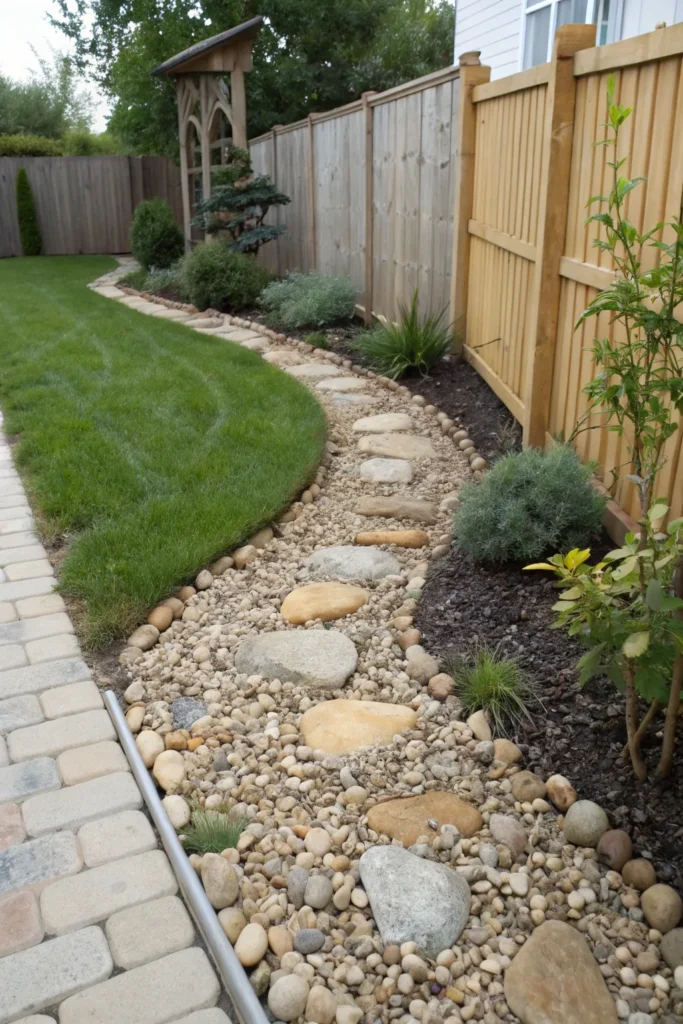
Pebble mosaic paths add a decorative, handcrafted element to the garden. Patterns can be subtle or bold, depending on your style.
While more labor-intensive, pebble pathways are durable and slip-resistant. They work well as accent paths or focal points within the garden.
12. Minimalist Linear Paths
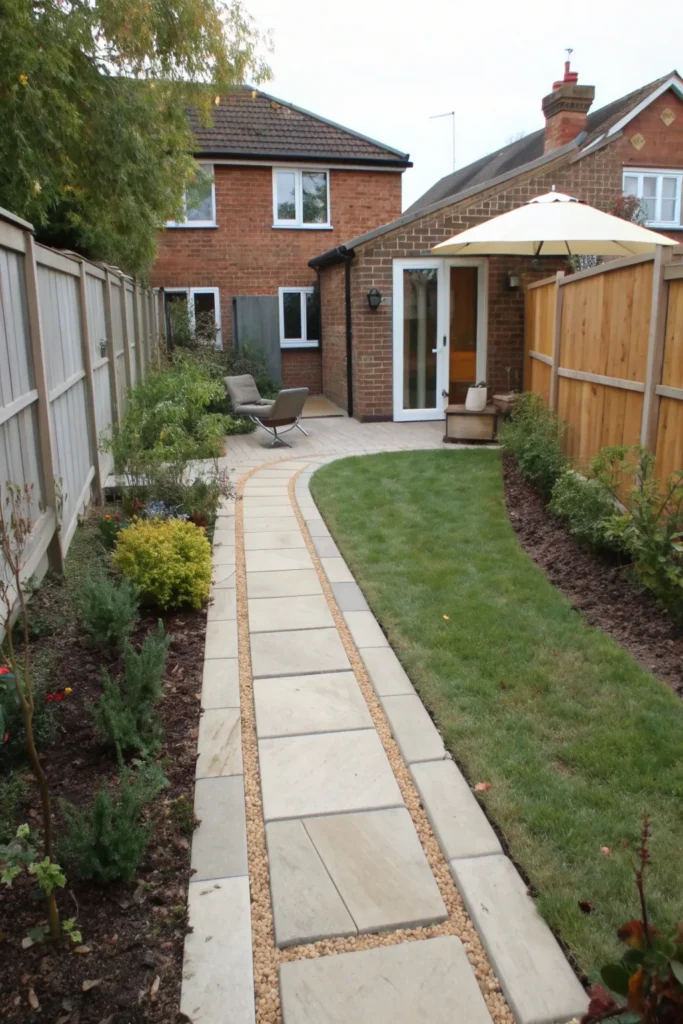
Straight, linear paths create a clean, contemporary look. This design works best in modern landscapes with strong architectural elements.
Use uniform materials and consistent spacing to maintain visual clarity. Linear paths are practical and easy to navigate, making them ideal for everyday use.
13. Pathways With Integrated Lighting
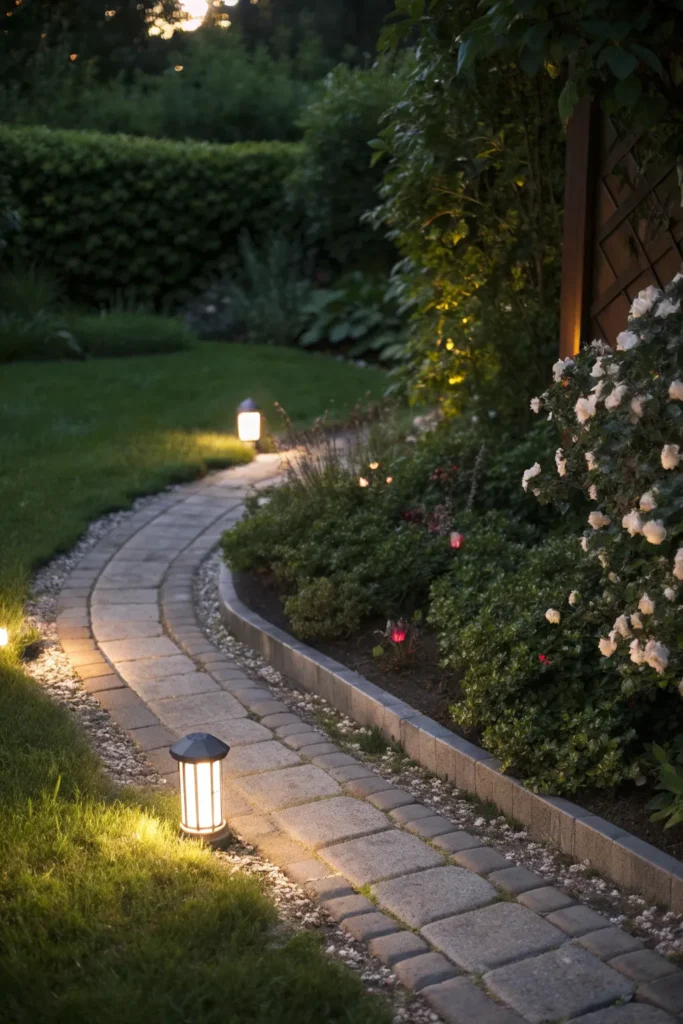
Adding lighting to a garden pathway improves safety and enhances nighttime appeal. Solar lights, recessed fixtures, or low bollards create a warm glow.
Lighting highlights the path’s design while extending the usability of outdoor spaces. Choose subtle fixtures that blend seamlessly into the landscape.
14. Mixed-Material Pathways
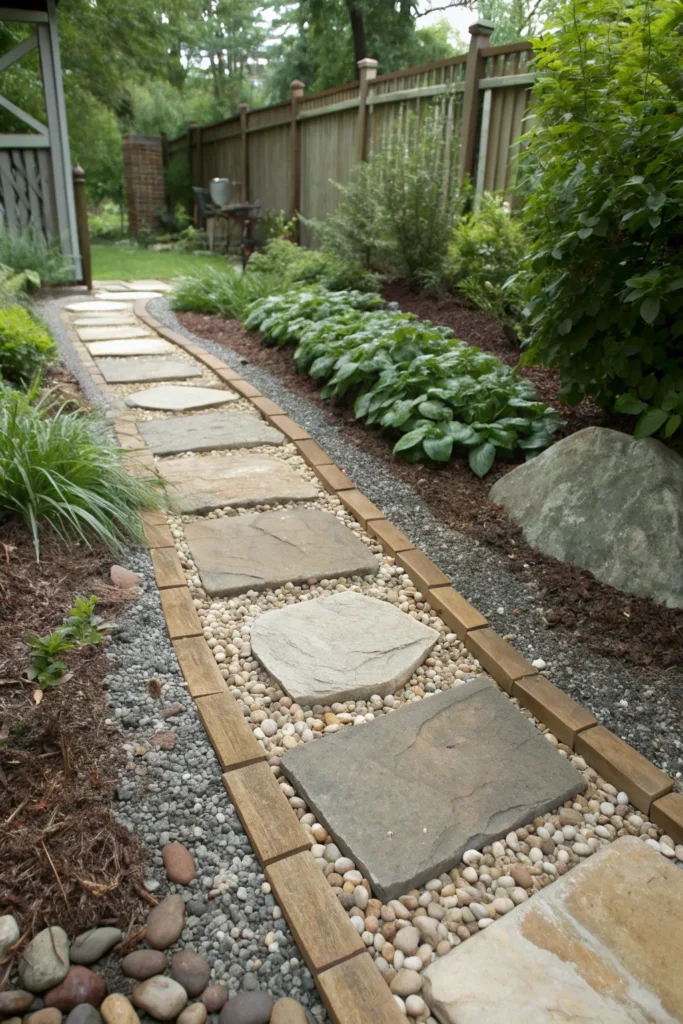
Combining materials such as stone, gravel, and wood creates visual interest and texture. Mixed-material paths feel curated and modern when done thoughtfully.
Keep the color palette cohesive to avoid a busy look. This approach allows you to tailor different sections of the path to specific needs.
15. Garden Paths That Connect Key Zones
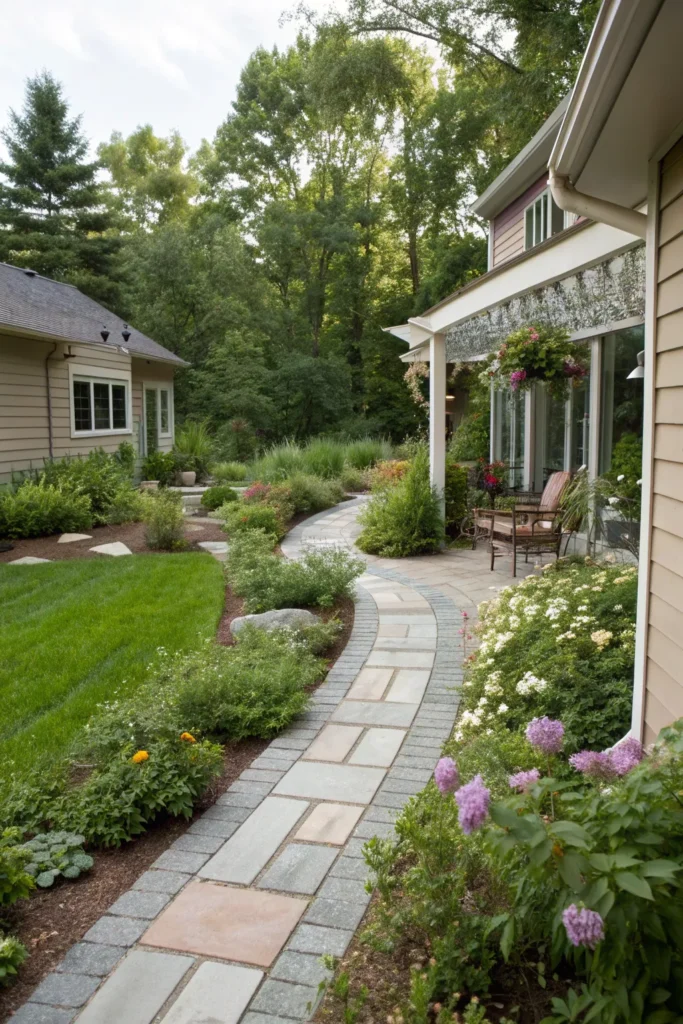
A well-planned pathway connects different areas of the garden, such as seating spaces, entrances, and planting zones. This creates a sense of flow and purpose.
Design paths with width and material suited to their function. Practical connections make the garden easier to navigate and more enjoyable to use.
Final Thoughts
Pinterest-worthy garden pathways combine thoughtful design with everyday practicality. By choosing durable materials, clear layouts, and styles that complement your garden, you can create paths that look beautiful while serving their purpose.
Whether you prefer natural stone, modern pavers, or soft gravel, the right pathway enhances both the look and function of your outdoor space. With these 15 ideas, you can design a garden pathway that feels stylish, intentional, and ready to be pinned.