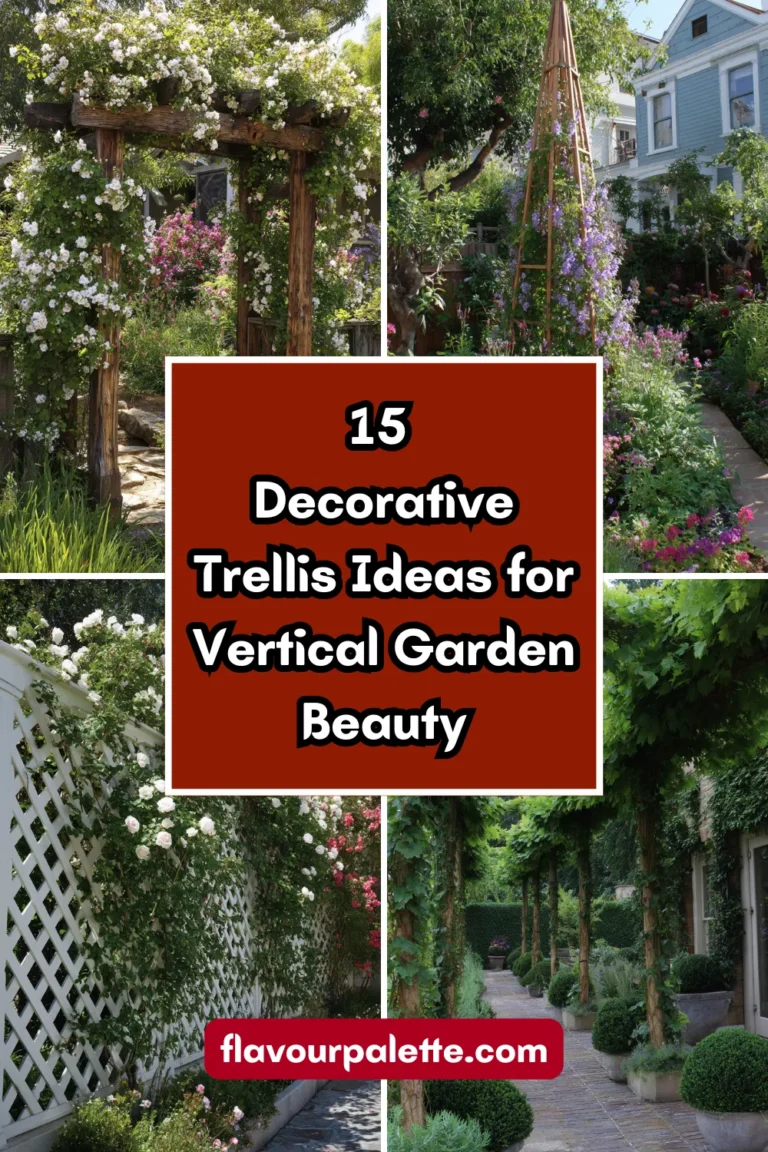
15 Garden Edging Ideas That Instantly Upgrade Flower Beds
There is a detail in garden design that separates the well-tended from the merely maintained, and it is one of the least glamorous and most consistently underestimated elements of the entire outdoor space. Garden edging — the material that defines the boundary between a planted bed and the lawn, path, or paving that surrounds it — is the garden’s equivalent of picture framing.
Remove the frame from a great painting and the painting still exists, still contains all its color and composition, but something essential is lost — the clarity of boundary, the sense that what is inside is deliberate and considered, the visual signal that says this was made rather than simply grown.
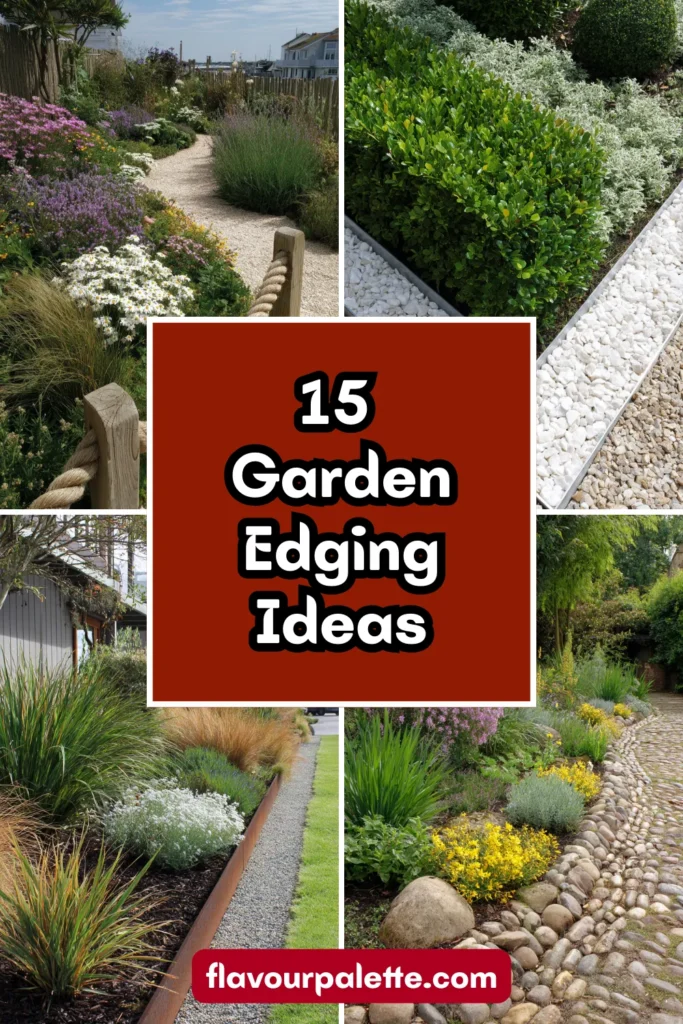
Edging does exactly this for a flower bed, and its absence is the reason that even well-planted beds sometimes fail to read with the crispness and intentionality that the effort of planting them deserves.
The good news is that garden edging is one of the most accessible and most immediately rewarding improvements available to any garden, achievable at virtually every budget level and in a range of materials and styles broad enough to suit every aesthetic from the most formally architectural to the most romantically naturalistic. Here are fifteen ideas for getting it right.
1. Corten Steel Strip Edging for Contemporary Precision
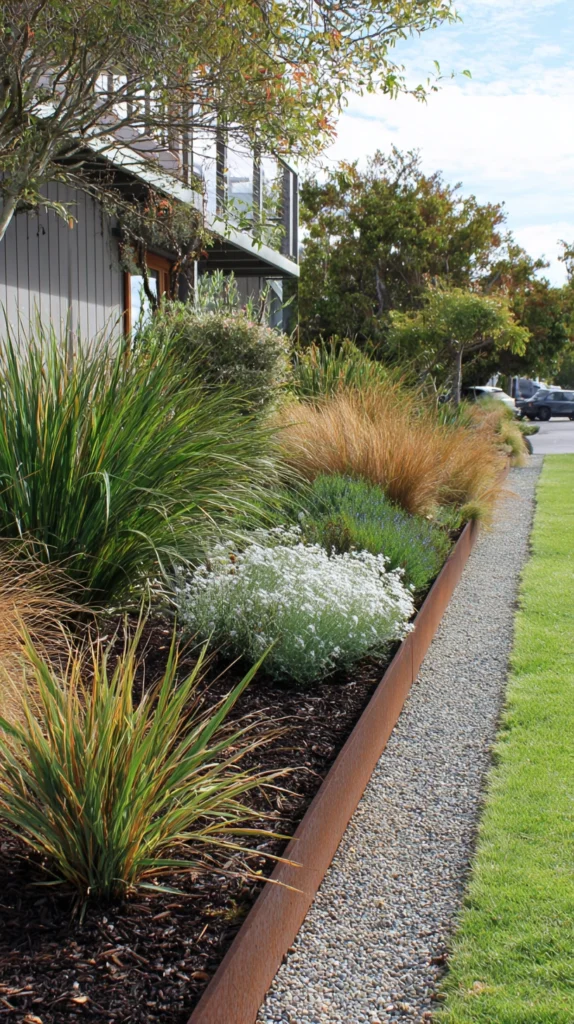
Corten steel edging — thin strips of weathering steel that develop a rich rust patina as they oxidize and stabilize — is the material that contemporary garden designers reach for most consistently when they want a flower bed edge that is simultaneously precise, durable, and visually sophisticated.
The strip sits proud of the surrounding lawn or path surface by just enough to create a clear visual boundary while remaining low enough not to interfere with mowing, and its flat, continuous surface creates a line of extraordinary crispness that defines the bed’s geometry with an architectural precision that most other edging materials cannot match.
The Corten’s color — warm amber in early oxidation, deepening to a rich chocolate rust as it stabilizes — works beautifully with the green of lawn, the warm tone of timber decking, the gray of stone paths, and the rich earth tones of a well-mulched planted bed.
It requires no maintenance once the patina has stabilized, and its longevity — Corten steel maintains its structural integrity for decades — makes the initial cost per year of service one of the most competitive of any edging material available.
2. Natural Stone Edging for Timeless Character
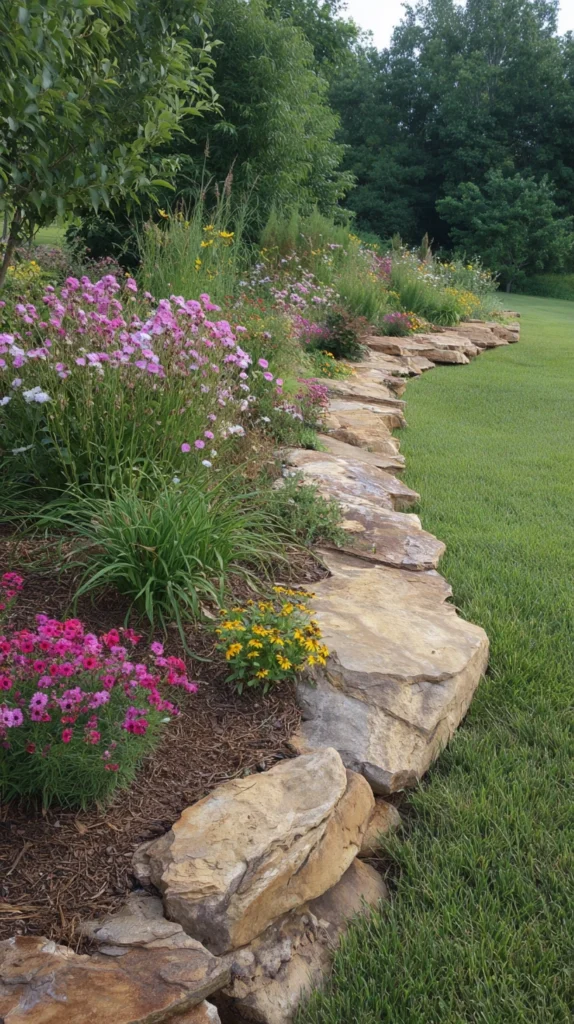
Natural stone edging — pieces of local stone, whether flat sandstone, slate, limestone, or granite, laid along the bed’s boundary either flat on the ground or partially buried for stability — brings a material authenticity and sense of geological permanence to the garden that no manufactured product can replicate.
The beauty of natural stone edging lies in its imperfection — the slight variation in thickness, the irregular edges, the specific mineral quality of the local stone that connects the garden to its landscape context — and this imperfection is precisely what gives it its character. Flat pieces of stone laid as a continuous edging create a formal effect despite their natural material. Larger, more irregular stones laid as a single row at the bed’s boundary create a more naturalistic effect that suits cottage and woodland garden styles.
In both cases, the stone should be partially buried for stability — at least a third of the stone’s depth set below the soil surface — and should be bedded on a thin layer of sand to prevent movement as the ground freezes and thaws through seasonal cycles.
3. Victorian-Style Rope-Top Terracotta Edging
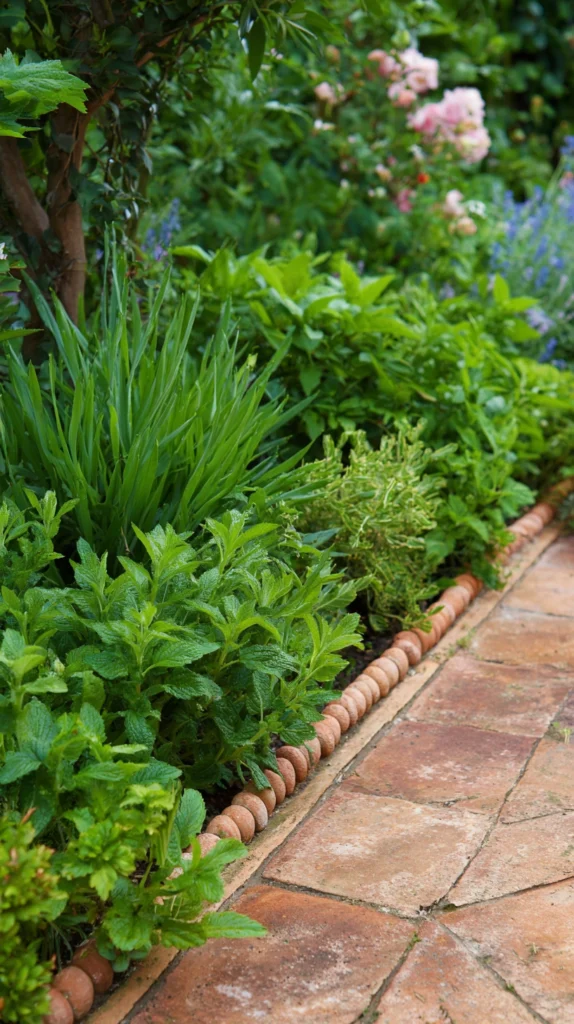
The Victorian rope-top terracotta edging tile — a classic piece of garden infrastructure whose design has not fundamentally changed since its Victorian heyday because it remains entirely and perfectly suited to its purpose — brings a warmth, history, and horticultural authenticity to a flower bed that no contemporary alternative can quite match.
These tiles, with their distinctive twisted rope detail along the top edge and their tapered body that pushes into the soil for stability, were developed at the height of the Victorian passion for gardening and remain in production because gardeners with a love of the traditional have never stopped wanting them.
They suit the formal geometry of Victorian and Edwardian gardens with obvious appropriateness, but they also work beautifully in cottage gardens, walled gardens, and any outdoor space where warm terracotta tones, period detail, and genuine horticultural character are valued over contemporary minimalism.
They are fragile relative to metal and plastic alternatives — occasional frost cracking and physical breakage are realities to manage — but their beauty justifies the maintenance they require.
4. Reclaimed Brick Edging for Cottage Warmth
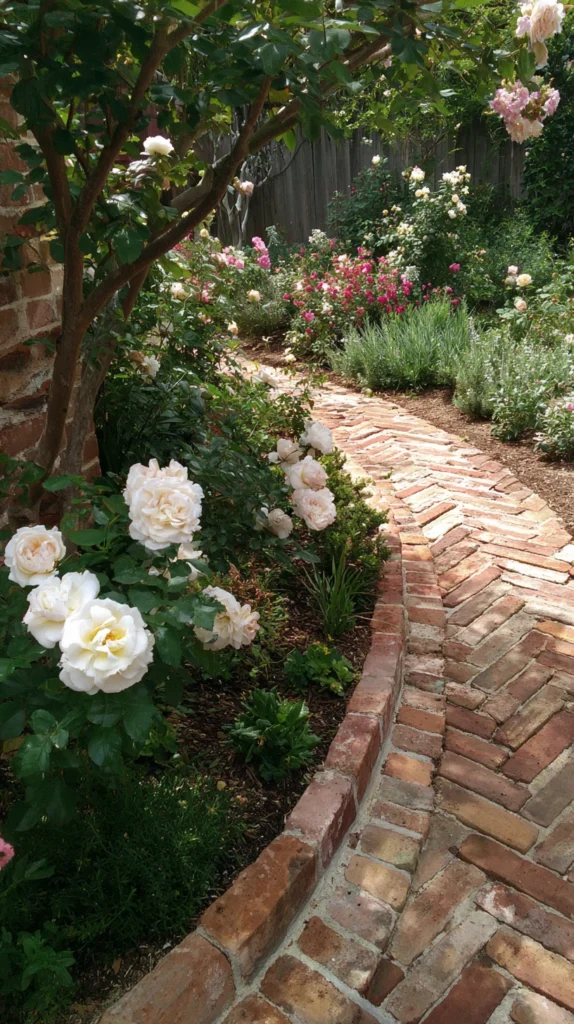
Reclaimed brick edging — old bricks stood on end or laid on edge at the flower bed’s boundary — is one of the most immediately charming and most materially honest edging solutions available, particularly in gardens associated with older houses where the brick itself may match the house’s construction material and creates a genuine material continuity between building and garden.
Bricks stood on end in a sawtooth pattern — alternating diagonal orientations creating a zigzag along the bed’s edge — is the most traditional configuration, familiar from Victorian kitchen gardens and cottage garden borders. Bricks laid flat end-on create a more contemporary, simpler line.
Either approach benefits from the use of genuinely old reclaimed bricks rather than new alternatives, because the weathered surface, occasional lime mortar residue, and slight irregularity of old brick is precisely what creates the warmth and character that makes this edging style so appealing. Source reclaimed bricks from demolition salvage yards, where their age and regional variety can be verified.
5. Wooden Board Edging for a Natural, Modern Edge
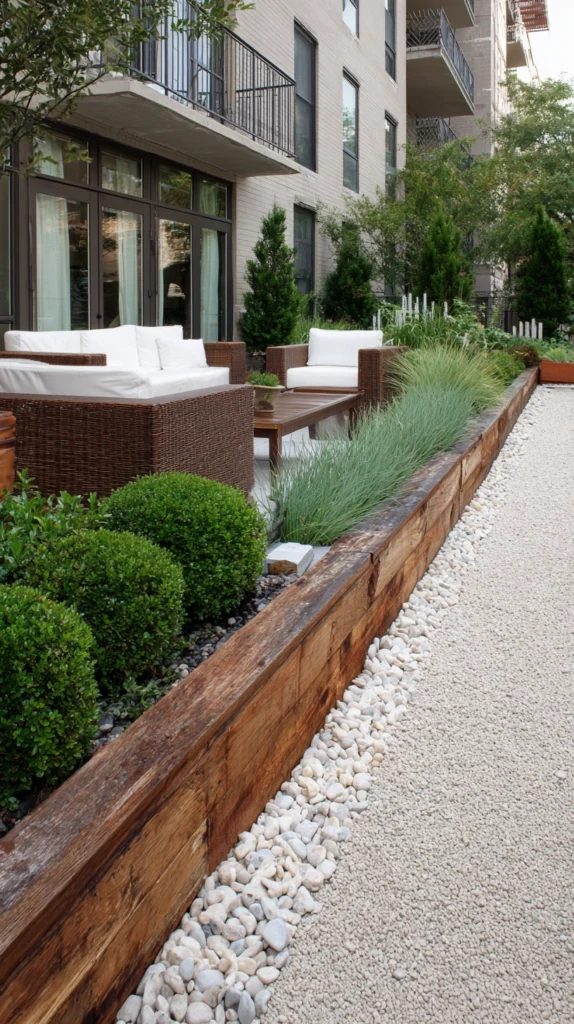
Timber board edging — lengths of planed or rough-sawn timber, typically between fifteen and twenty-five centimeters wide, set vertically into the soil along the bed’s boundary — creates a clean, continuous edge with a natural material warmth that suits both contemporary and traditional garden aesthetics.
The choice of timber species and treatment determines both the edging’s longevity and its visual character: hardwood species like oak and sweet chestnut will last ten to twenty years with minimal treatment; treated softwood offers a more economical alternative with a lifespan of five to ten years; and sleeper-grade timber, used in its rough-sawn natural state, creates a more rustic, substantial edge that suits large-scale beds and contemporary productive gardens particularly well.
The board should be partially buried — at least a third of its height below the soil surface, with a gravel drainage layer beneath to prevent rot at the soil line — and secured with vertical wooden or metal pegs driven behind the board at regular intervals to prevent movement. Paint or stain the exposed surface in a color that relates to the garden’s overall palette for the most resolved aesthetic result.
6. Galvanized Steel Edging for Industrial Elegance
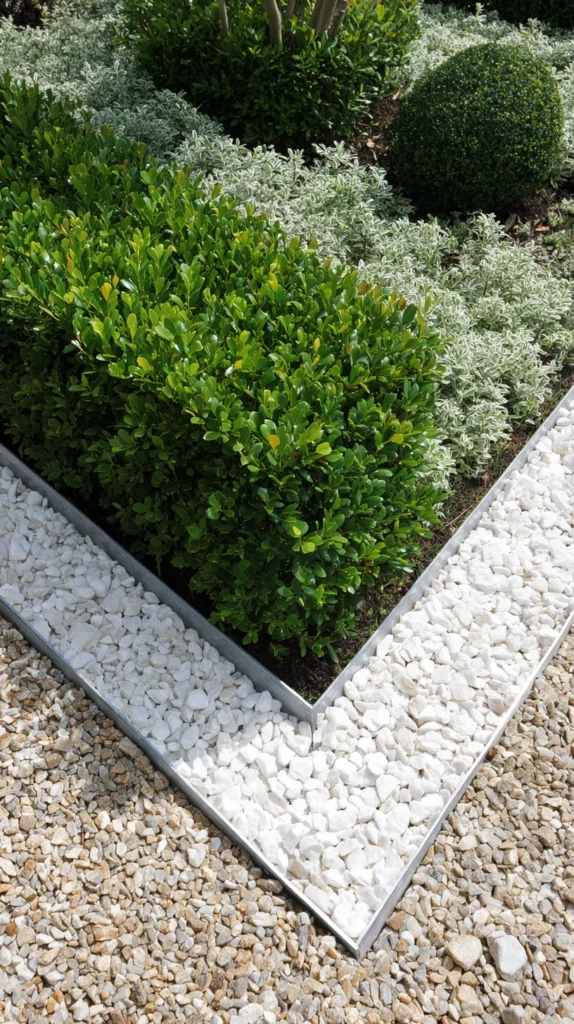
Galvanized steel edging — a step down from Corten in price while maintaining the sharp, precise line that metal edging delivers — brings an industrial refinement to the flower bed boundary that suits contemporary, modernist, and urban garden styles with particular aptness.
The galvanized surface has a cooler, more silver tone than Corten’s warm rust, and its geometric precision makes it the natural choice for beds with formal, rectilinear geometry — the straight lines and right angles of a contemporary productive garden or a modernist terrace planting.
Galvanized steel does not develop the dramatic visual character of Corten’s patina, which some consider a limitation and others a virtue — the consistent, neutral silver of the galvanized surface is unobtrusive in a way that allows the planting to read without competition from the edging material.
The steel comes in flexible strip form that can accommodate gentle curves, and in rigid profile sections for perfectly straight runs, and both formats are available at significantly lower cost than equivalent Corten products.
7. Woven Willow or Hazel Hurdle Edging
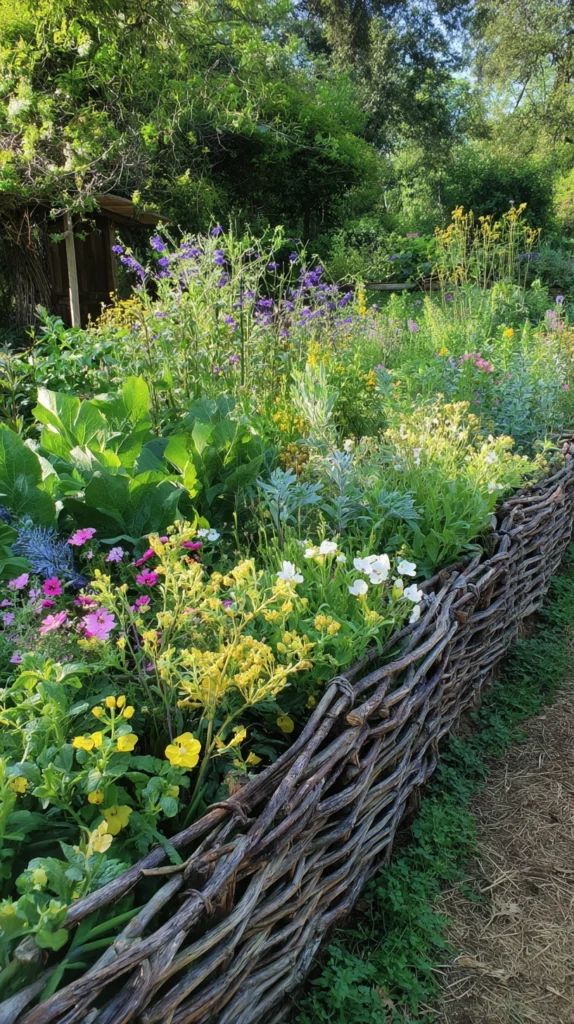
Woven willow or hazel edging — miniature hurdle panels woven from flexible willow or hazel whips and used as a low boundary along the front of a planted bed — brings a craft tradition of considerable antiquity to the contemporary garden and creates a flower bed edge of extraordinary warmth, texture, and naturalistic character.
These edgings are the horticultural equivalent of the full-sized hazel hurdle used as a garden screen — the same weaving technique applied at a smaller scale to create a boundary that is simultaneously a piece of traditional craftsmanship and a practical garden edge. They suit cottage garden planting, naturalistic borders, potager vegetable gardens, and any outdoor space where handmade natural material is valued as an aesthetic principle.
Their lifespan — typically four to eight years depending on climate and the quality of the coppiced material used — is shorter than metal or stone alternatives, but their low cost and complete biodegradability make replacement straightforward, and the replacement process itself maintains the garden’s connection to the seasonal cycle of coppice woodland from which the material comes.
8. Concrete Edging in a Custom Poured Form
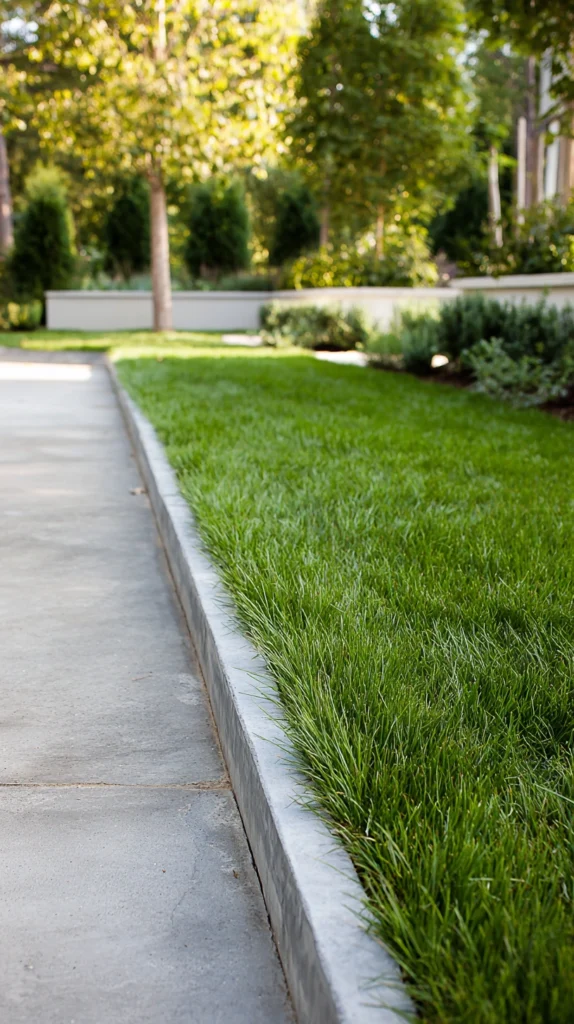
Poured concrete edging — a continuous concrete strip cast in place along the bed’s boundary using a simple formwork of timber boards as a mould, finished flush with the surrounding lawn or path surface — is one of the most durable, most maintenance-free, and most customizable edging solutions available at any price point, and its association with purely utilitarian applications has prevented it from receiving the design attention it deserves.
Poured in a continuous form, concrete edging eliminates the joints and transitions that expose other edging types to movement and settlement, and its durability — concrete edging correctly installed will outlast virtually every other material available — makes its per-year cost extremely competitive.
The design options are broader than most people realize: the surface can be brushed, stamped, colored with pigment, or aggregate-exposed for different visual effects; the edge profile can be given a simple chamfer or a rounded form rather than a flat top; and the width and depth can be adjusted to suit the bed’s scale and the surrounding surface material.
9. Bamboo Roll Edging for an Organic Transition
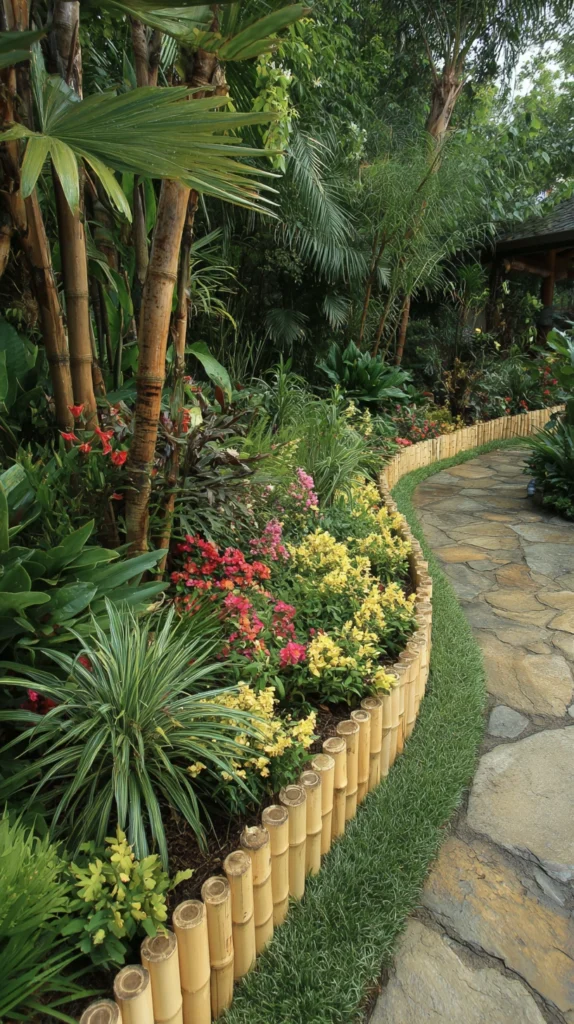
Bamboo roll edging — sections of bamboo culm wired together into a flexible roll that can be pushed into the soil along a bed’s boundary — creates an organic, textural edge with the warm honey and straw tones of natural bamboo that suits Asian-influenced, tropical-inspired, and naturalistic garden styles with particular authenticity.
The round profile of the individual bamboo sections creates an edge that is softer in character than the flat profile of metal and timber alternatives, and the visible texture of the bamboo culms — their surface nodes, slight variation in diameter, and gradual weathering to silver gray over time — gives the edging a material interest that more uniform alternatives lack. Bamboo roll edging is one of the most accessible products in the edging category, widely available and economically priced, and its ease of installation — simply unroll, cut to length, and push into the soil — makes it one of the fastest flower bed upgrades available.
It is not the most durable option on this list, requiring replacement every three to five years, but for the gardener who values the process of seasonal garden maintenance rather than resenting it, this frequency is not a significant objection.
10. Flint and Stone Cobble Edging for Rustic Character
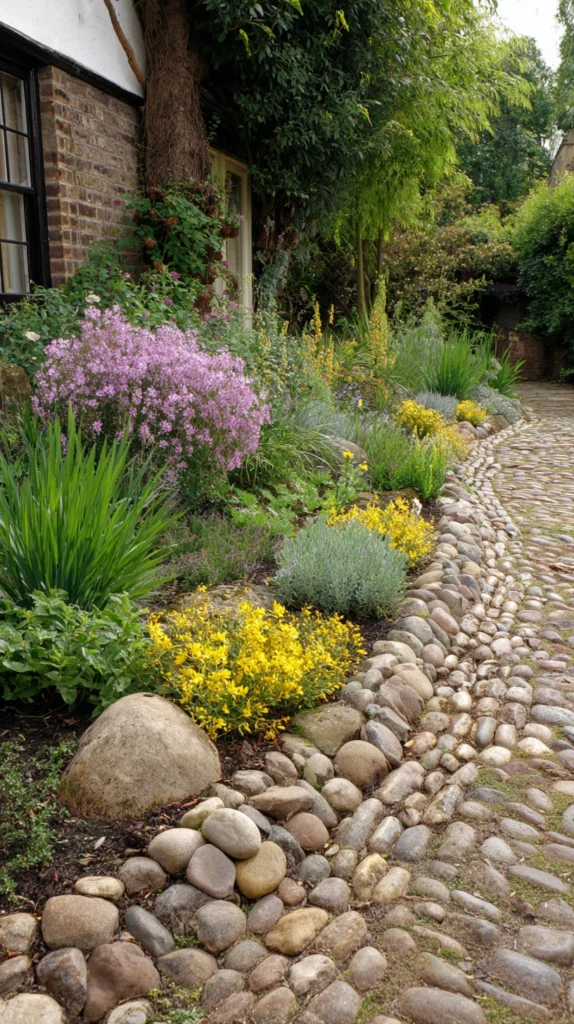
A row of flint stones, river cobbles, or small rounded boulders laid along the boundary of a flower bed creates an edging of completely natural origin and very considerable visual character — the organic variety of stone shapes, sizes, and surface textures producing a boundary that looks gathered rather than manufactured and that suits naturalistic, wildlife, and wild garden styles with perfect authenticity.
Flints are the material of choice in chalk and limestone landscapes, their dark, glassy surfaces providing a dramatic contrast with pale stone paths and the green of lawn. River cobbles — the smooth, rounded stones deposited by glacial and fluvial action — suit any garden context and are available from landscape suppliers in a range of sizes.
The stones should be partially buried for stability, with the largest diameter at or below the soil surface so that the visible stones sit stably in their positions without rocking when touched. The gaps between stones can be filled with fine gravel, moss, or allowed to fill naturally with the low-growing plants that will self-seed into them from the adjoining bed.
11. Recycled Glass Bottle Edging for Creative Personality
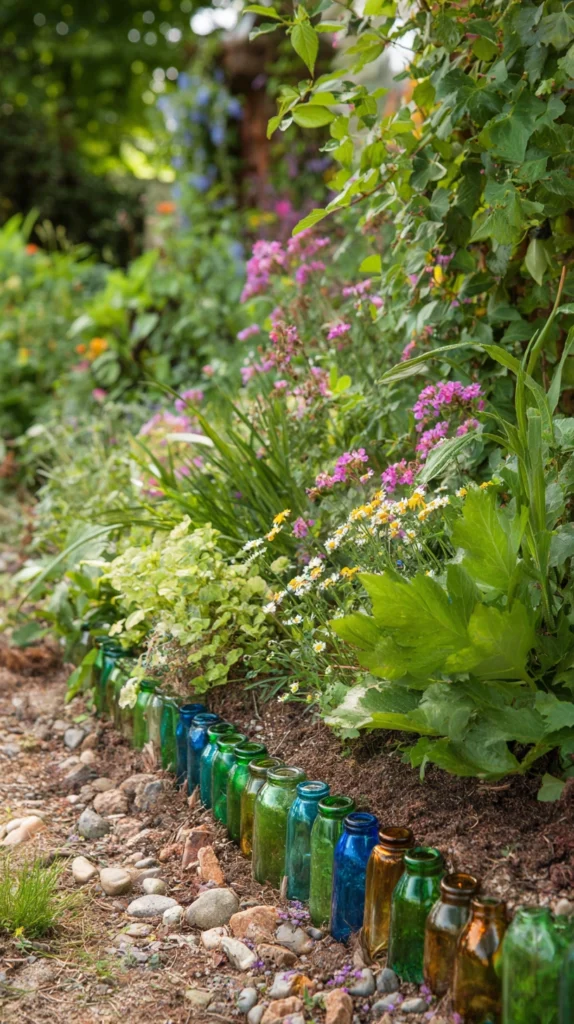
Glass bottle edging — wine, beer, or spirit bottles pushed neck-down into the soil along the bed’s boundary, their bases creating a continuous row of circular glass discs at ground level — is one of those garden edging ideas that divides opinion sharply and pleases those who love it unreservedly.
The colored glass — green wine bottles, brown beer bottles, or deliberately sourced blue and amber glass — creates a mosaic-like visual effect along the bed’s boundary that is unique to this edging type, and in low sunlight, the glass refracts and transmits light in a way that no other edging material can replicate.
It is unambiguously a choice for the garden with a strong personality — the cottage garden, the eclectic kitchen garden, the deliberately quirky outdoor space — rather than for the formally designed or contemporary garden where its improvisational character would create a tonal mismatch.
Its practical advantages — completely free sourcing from recycling, genuine structural effectiveness once the bottles are correctly buried, and unlimited color selection — are meaningful in contexts where budget and creative expression are both priorities.
12. Metal Mesh Edging for Root Barrier and Edge Definition Simultaneously
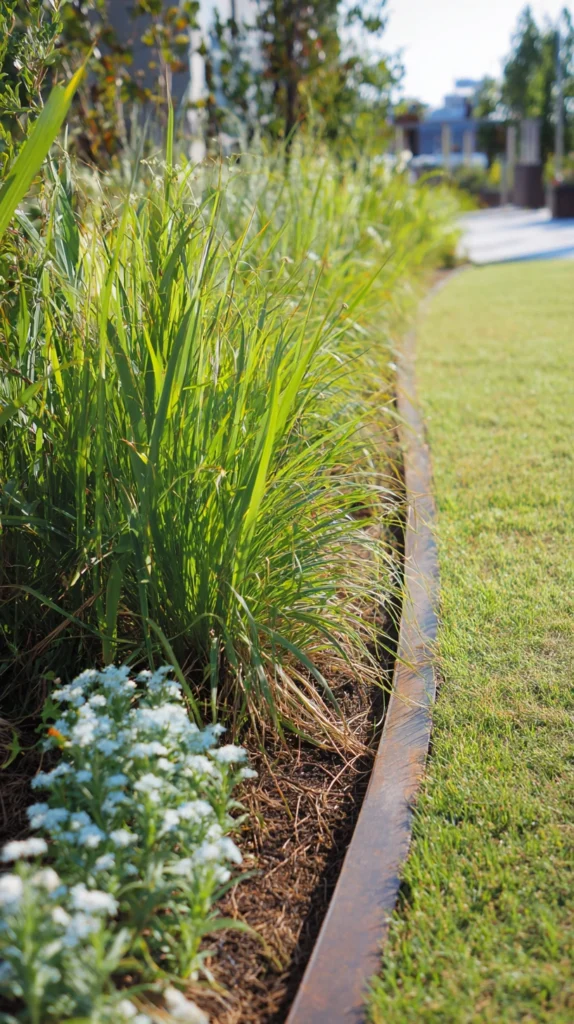
Metal mesh edging — a deeper, perforated or solid metal strip buried to a depth of twenty to thirty centimeters along the bed’s boundary with only a narrow reveal visible at the surface — serves the dual function of defining the bed’s edge visually and creating a physical barrier to the grass and perennial root invasion that gradually destroys an unedged bed’s planting if not managed.
The root barrier function is the practical justification for the additional installation depth and the higher material cost relative to surface-only edging options, and in gardens where invasive grass species or spreading perennial roots are a persistent problem, the investment pays for itself in the reduced maintenance the barrier enables.
At the surface, the narrow metal reveal creates a clean, contemporary edge that reads from a distance as a sharp, precise line without the visual weight of wider edging materials — a quality that suits formal beds and contemporary planting schemes where clean geometry is the design priority.
13. Railway Sleeper Edging for Bold Structural Weight
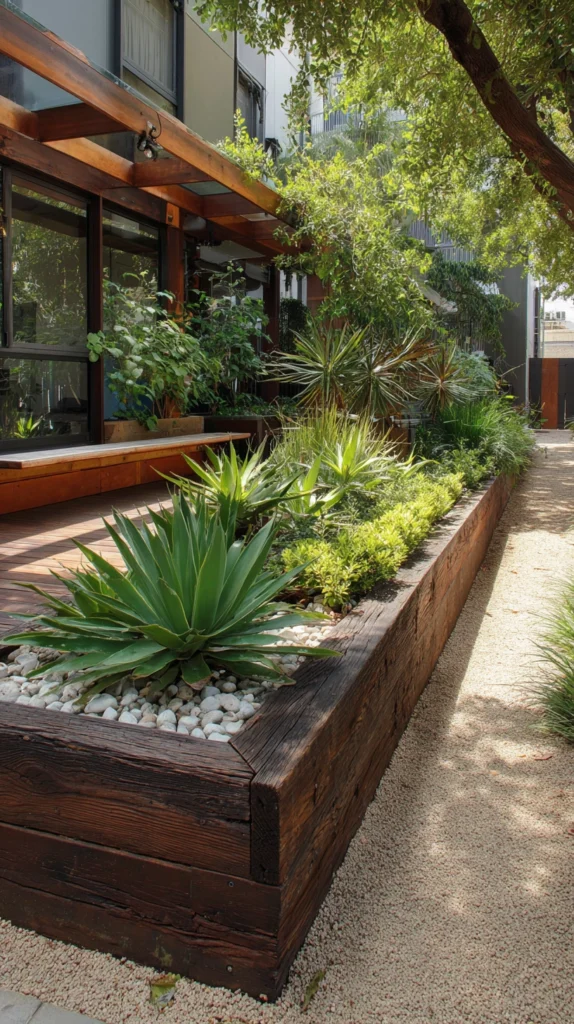
Full-sized railway sleepers used as flower bed edging — laid horizontally along the bed’s boundary rather than the vertical timber board approach described earlier — bring a structural weight and visual boldness that no other timber edging can match, and create a boundary that functions simultaneously as an edging, a raised bed wall, and a potential seating surface along the bed’s perimeter.
The scale of a sleeper edging transforms the flower bed from a planted area at ground level into something with genuine architectural presence — the thick, dark timber standing proud of the surrounding surface creates a raised planting zone that changes the spatial character of the garden area it defines.
New oak sleepers in untreated form will weather beautifully over several seasons to a silver gray. Reclaimed railway sleepers bring an additional layer of material history — the dark, oiled surface of a sleeper that has spent decades in railway service has a depth and richness of tone that new timber cannot replicate.
Ensure that any reclaimed sleepers used are of the non-creosoted variety, as creosoted sleepers leach toxins into the surrounding soil that are harmful to plants and soil life.
14. Rope Edging for a Nautical and Informal Touch
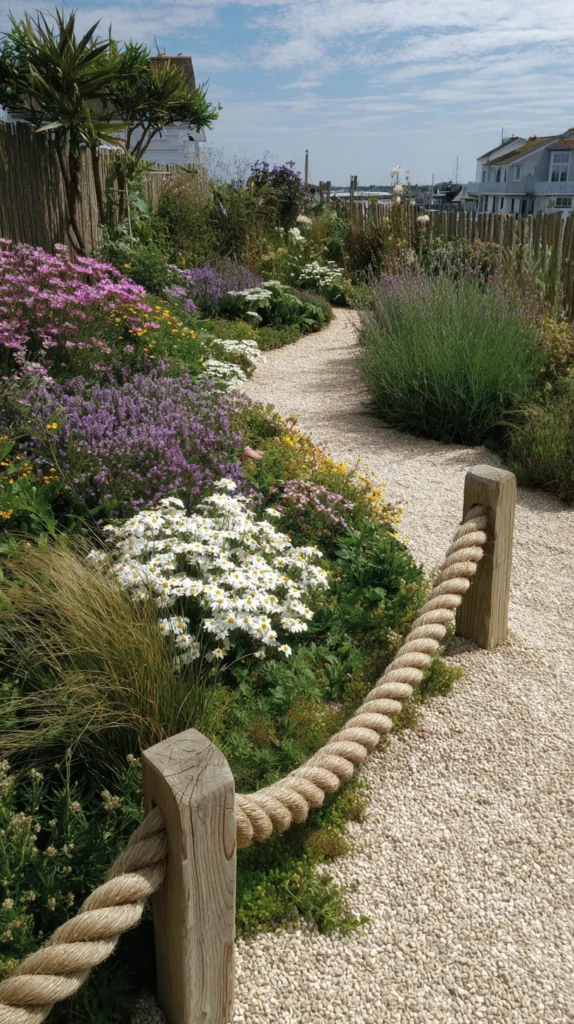
Thick natural rope — manila, sisal, or jute in a diameter of three to five centimeters — laid along the bed’s boundary and secured at intervals with short wooden pegs or metal U-staples driven through the rope into the ground creates a flower bed edging of considerable informal charm that suits coastal, cottage, and relaxed garden styles with a warmth and approachability that harder materials cannot match.
The rope edge is the softest visual boundary available in the edging category — it suggests rather than declares the bed’s boundary, and its natural fiber tones sit quietly within the planted context rather than asserting themselves as a design statement.
It is also among the most accessible edging options in terms of cost and installation ease, as rope requires no tools to install beyond the pegs or staples that secure it. Its lifespan is limited by the rate at which natural fiber degrades in soil contact — typically three to five years for jute and sisal, longer for Manila hemp — and replacement is as simple as installation.
15. Living Grass or Plant Edging for a Fully Organic Boundary
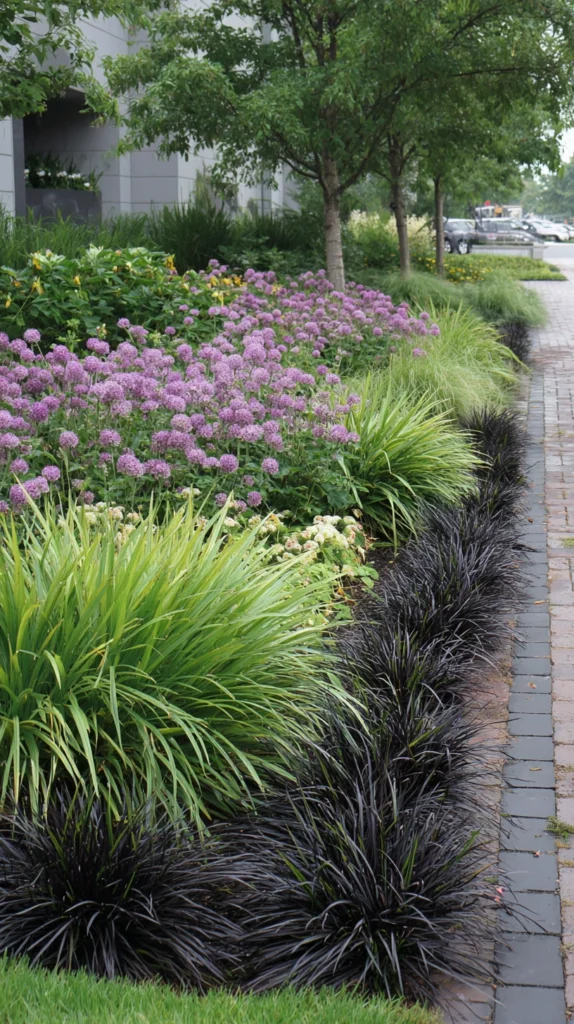
The most naturalistic and most ecologically connected flower bed edging available is a living one — a low-growing grass, groundcover, or edging plant deliberately planted along the bed’s boundary to create a biological rather than material definition of the planted area. Ophiopogon japonicus — black mondo grass — creates a striking, dark-toned living edge that suits contemporary and Asian-influenced garden styles.
Armeria maritima — sea thrift — forms a mounding, flowering edge with pink pompom flowers that suits coastal and cottage gardens. Liriope muscari creates a dense, grassy edge of considerable structural presence. Thyme, chamomile, and mind-your-own-business all create low-growing, soft-textured living edges that are fragrant and entirely organic.
The living edge requires more maintenance than hard edging — it must be trimmed to maintain its boundary function and managed to prevent it from spreading into the bed it is supposed to define — but the beauty of a flower bed whose boundary is itself a designed element of the planting composition, rather than a separate inert material, is one that rewards the additional effort with a naturalness and integration that no manufactured edging can achieve.