
15 Farmhouse Dining Room Design and Decor Ideas
The farmhouse dining room is one of the most enduringly popular interior styles for good reason. It is warm, welcoming, unpretentious, and built around the idea that the dining room should feel like the heart of the home — a place where people genuinely want to gather, linger, and stay long after the plates have been cleared.
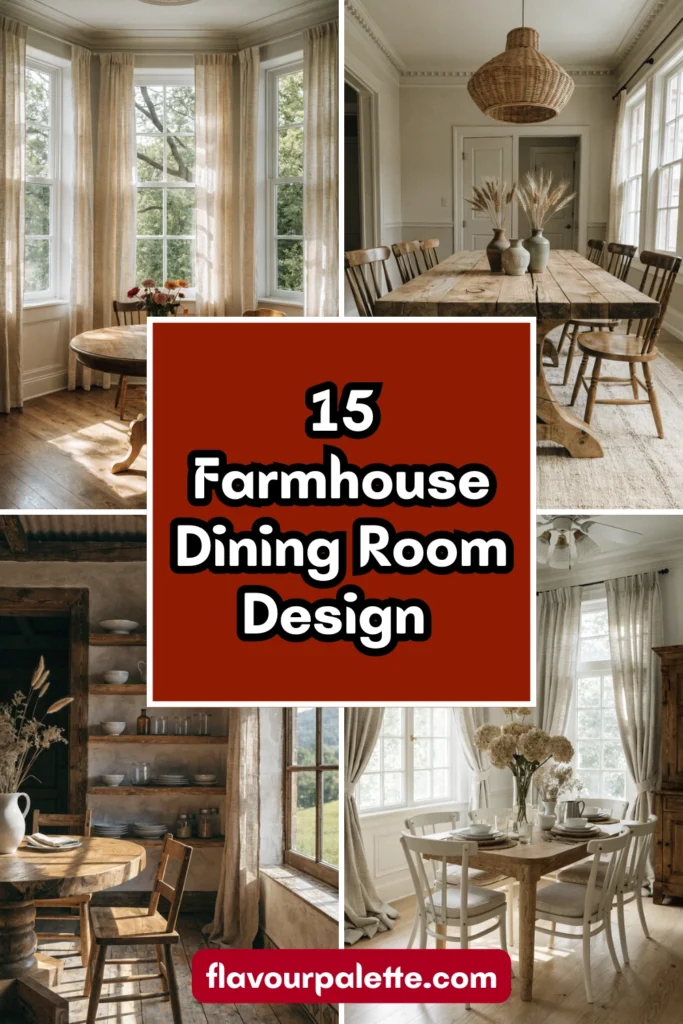
What makes farmhouse style so appealing is its accessibility. It does not demand perfection. Slightly worn furniture, mismatched chairs, exposed wood grain, and imperfect textures are not flaws in a farmhouse dining room — they are features. The style celebrates the beauty of real, lived-in spaces over showroom-perfect interiors that no one feels comfortable using.
Here are 15 farmhouse dining room design and decor ideas that bring warmth, character, and genuine personality to one of the most important rooms in the home.
1. Reclaimed Wood Dining Table as the Centrepiece
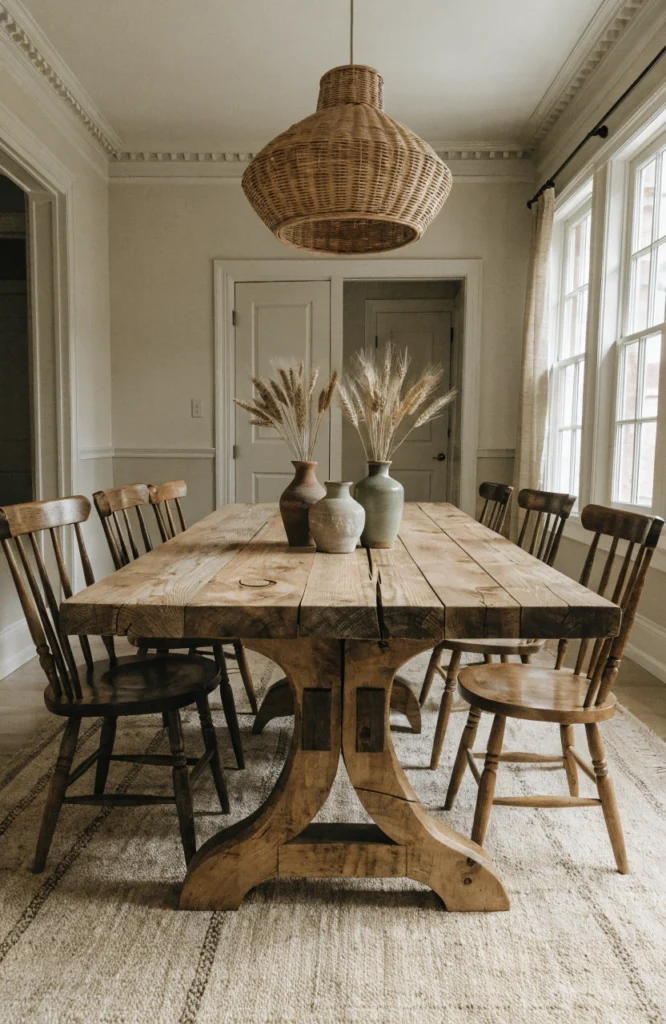
In a farmhouse dining room, the dining table is everything. It is the anchor around which every other design decision is made, and nothing sets the tone more effectively than a large, solid reclaimed wood dining table with real character — knots, grain variation, saw marks, and the natural imperfections that only come with genuinely aged timber.
Source a reclaimed wood table from a salvage specialist, a bespoke furniture maker, or build one yourself from scaffold boards or old barn timber. The key is scale — go larger than you think you need. A farmhouse table should feel generous and substantial, capable of seating more people than you usually have and making every meal feel like a proper occasion.
Pro Tip: Finish a reclaimed wood dining table with a hard-wearing natural oil rather than a film-forming lacquer or varnish. Oil penetrates the wood and protects from within while preserving the natural texture and character of the surface. A lacquered finish sits on top of the wood and eventually chips and peels — an oiled finish simply needs reapplying periodically and improves with age.
2. Mix and Match Dining Chairs for Relaxed Character
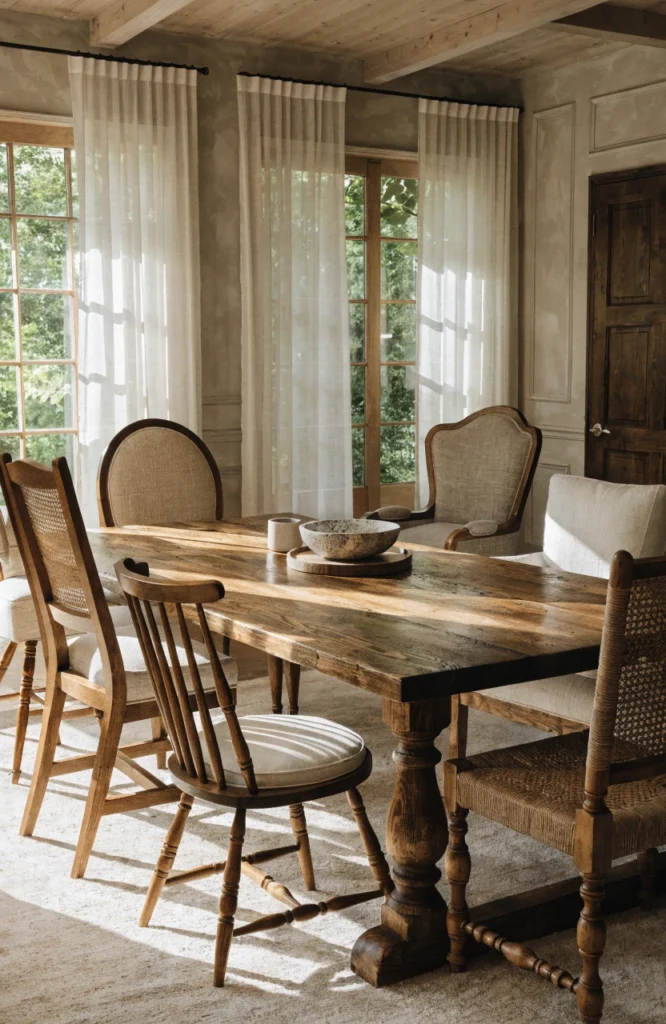
One of the most defining features of the farmhouse dining room aesthetic is the deliberate mix of different chair styles around the table. Rather than a perfectly matched set of identical chairs, a farmhouse dining room embraces variation — different chair backs, different materials, different heights — united by a consistent color or material thread that ties everything together.
Try wooden dining chairs in varying styles, painted the same shade of white or cream, or mix upholstered chairs at the ends of the table with simpler wooden chairs along the sides. The effect is casual, collected, and deeply inviting — the visual opposite of the stiff, formal dining room that nobody actually feels comfortable in.
Pro Tip: When mixing chair styles, limit yourself to two or three different designs rather than introducing too many variables. Two styles alternated around the table, which looks deliberately considered. Five or six different designs can start to look chaotic rather than curated. Restraint in the variety creates the relaxed effect without tipping into visual confusion.
3. Shiplap or Tongue and Groove Feature Wall
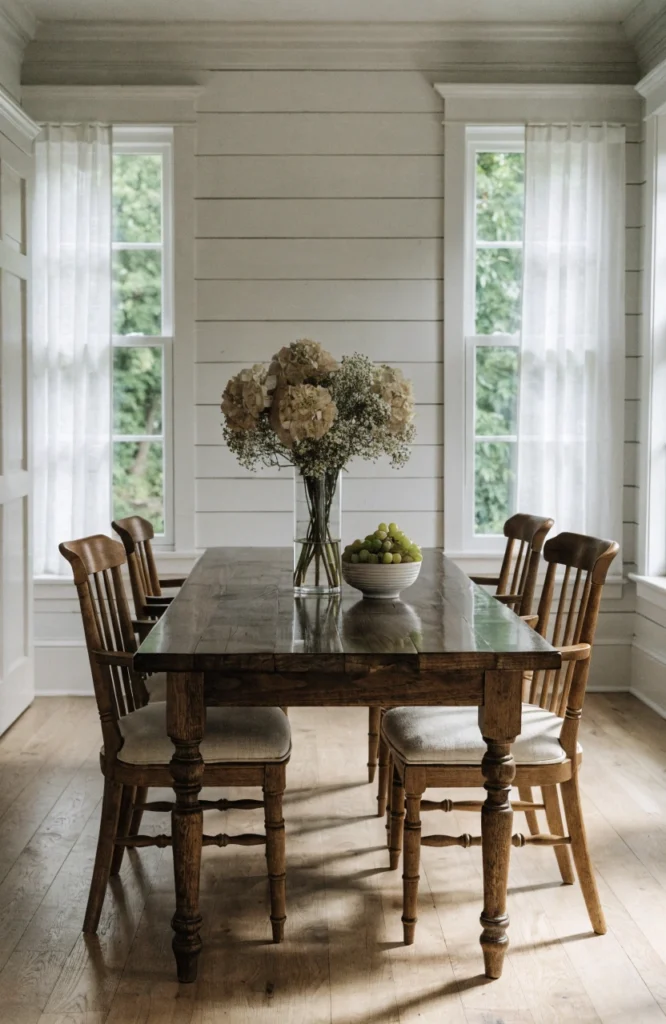
Wall panelling — whether classic shiplap, tongue-and-groove boards, or beadboard — is one of the most quintessential farmhouse interior elements and works beautifully in a dining room as either a full-wall treatment or a dado-height feature that runs along the lower portion of the walls.
Painted in crisp white, warm cream, or soft sage green, a shiplap feature wall behind the dining table creates a backdrop that is both textural and architectural, adding visual interest to the room without the complexity or commitment of wallpaper. It is a relatively straightforward DIY project, and the transformation it delivers to a plain dining room is genuinely dramatic.
Pro Tip: Paint shiplap or tongue-and-groove panelling in the same color as the surrounding walls, rather than in a contrasting tone, to make the texture read as a sophisticated architectural detail rather than a bold feature. Same-color panelling creates a subtle, layered effect that reads as considered and refined. High-contrast panelling makes a bolder statement that suits larger, more confident dining rooms.
4. Farmhouse Pendant Lighting Above the Table
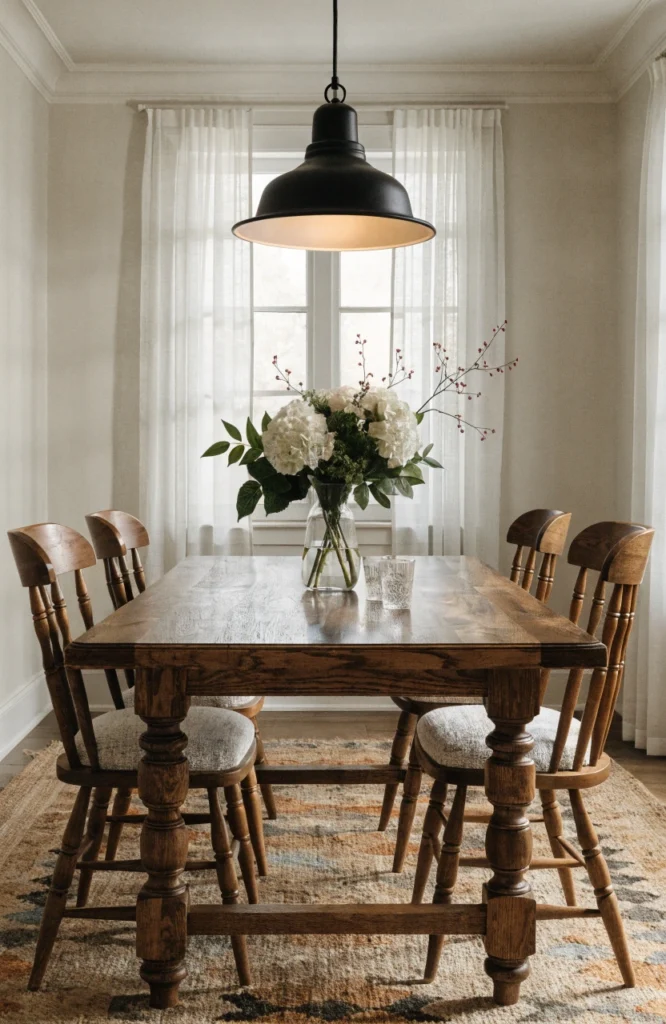
Lighting is one of the most impactful elements in any dining room, and in a farmhouse space, the pendant light above the table serves as both a functional light source and a key decorative element. Industrial-style metal pendants, woven rattan shades, aged brass fixtures, and lantern-style pendants all work beautifully in a farmhouse dining room.
Hang the pendants low enough to feel intimate and focused over the table — around 70 to 80 centimetres above the table surface is the standard starting point, adjusted up or down depending on your ceiling height and the fixture size. A row of three smaller pendants works beautifully over a long rectangular farmhouse table as an alternative to a single large fixture.
Pro Tip: Always use warm white bulbs — around 2700K — in dining room pendant lights. Cool or daylight bulbs create a clinical, unflattering light that makes food look less appealing and people look washed out. Warm light makes everything in a dining room look more beautiful — the food, the table setting, the room, and the people gathered around it.
5. Open Shelving with Styled Dishware Display
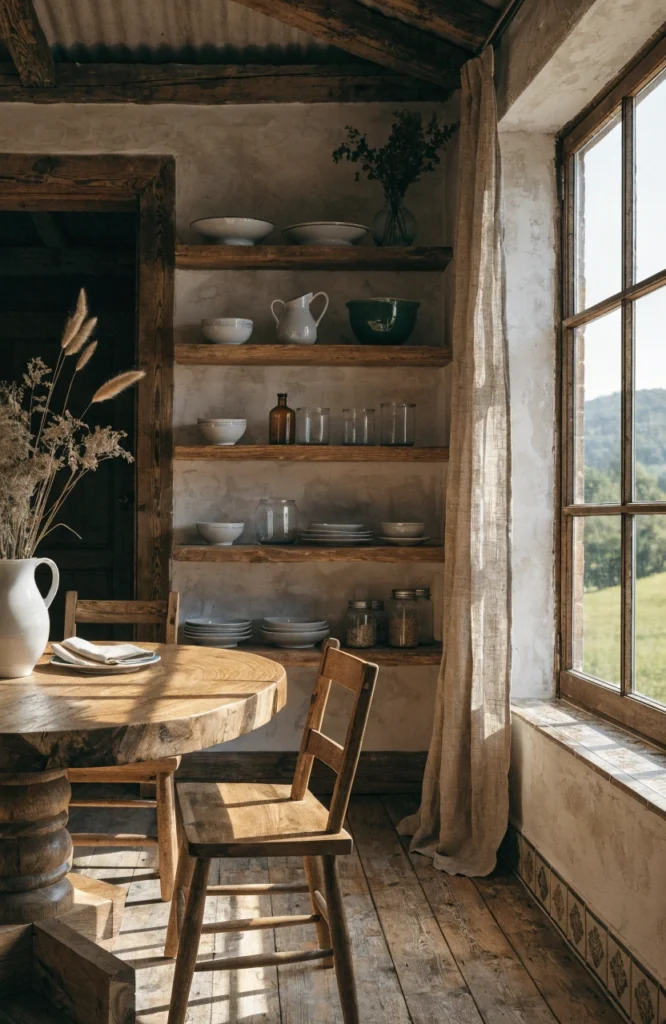
Open shelving in a farmhouse dining room — whether a set of floating timber shelves on one wall or a built-in dresser unit — creates a display opportunity that is both practical and deeply decorative. Styled dishware, stacked plates, vintage ceramics, glass jars, linen napkins, and seasonal decorative objects all contribute to a display that feels curated and lived-in at the same time.
The key to open shelving that looks intentional rather than cluttered is editing ruthlessly and repeating elements. Groups of matching or complementary pieces, consistent spacing between items, and a deliberate color palette across the display creates visual order within what might otherwise read as a random collection of kitchen objects.
Pro Tip: Style open dining room shelves in odd numbers — groups of three or five objects rather than two or four. Odd-numbered groupings are visually more dynamic and interesting than even ones, which tend to read as static and formal. Vary the heights within each group — a tall piece beside a medium piece beside a low piece — for a natural, organic arrangement.
6. Farmhouse Bench Seating Along One Side
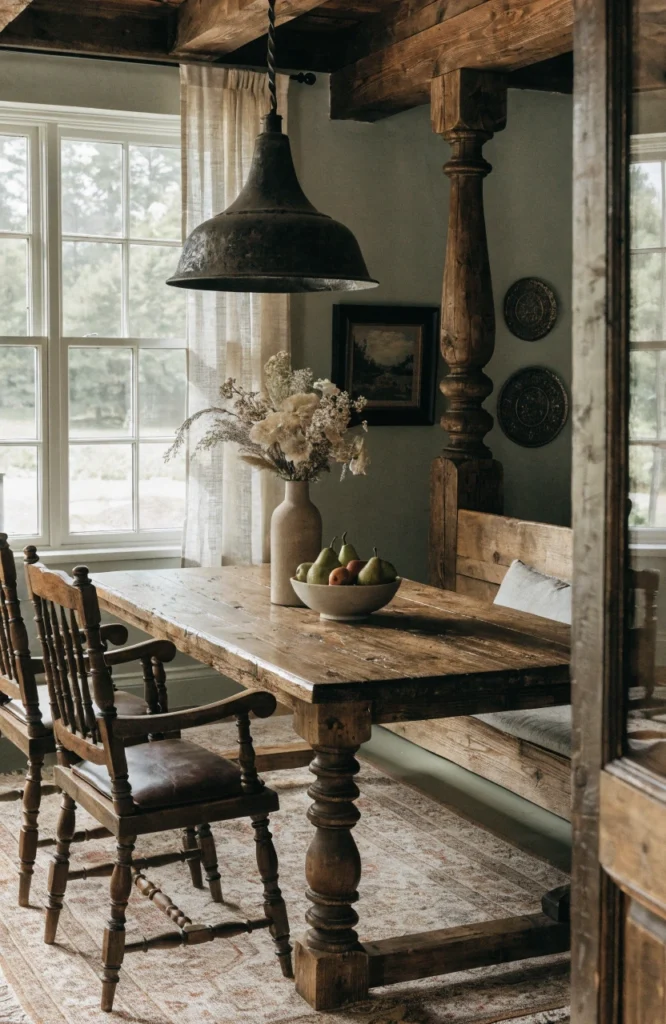
Replacing dining chairs along one or both sides of the farmhouse table with a simple timber bench is one of the most authentic and practical farmhouse dining room moves you can make. Benches are flexible — they seat more people when needed, they tuck neatly under the table when not in use, and they have a casual, communal quality that immediately makes a dining room feel more relaxed and welcoming.
A simple bench built from the same reclaimed timber as the dining table creates a beautifully cohesive look. Alternatively, a painted wooden bench in white or a soft heritage color provides a lighter contrast to a dark wood table. Add a long bench cushion in a ticking stripe, a linen fabric, or a vintage-inspired print for comfort and softness.
Pro Tip: Make bench seating more comfortable for long dinners by adding individual cushions or a long bolster cushion with ties that attach to the bench legs. Cushions make extended sitting significantly more comfortable without compromising the casual, unfussy quality of bench seating — a practical improvement that guests genuinely appreciate during longer meals and gatherings.
7. Vintage Farmhouse Dresser or Buffet
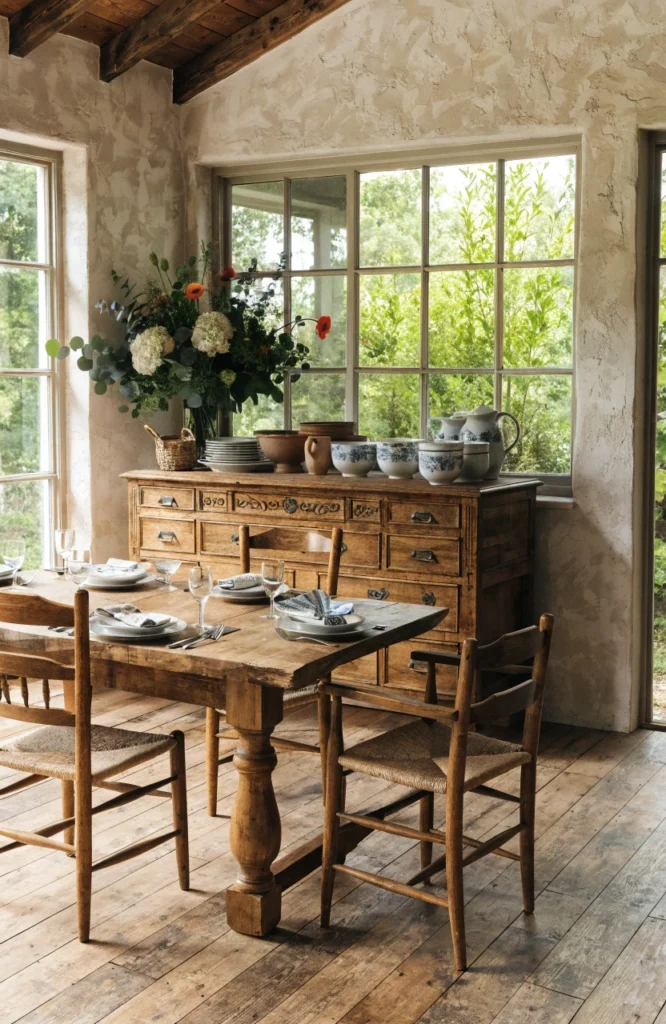
A vintage dresser, sideboard, or farmhouse buffet against one wall of the dining room serves multiple purposes: additional storage for tableware and linens, a surface for serving food and drinks, and a major decorative element that adds age, character, and genuine authenticity to the room.
Look for genuine vintage pieces in pine, oak, or painted timber from antique shops, salvage yards, and online marketplaces. A lightly distressed painted finish in white, cream, or a faded heritage color suits the farmhouse aesthetic perfectly. Style the top with a mix of practical and decorative elements — a stack of plates, a vase of seasonal flowers, a candle, a wooden bowl of fruit.
Pro Tip: Do not over-restore a vintage farmhouse dresser or buffet. Light wear, slightly uneven paint, and minor surface marks are part of what gives genuine antique furniture its character and authenticity. A heavy-handed restoration strips this away and makes a genuinely old piece look like a new reproduction. Clean, stabilise, and protect — but leave the patina intact.
8. Exposed Wooden Ceiling Beams
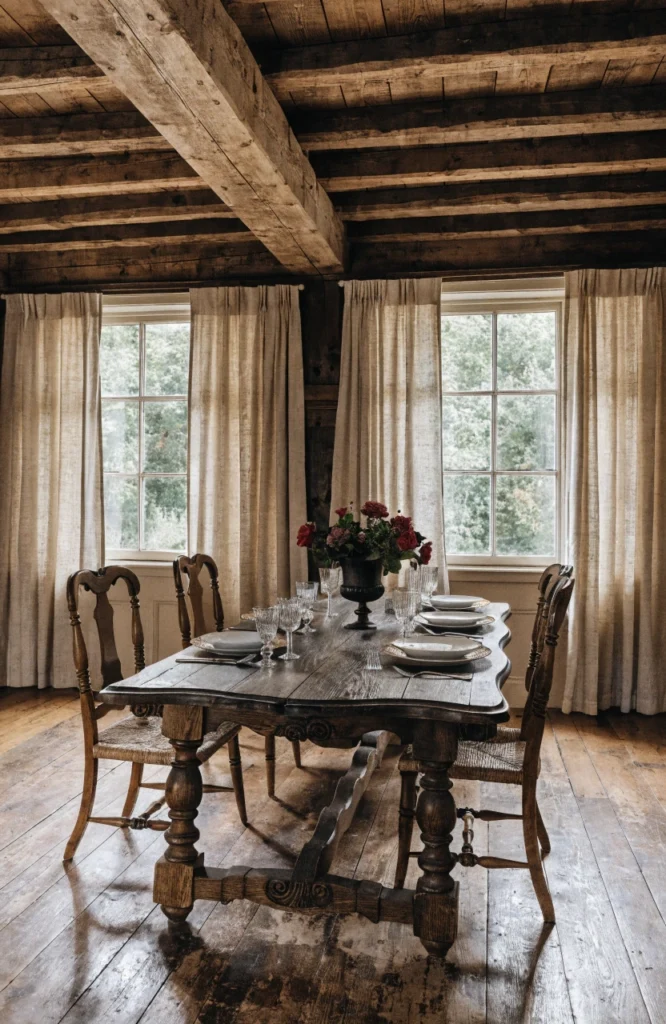
Few architectural features say farmhouse more immediately and powerfully than exposed timber ceiling beams. Whether genuine structural beams revealed by removing a ceiling, added decorative beams applied to an existing ceiling surface, or a mix of both, they transform the entire character of a dining room and create an authentic farmhouse atmosphere that paint and furniture alone cannot achieve.
In a dining room, ceiling beams draw the eye upward, make the space feel taller and more expansive, and add a warmth and texture overhead that complements the natural materials typically found in a farmhouse interior. Dark stained beams against a white ceiling create maximum contrast and drama. Natural or limed beams on a white ceiling feel lighter and more contemporary.
Pro Tip: If adding decorative rather than structural beams, use hollow lightweight timber box beams rather than solid timber. Hollow box beams are far easier to install, significantly lighter, and completely indistinguishable from solid beams once in place. They can be made to any size, stained or painted to any finish, and installed by a competent DIYer in a weekend.
9. Farmhouse Colour Palette — White, Cream, and Warm Neutrals
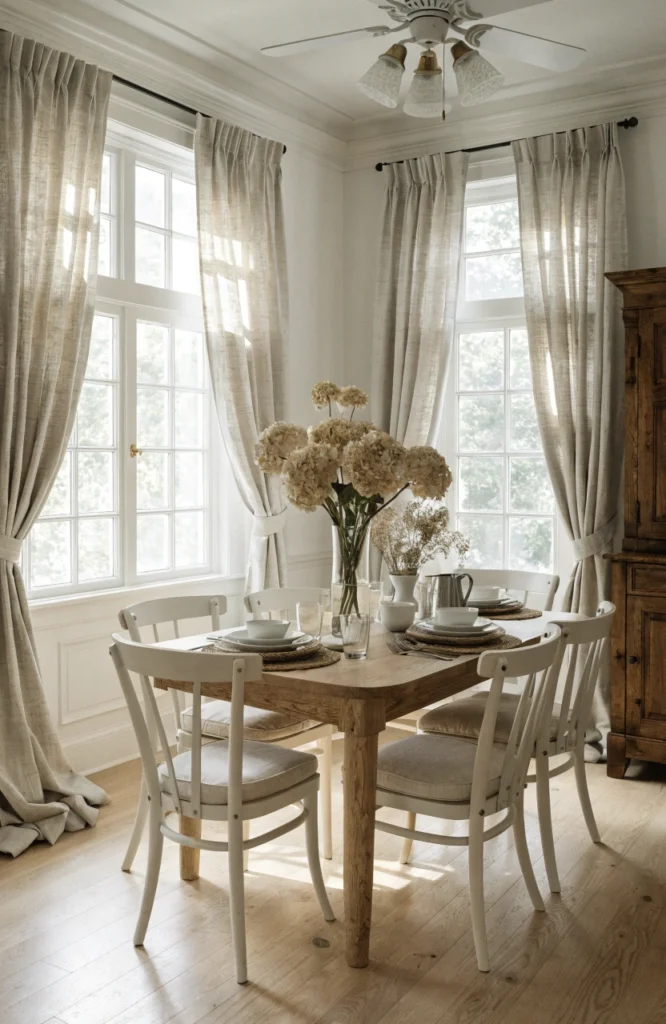
The farmhouse dining room colour palette is built on a foundation of whites, creams, warm beiges, and soft neutrals — shades that reflect natural light, complement timber and natural materials, and create the warm, airy atmosphere that is central to the farmhouse aesthetic. These are colours that feel genuinely timeless rather than trend-dependent.
Layer different whites and creams throughout the room — slightly warm white on the walls, a creamier tone on the woodwork, a linen-coloured tablecloth, off-white chair cushions — for a tonal, layered approach that adds depth without introducing bold colour. Warm wood tones, aged metals, and greenery from plants provide all the contrast the palette needs.
Pro Tip: Introduce one carefully chosen deeper tone into a white and cream farmhouse dining room to anchor the palette and prevent it from feeling washed out or flat. A soft sage green on a feature wall, a dusty blue on a dresser, or a warm charcoal on the ceiling beams gives the eye something to rest on and makes the lighter elements around it read as brighter and more intentional by contrast.
10. Galvanised Metal and Industrial Accents
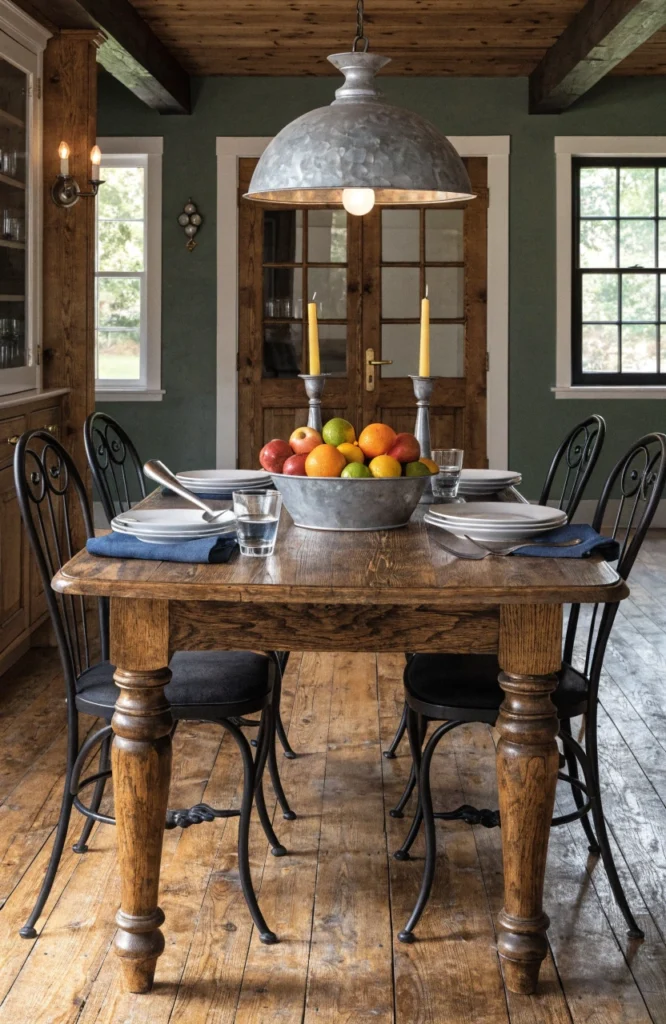
The farmhouse aesthetic has always had one foot in the working farm — practical, hardworking, and unsentimental about materials. Galvanised metal accents connect the dining room to this practical heritage and add an industrial edge that prevents farmhouse style from tipping into anything overly sweet or precious.
Galvanised metal light pendants, zinc-topped side tables, metal-framed chairs or bar stools, and industrial-style wall sconces all bring this harder edge into the dining room beautifully. The contrast between the roughness of galvanised metal and the warmth of timber, linen, and ceramic is one of the defining tensions that gives modern farmhouse style its visual energy.
Pro Tip: Balance galvanised metal accents with plenty of natural softness — linen tablecloths, wooden tableware, ceramic serving pieces, and fresh greenery. Metal without these softer counterpoints can make a farmhouse dining room feel cold and utilitarian rather than warm and welcoming. The metal works best as an accent material rather than the dominant one.
11. Farmhouse Table Styling and Centrepiece Ideas
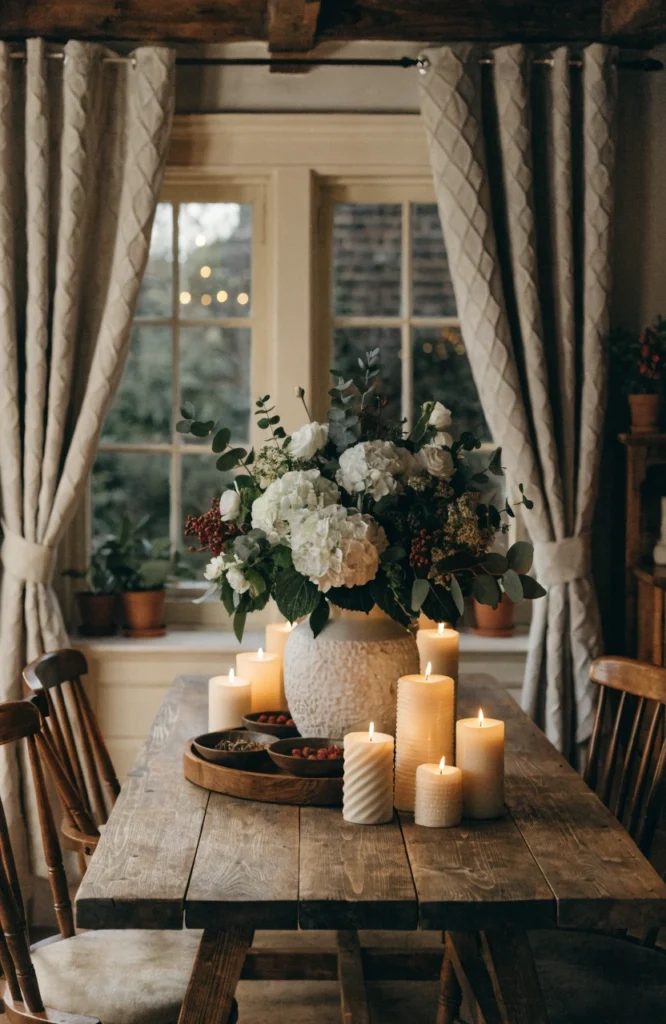
How you style your farmhouse dining table when it is not in use is just as important as the table itself. A beautifully styled farmhouse table centrepiece — simple, natural, and unpretentious — completes the room and creates a focal point that draws the eye and invites people to sit down.
A long timber tray or runner down the centre of the table holding a collection of mismatched candle holders at varying heights, a simple ceramic vase of seasonal flowers or foliage, a wooden bowl of fruit, and a few linen napkins loosely folded creates a centrepiece that feels effortlessly beautiful. Change the seasonal elements throughout the year to keep the table feeling fresh and relevant.
Pro Tip: Use real candles rather than battery-operated alternatives on a farmhouse dining table whenever possible. The quality of candlelight — warm, flickering, alive — creates an atmosphere that no LED alternative genuinely replicates, and on a reclaimed wood farmhouse table surrounded by natural materials, the effect is particularly beautiful. Always use appropriate candle holders and never leave burning candles unattended.
12. Woven Textures and Natural Fabric Linens
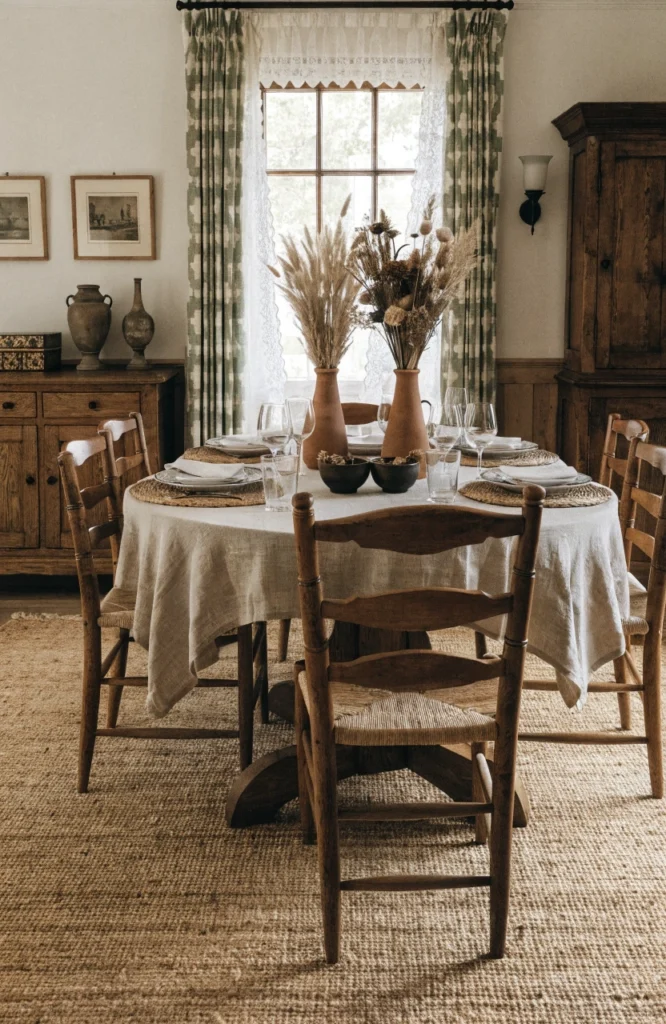
Texture is one of the most important but frequently overlooked elements of farmhouse dining room design. Natural woven textures — linen tablecloths, rattan placemats, jute runners, cotton napkins, wicker baskets — bring warmth, depth, and an organic quality to the table and room that no smooth, synthetic material can replicate.
Invest in a quality linen tablecloth in white, natural, or a soft stripe as the foundation of your table setting. Layer rattan or woven grass placemats on top, add linen napkins loosely arranged rather than precisely folded, and place a woven basket or wooden serving board at the centre. The layering of natural textures creates a table that looks abundant and welcoming.
Pro Tip: Embrace the natural creases and gentle wrinkles of linen tablecloths rather than pressing them to rigid perfection. Lightly wrinkled linen has a relaxed, lived-in quality that suits the farmhouse aesthetic perfectly. Over-pressed linen looks stiff and formal — the opposite of what a farmhouse dining room is trying to achieve. Wash, smooth by hand while damp, and allow to dry naturally.
13. Vintage and Antique Decorative Accessories
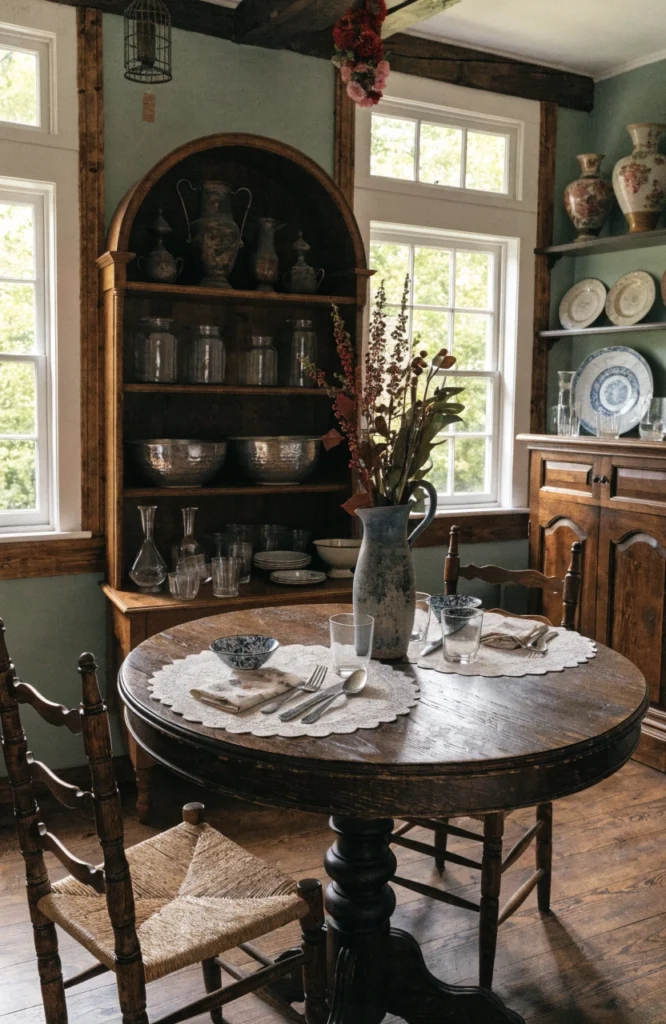
The accessories in a farmhouse dining room should feel collected rather than purchased — as though they have been gathered over years from different places and sources rather than bought as a matching set from a single shop. Vintage ceramic pitchers, antique glass bottles, old wooden bread boards, enamelware, ironstone dishes, and weathered wooden objects all contribute to this authentic, layered quality.
Visit antique shops, flea markets, salvage yards, and charity shops with a clear sense of the colors and materials you are looking for — whites and creams in ceramics, warm wood tones, aged metals and glass — but remain open to unexpected finds. The best farmhouse accessories are often the ones you were not specifically looking for.
Pro Tip: Display vintage and antique accessories in considered groupings rather than scattering them individually around the room. A collection of white ironstone pitchers grouped together on an open shelf has far more visual impact than the same pieces spread across multiple surfaces. Grouping creates a sense of abundance and intention that isolated pieces rarely achieve on their own.
14. Farmhouse Window Treatments — Simple, Natural, and Unfussy
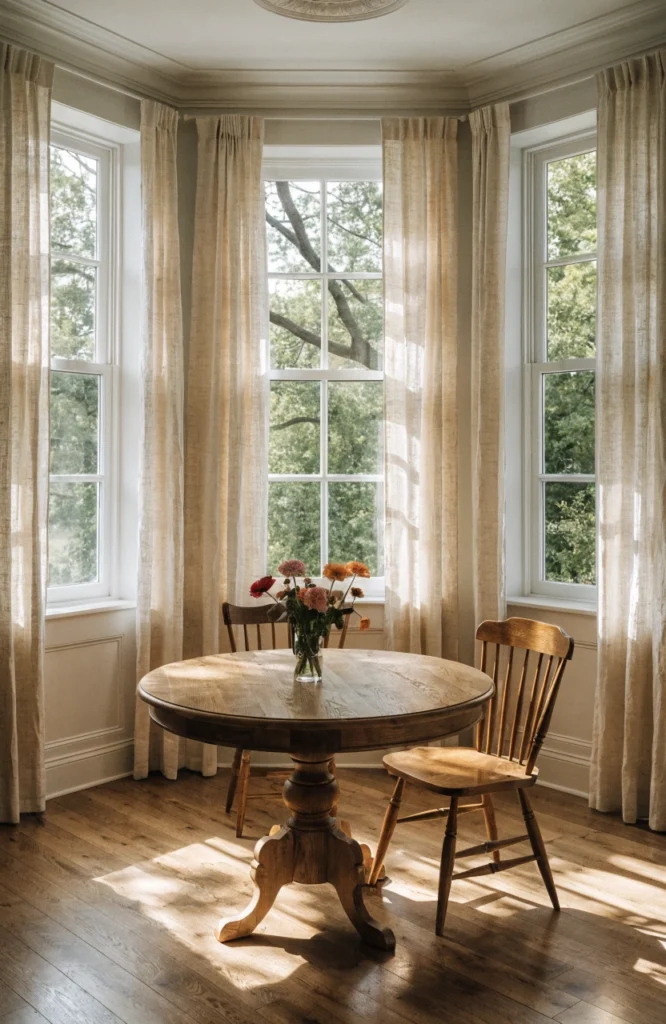
Windows in a farmhouse dining room should be dressed simply and naturally — nothing heavy, elaborate, or formal. Simple linen or cotton curtains in white or a soft natural tone, Roman blinds in a ticking stripe or a subtle check, or wooden shutters that fold back to let in maximum light during the day all suit the farmhouse aesthetic perfectly.
The goal is to frame the window without dominating it. Natural light is one of the most important elements of a farmhouse dining room — the style depends on the warmth and brightness that good natural light delivers — and window treatments should enhance rather than compete with or obstruct it.
Pro Tip: Hang curtain rods significantly higher than the top of the window frame — ideally close to the ceiling line — and extend the rod well beyond the window width on both sides. This makes the window appear taller and wider than it actually is, allows the curtains to frame the window generously without covering any glass when open, and creates an elegant, proportioned look that makes the whole room feel larger and lighter.
15. Fresh Greenery and Seasonal Natural Elements
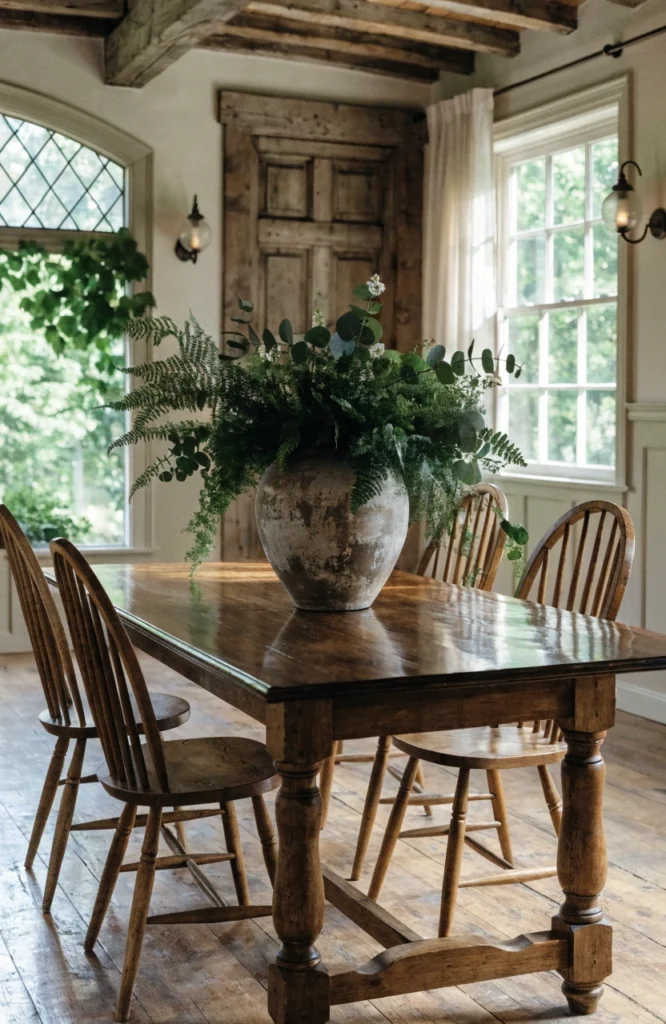
Nothing brings a farmhouse dining room to life quite like fresh greenery and seasonal natural elements. Flowers, foliage, herbs, seasonal branches, dried botanicals, and natural objects from outside — pine cones, seed heads, autumn leaves, citrus fruits — connect the interior to the natural world and give the room a living, breathing quality that no artificial decoration can replicate.
A simple bunch of garden flowers in a vintage ceramic jug, a terracotta pot of fresh herbs on the table, a bundle of eucalyptus in a tall glass vase, or a seasonal wreath on the wall — these are the details that make a farmhouse dining room feel genuinely alive and welcoming every single day of the year.
Pro Tip: Grow a small selection of cut flowers and foliage plants in the garden specifically for use in the dining room. Even a tiny patch dedicated to cornflowers, dahlias, sweet peas, and leafy herbs gives you a supply of fresh, seasonal material throughout the growing months that costs almost nothing and looks far more beautiful and authentic than anything bought from a supermarket.
Set the Table for the Life You Actually Want to Live
A farmhouse dining room is ultimately about one thing — creating a space where people feel genuinely welcome, genuinely comfortable, and genuinely reluctant to leave. The worn timber, the mismatched chairs, the linen tablecloth, and the candles on the table all serve that single purpose.
Design this room with generosity in mind — generous seating, generous table space, generous lighting, and a generous spirit in every decision you make. A dining room designed for real life, real people, and real meals together is always the most beautiful room in the home.