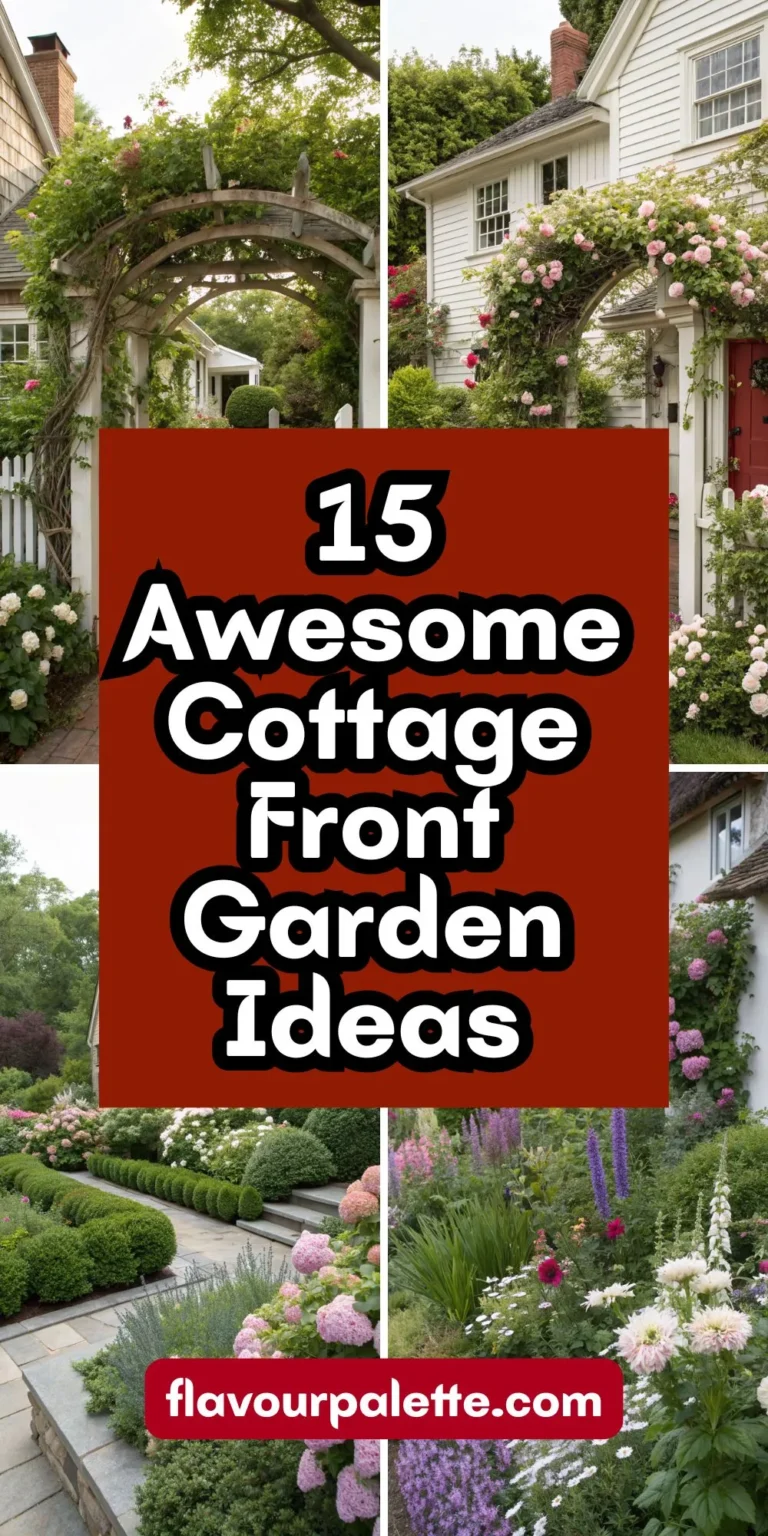
14 European Summer Garden Ideas That Are Trending Everywhere
European summer gardens embody centuries of horticultural tradition blended with contemporary design sensibilities, creating outdoor spaces that balance romantic abundance with sophisticated restraint. These influential gardens inspire global trends through their masterful plant combinations, architectural elements, and the effortless elegance that comes from understanding both formal design principles and nature’s organic beauty.
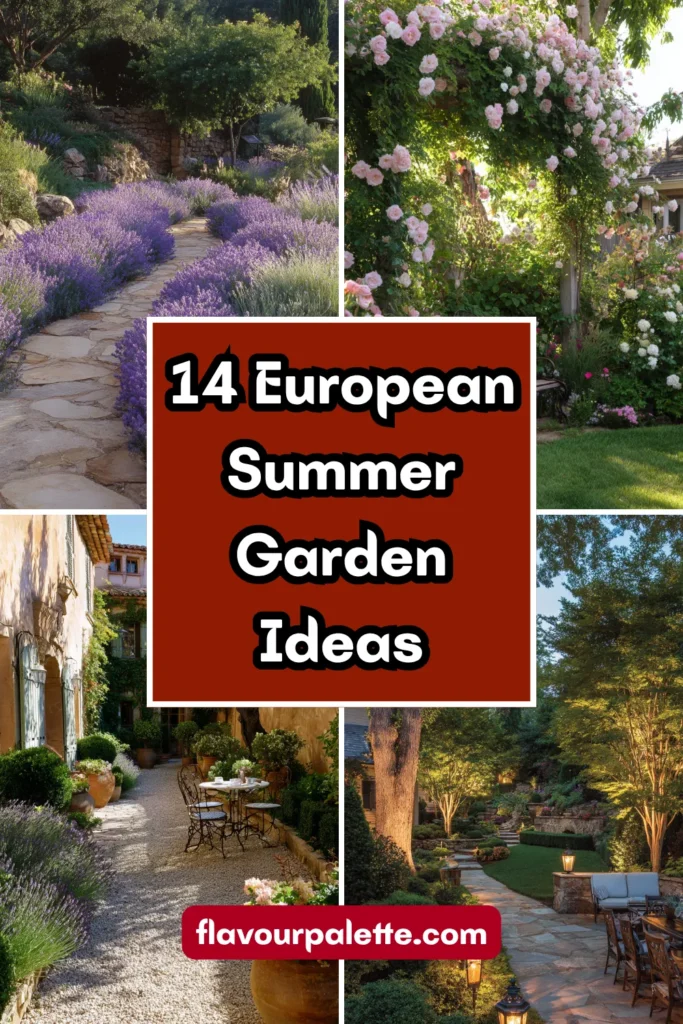
The appeal lies in their ability to feel simultaneously structured and wild, cultivated yet natural, creating gardens that appear to have evolved gracefully over generations rather than being recently installed.
These 14 European summer garden ideas capture trending elements from across the continent, demonstrating how to incorporate French formal gardens’ geometry, English cottage gardens’ abundance, Mediterranean courtyard intimacy, and Scandinavian minimalism into gardens that feel authentically European, regardless of actual location.
1. Gravel Courtyard Gardens
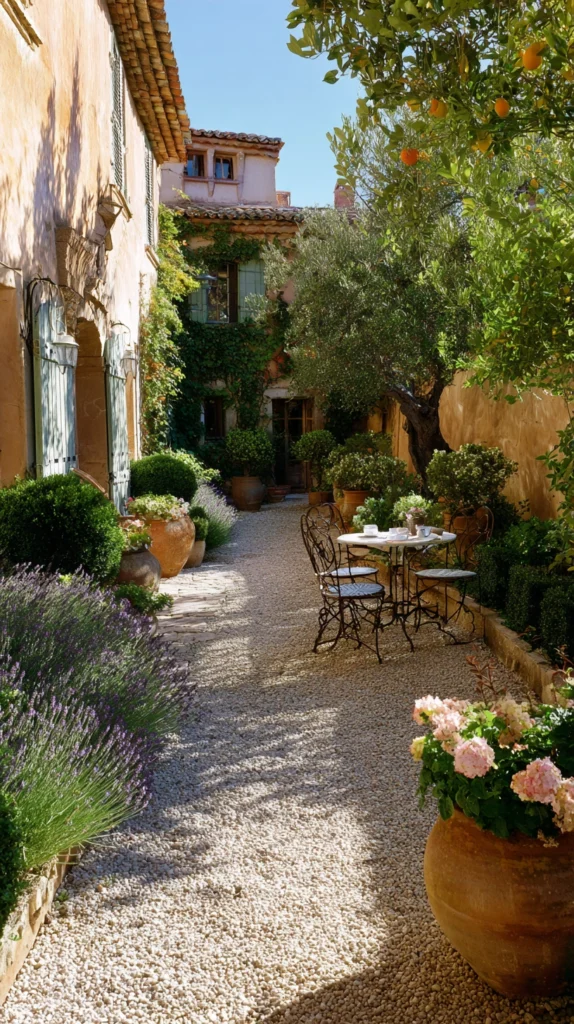
Create intimate outdoor rooms using fine gravel surfaces bordered by low hedges, aromatic herbs, and terracotta containers channeling Mediterranean and French potager aesthetics. Lay permeable landscape fabric beneath gravel, preventing weeds while allowing excellent drainage, then edge with clipped boxwood or lavender, creating defined boundaries.
Position containers strategically, holding citrus trees, olive specimens, or abundant flowers, creating focal points within the gravel expanse. The gravel eliminates lawn maintenance while its neutral tone provides versatile backdrops for rotating seasonal plantings, and the crunching sound underfoot adds sensory dimension to garden experiences.
2. Formal Boxwood Parterre
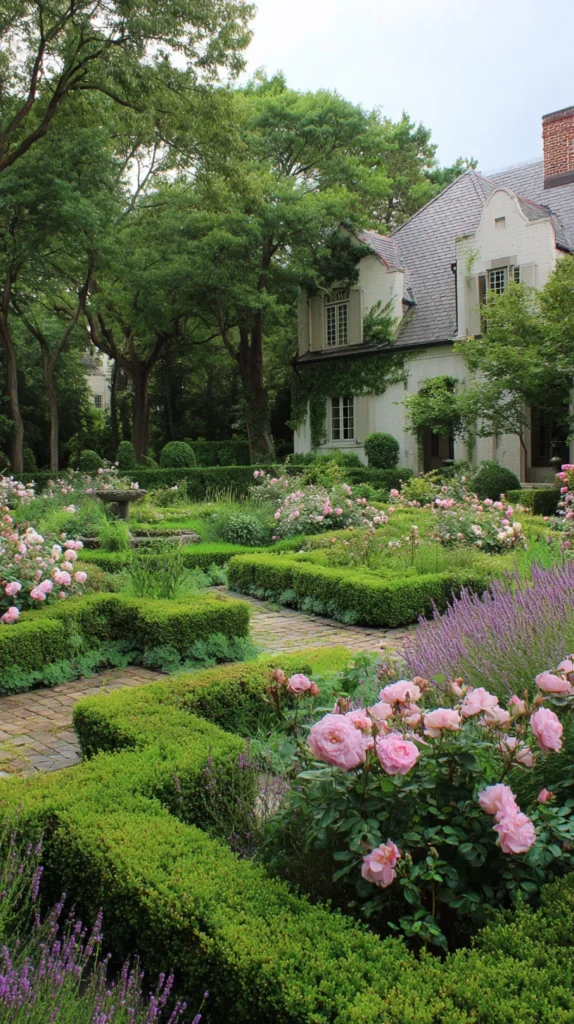
Design geometric gardens using low boxwood hedges arranged in traditional parterre patterns, creating structured elegance and year-round architectural interest. Plant boxwood in precise geometric shapes like squares, circles, or interlocking curves, maintaining consistent heights through regular shearing.
Fill interior sections with seasonal flowers, changing displays throughout the year, or plant with single varieties like lavender or roses, creating abundant contrast against the evergreen structure. The formal geometry provides winter interest when perennials are dormant, while the clipped precision communicates garden investment and maintenance commitment.
3. Cottage Garden Abundance
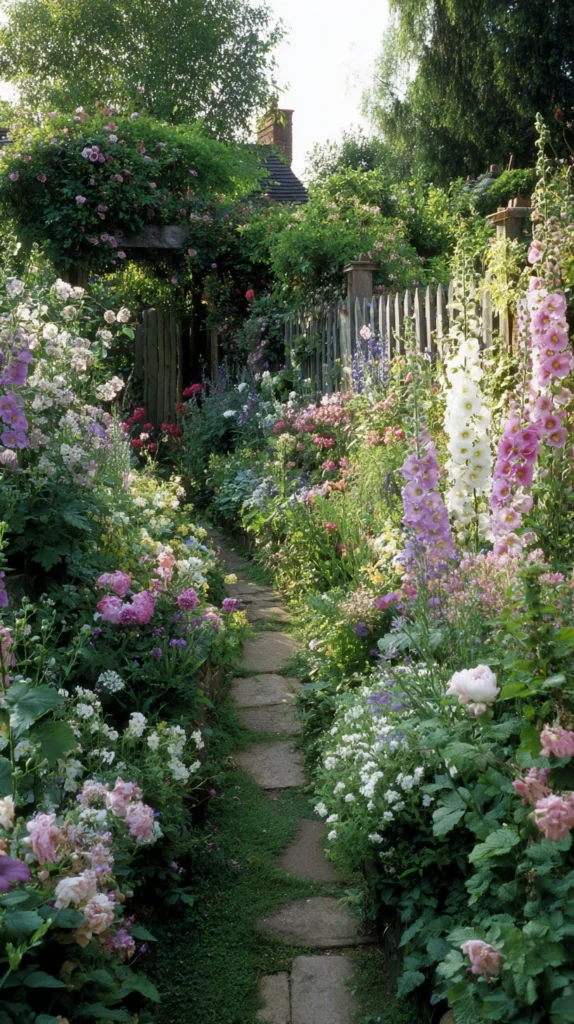
Embrace romantic profusion through densely planted borders combining perennials, annuals, roses, and self-seeding flowers, creating the seemingly haphazard abundance characterizing English cottage gardens. Layer plants by height, placing tall delphiniums, hollyhocks, or foxgloves at back edges, medium roses and peonies in middle zones, and low lavender or catmint spilling onto pathways.
Allow plants to intermingle and self-seed, creating the natural organic appearance that defines cottage aesthetics, while regular deadheading maintains continuous bloom. The abundant plantings create immersive garden experiences where pathways disappear into flower-filled borders, inviting exploration and discovery.
4. Pergola-Covered Dining Areas
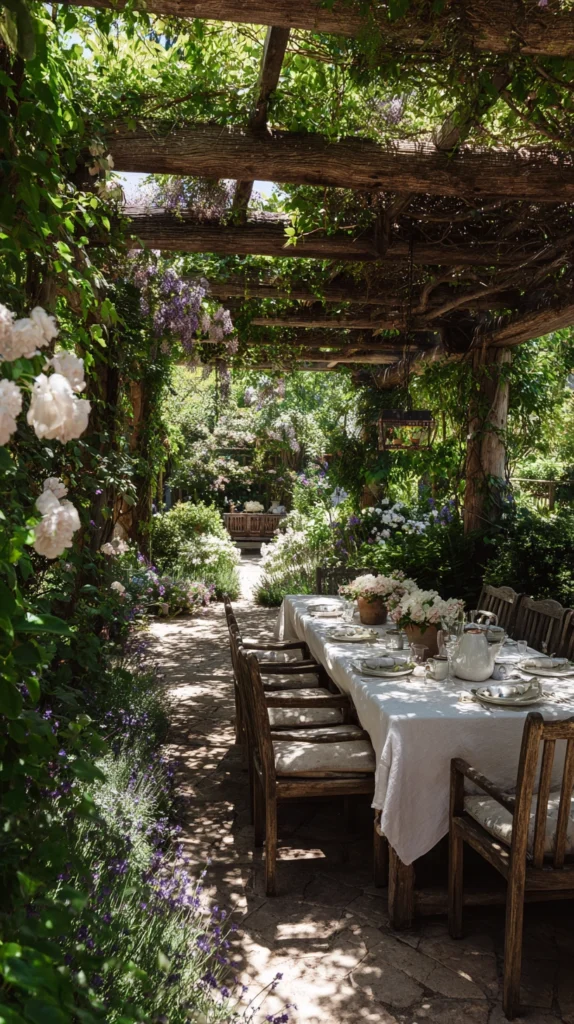
Install substantial pergolas over outdoor dining areas, training climbing roses, wisteria, or grape vines, creating living ceilings that provide dappled shade and seasonal flowers. Build pergolas using heavy timber beams or metal frameworks, scaled generously, creating architectural presence while supporting vigorous climbing plant growth.
Position dining furniture beneath, creating dedicated outdoor rooms where meals happen, surrounded by fragrant blooms and filtered sunlight. The overhead structure defines space while climbing plants add seasonal interest, blooming prolifically in summer, then providing interesting bare branch structure during the winter months.
5. Lavender-Lined Pathways
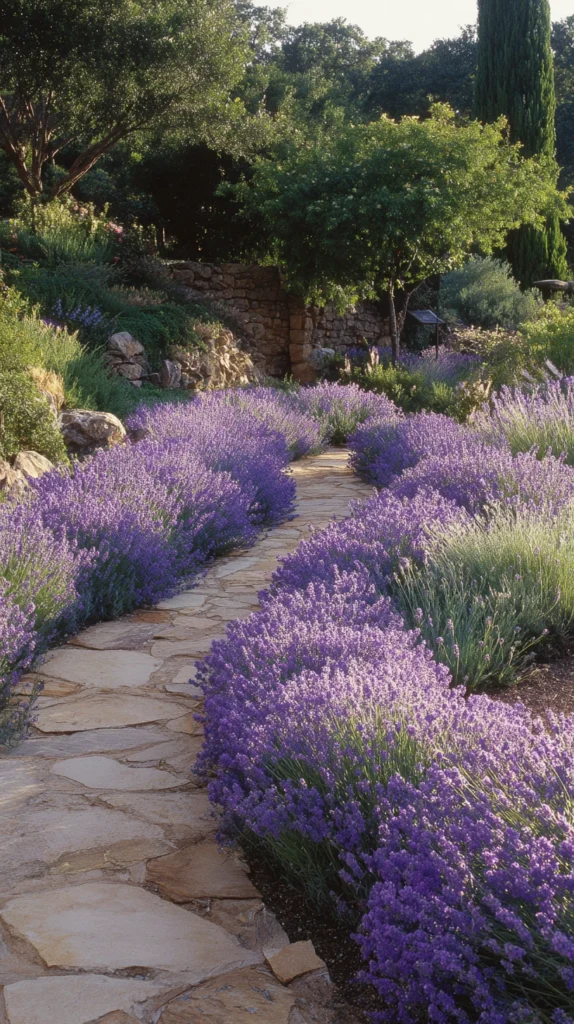
Frame garden pathways with lavender borders, creating fragrant ribbons of purple flowers that release scent when brushed against, while providing structural definition. Plant lavender varieties suited to your climate, spacing appropriately, allowing air circulation, preventing disease, while ensuring plants eventually touch, creating continuous hedges.
Shear after flowering, maintaining compact shapes and encouraging dense growth, while the silvery foliage provides year-round structure even when not blooming. The drought-tolerant plants require minimal water once established, while their Mediterranean associations evoke the southern French countryside regardless of actual location.
6. Water Features and Fountains
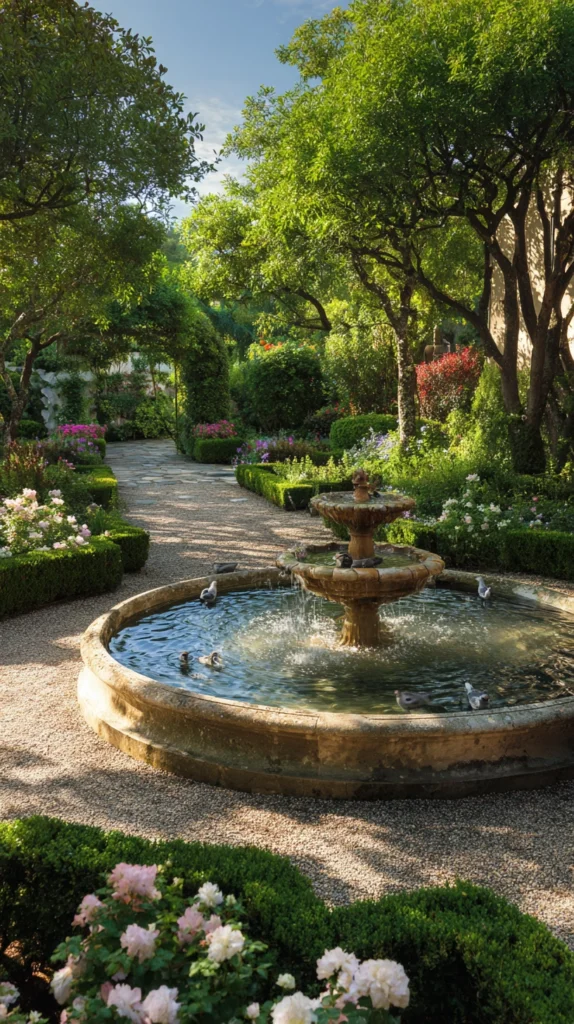
Incorporate classical fountains, simple birdbaths, or formal reflecting pools, creating focal points and providing soothing water sounds that enhance garden ambiance. Install wall-mounted fountains in small spaces or freestanding tiered fountains as courtyard centerpieces, choosing designs with classical European styling.
Position water features where their sounds can be appreciated from seating areas, while their reflective surfaces add light and movement to garden compositions. The water attracts beneficial wildlife, including birds and butterflies, while the gentle sounds mask traffic noise and create meditative atmospheres.
7. Outdoor Kitchen and Pizza Oven
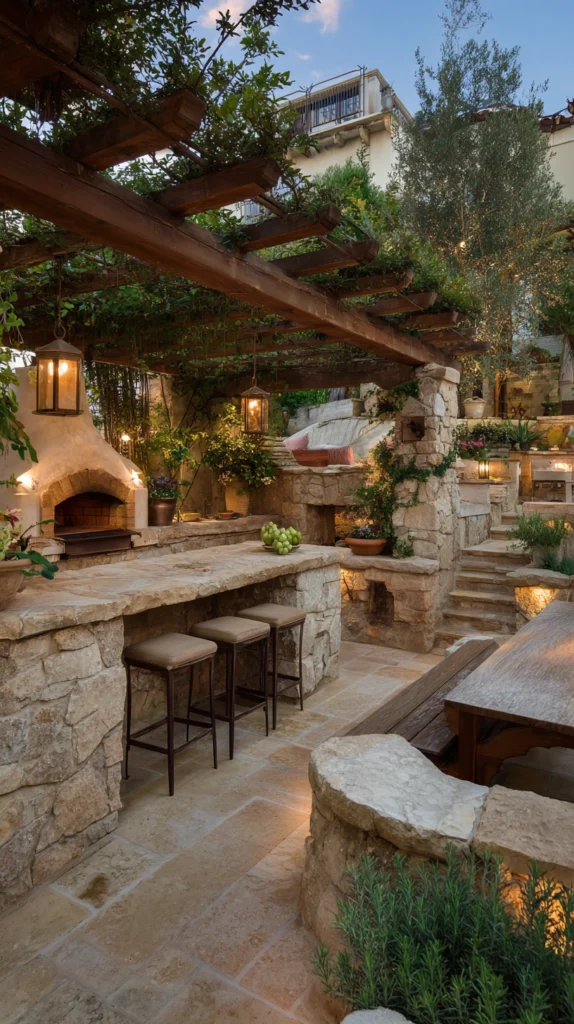
Design functional cooking areas incorporating built-in grills, wood-fired pizza ovens, or outdoor sinks, creating European-inspired alfresco dining capabilities. Build pizza ovens using traditional masonry techniques or install prefabricated units, positioning them as architectural focal points within garden designs.
Add prep counters, herb gardens within arm’s reach, and perhaps vine-covered pergolas overhead, creating complete outdoor kitchens. The cooking capabilities encourage outdoor entertaining while the substantial structures demonstrate commitment to garden living extending beyond simple decoration into a true outdoor lifestyle.
8. Clipped Topiary Statements
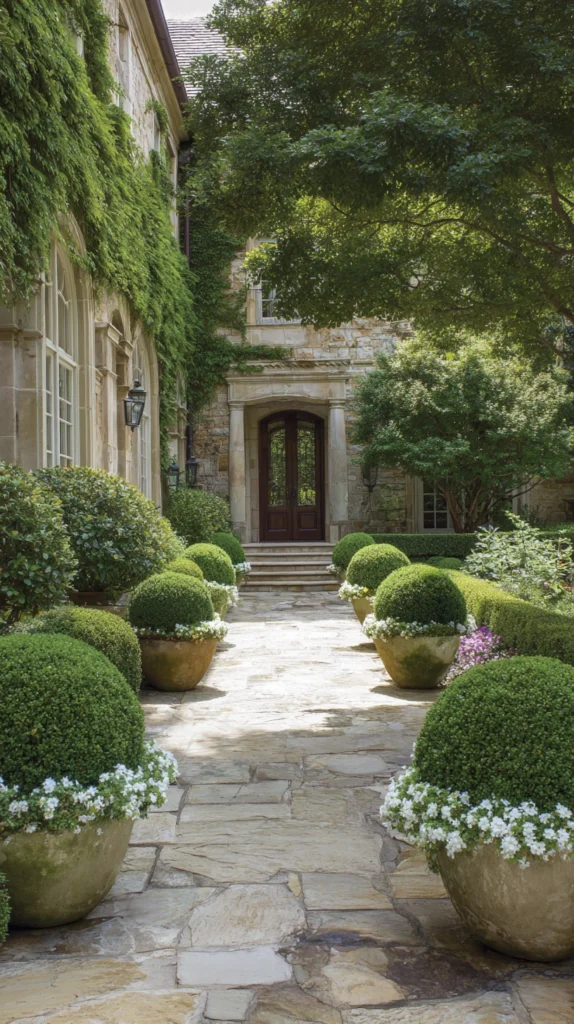
Create architectural plant sculptures through clipped topiary using boxwood, yew, or bay laurel shaped into balls, cones, spirals, or cloud forms, adding permanent structure. Position topiary specimens in containers flanking doorways, placed symmetrically in formal gardens, or used as focal points within less structured plantings.
Maintain shapes through regular trimming, ensuring crisp definition while the evergreen nature provides year-round interest and structure. The sculpted plants add sophistication and demonstrate garden skill, while their geometric precision contrasts beautifully with loose cottage garden plantings.
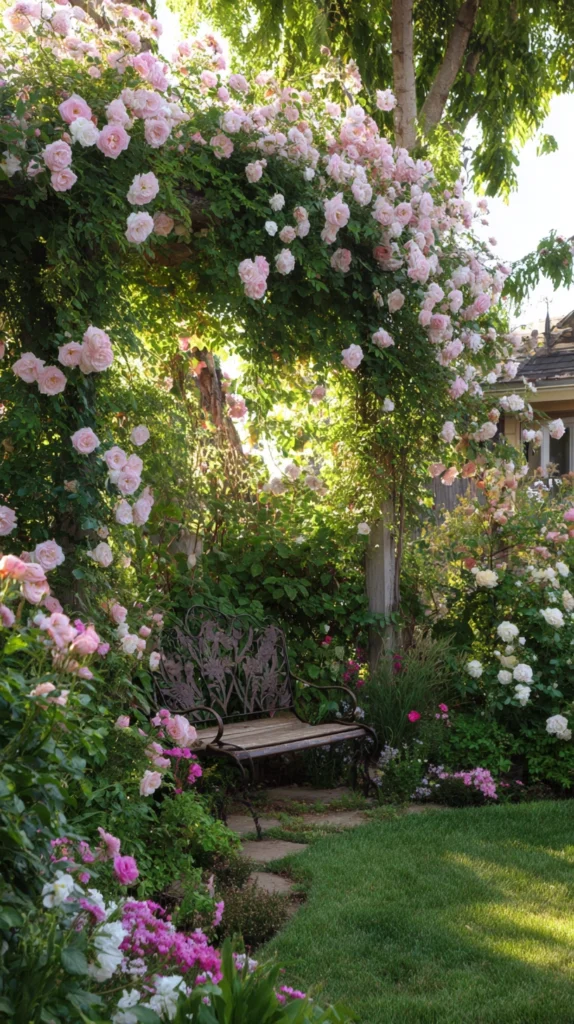
9. Climbing Rose Abundance
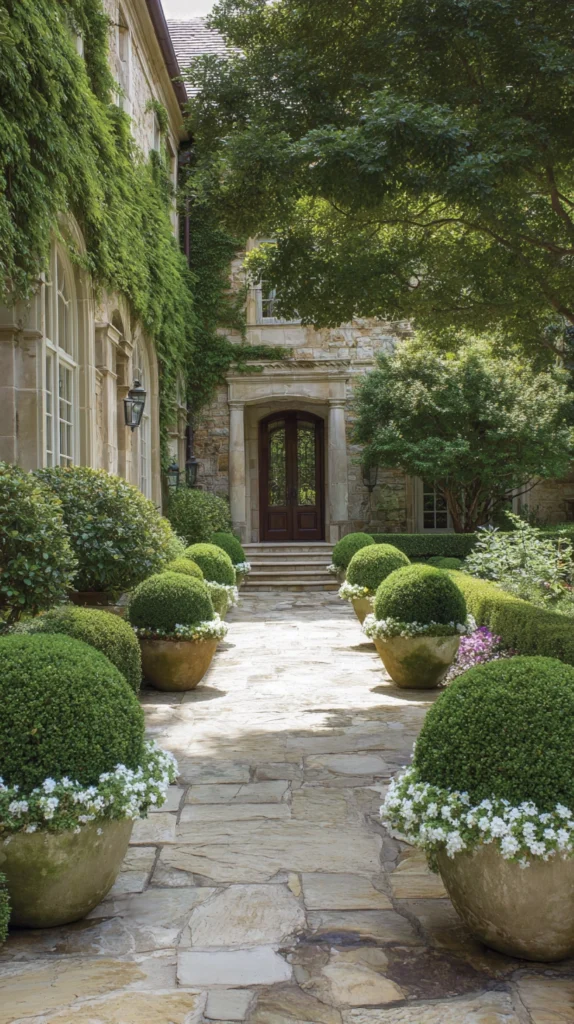
Cover walls, arbors, and fences with climbing roses in classic varieties, creating the romantic floral abundance synonymous with European summer gardens. Choose fragrant varieties in soft colors like pale pink, cream, or apricot, avoiding harsh modern hybrid colors that feel less authentic.
Trains canes horizontally, encouraging flowering along entire lengths rather than only at tips, maximizing bloom production. The abundant roses create immersive floral experiences while their heady fragrance perfumes entire gardens during peak summer blooming periods.
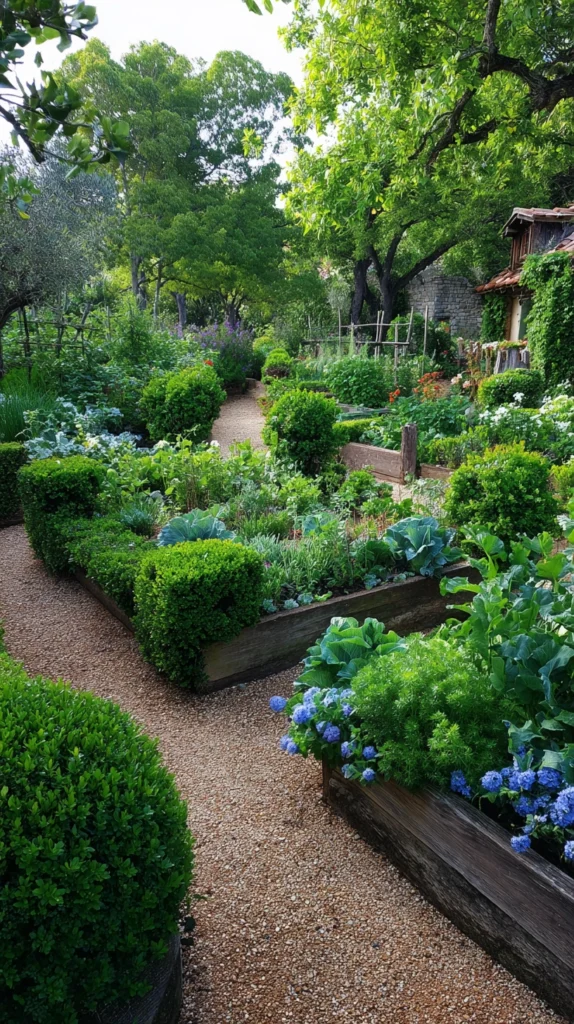
10. Potager Vegetable Gardens
Design ornamental kitchen gardens combining vegetables, herbs, and flowers in geometric beds, creating beautiful, productive spaces where edibles become decorative elements. Arrange beds in formal patterns using gravel or brick pathways for access, edging beds with low hedges, tiles, or woven willow.
Intermix vegetables with flowers, adding marigolds, nasturtiums, or zinnias, providing color and attracting beneficial insects, while the structured layout creates year-round architectural interest. The productive beauty combines function and aesthetics, demonstrating that gardens can feed both body and soul.
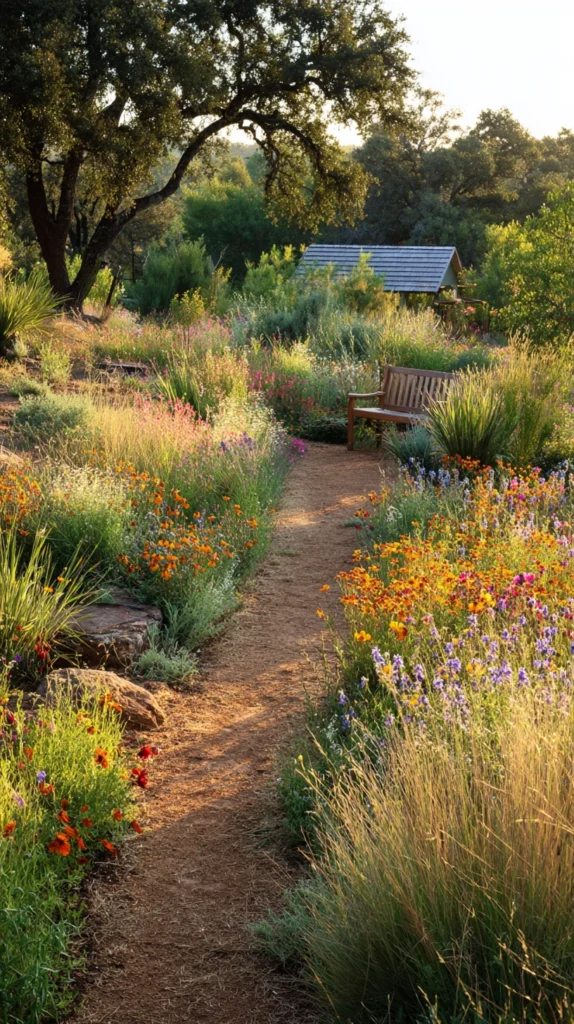
11. Naturalistic Wildflower Meadows
Replace traditional lawns with meadow plantings using native wildflowers and grasses, creating ecological gardens requiring less maintenance while supporting pollinators and wildlife. Prepare soil properly, removing existing vegetation, sow seed mixes appropriate for your region and conditions, then allow meadows to establish over multiple seasons.
Mow pathways through meadows creating circulation while the majority grows naturally throughout seasons, providing changing interest. The naturalistic approach reduces maintenance while meadow’s ecological value and ever-changing beauty represent progressive European garden philosophy.
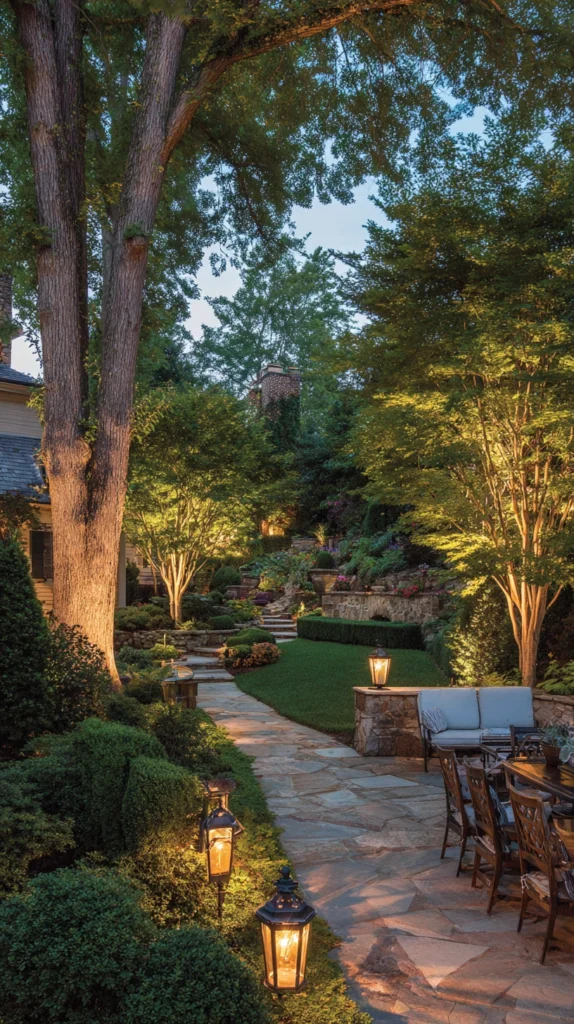
12. Outdoor Lighting Drama
Install comprehensive garden lighting, including uplighting on specimen trees, path lighting ensuring safe navigation, and accent lighting highlighting architectural features or sculptures.
Choose warm-toned LED fixtures providing energy efficiency and long life while creating inviting golden illumination rather than harsh security lighting. Position lights create dramatic shadows and emphasize garden structure, ensuring spaces remain beautiful and usable after sunset.
The lighting extends garden enjoyment into evening hours while nighttime illumination creates entirely different atmospheres, revealing new garden aspects.
13. Weathered Antique Elements
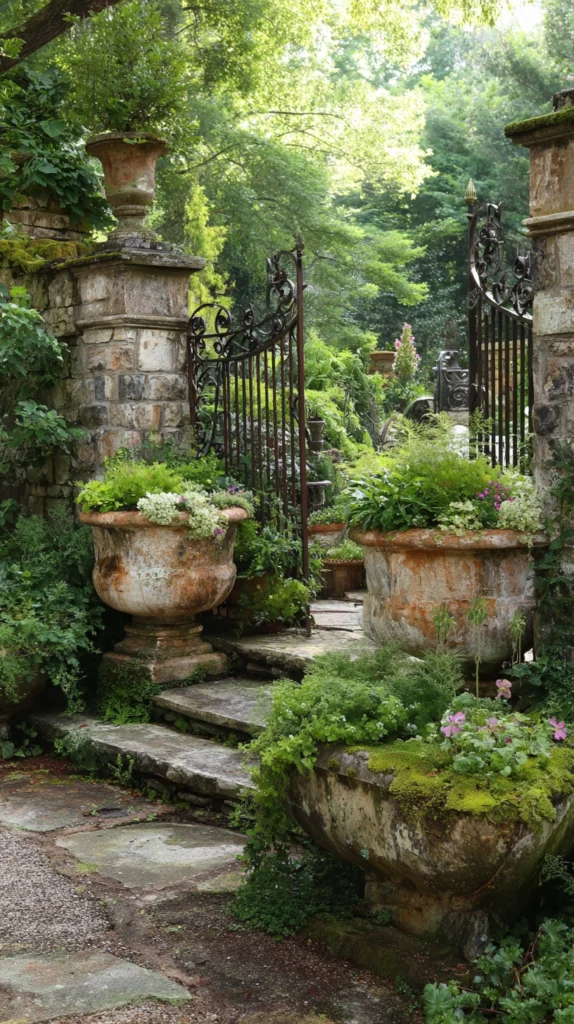
Incorporate authentic or reproduction antiques, including stone troughs, iron gates, vintage tools, or aged statuary, adding character and suggesting the garden’s evolution over time.
Source genuine antiques from salvage yards or commission quality reproductions, capturing authentic aged appearances through proper weathering and patina. Position architectural salvage as focal points or integrate throughout gardens where its aged character adds depth and historical resonance.
The vintage elements suggest established gardens with histories extending beyond recent installation, creating the collected-over-generations feeling European gardens naturally possess.
14. Seamless Indoor-Outdoor Flow
Design gardens extending interior living spaces outdoors through French doors, similar flooring materials inside and out, and coordinated color palettes blurring boundaries between house and garden. Install expansive glass doors that fully open, dissolving barriers, and use similar stone or tile both inside entry areas and on adjoining terraces, creating visual continuity.
Position outdoor furniture and plantings visible from interior spaces, ensuring gardens remain appreciated even when weather prevents outdoor activity. The integrated approach makes gardens feel like additional rooms rather than separate exterior spaces, encouraging more frequent use and deeper garden engagement.
Successfully creating European-inspired summer gardens requires understanding regional styles while adapting principles to your specific climate, available space, and maintenance capabilities.
Choose elements resonating personally rather than attempting comprehensive recreation of specific European garden styles that may not suit your conditions or lifestyle. Invest in quality permanent structures including pathways, water features, and architectural plants providing bones that remain beautiful year-round.
Most importantly, European gardens succeed through their sophisticated balance of structure and abundance, formality and romance, demonstrating that the most beautiful gardens emerge when design discipline meets horticultural passion creating spaces that feed the soul while delighting the senses.