15 Modern Duck Run Designs for a Stylish Backyard
There is a particular kind of satisfaction that comes from keeping backyard ducks that chicken keepers often describe as unexpectedly superior to the experience they anticipated.
Ducks are hardier than chickens in wet weather, more resistant to common poultry diseases, considerably more entertaining in their daily behavior, and capable of producing eggs with a richness and quality that has made them the preferred choice of serious bakers and professional chefs for generations.
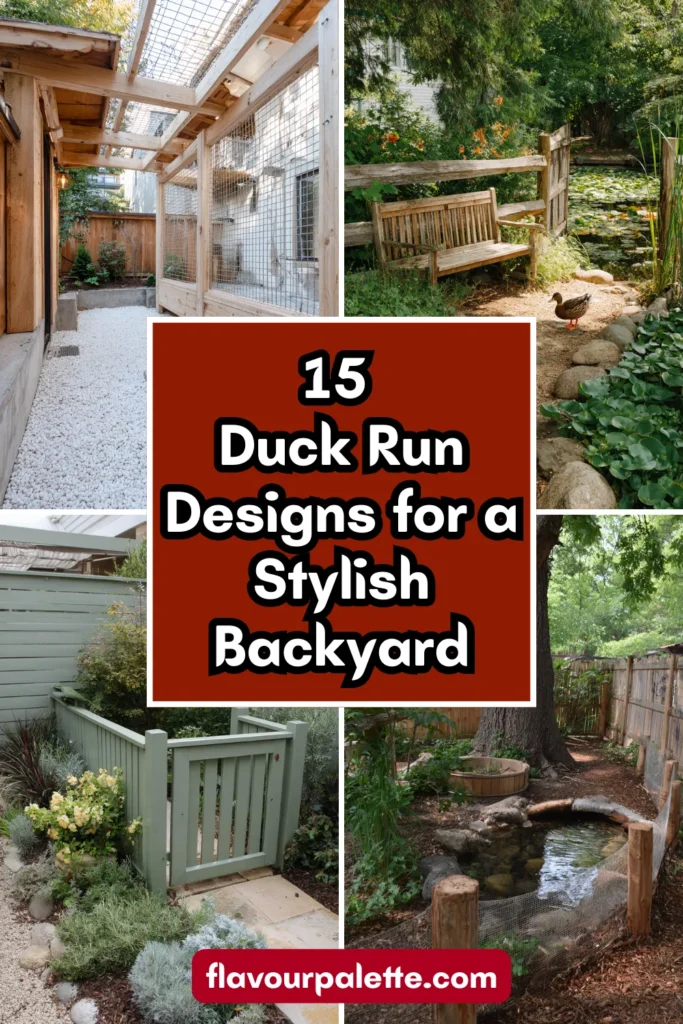
The barrier to entry for most backyard duck keepers is not the ducks themselves — they are remarkably undemanding once their basic needs are met — but the housing and containment infrastructure that their welfare requires. The duck run, in particular, has historically been treated as a purely utilitarian structure: wire on posts, a gate, some muddy ground. The result, in most backyards, is an eyesore that its owners tolerate rather than enjoy.
The premise of this guide is that this compromise is unnecessary. A well-designed duck run can be as beautiful as any other element of the backyard landscape, fully functional in its animal welfare performance, and integrated into the overall aesthetic of the outdoor space in a way that enhances rather than detracts from it. Here are fifteen modern duck run designs that prove the point.
1. The Scandinavian Minimalist Run

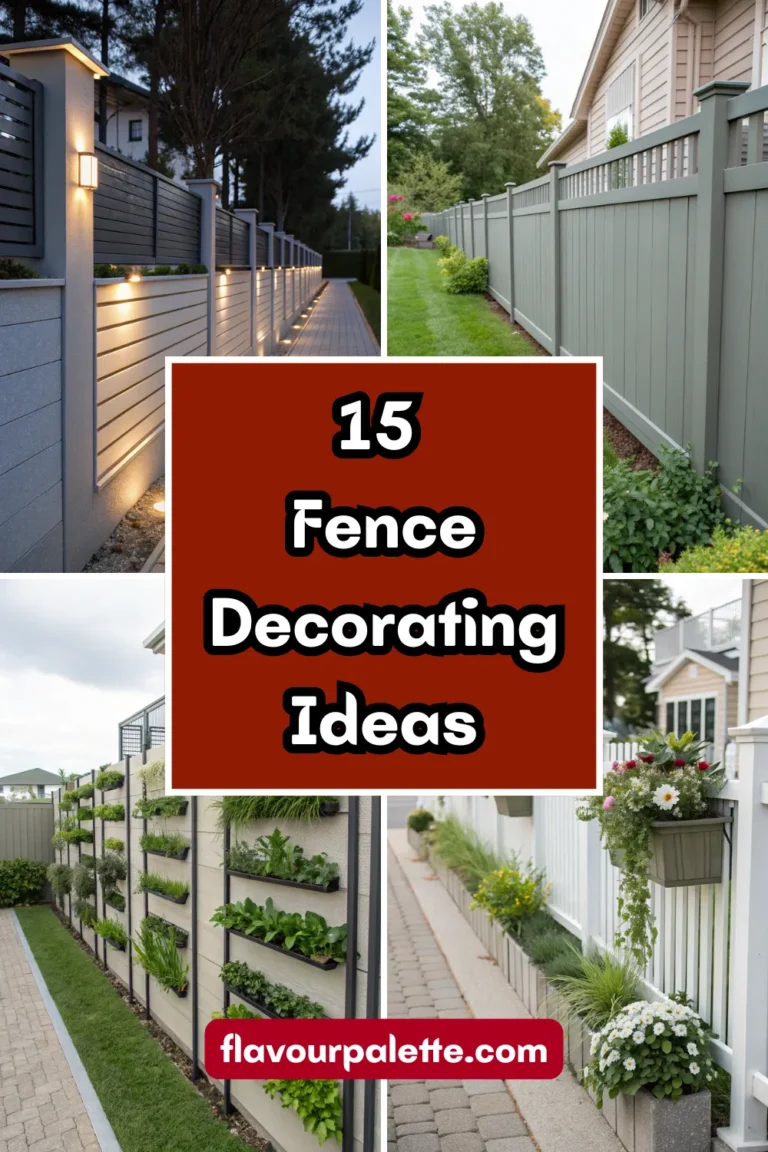
Clean lines, natural materials, and the principle of reducing everything to its essential form — these are the foundational principles of Scandinavian design, and they translate remarkably well into duck run construction.
A Scandinavian minimalist duck run uses smooth, planed timber in a pale, light-toned wood — Nordic spruce or pine treated with a white or light gray exterior stain — for its framing, with galvanized welded wire mesh stretched taut between the posts in clean, geometrically precise panels.
The gate is a simple rectangle with a smooth latch, the corners are sharp and deliberate, and the ground within the run is covered in pea gravel around a central shallow wading pool framed by smooth river stones.
There are no unnecessary decorative elements. The beauty comes from the precision of the construction and the quality of the materials, and from the way the pale timber and geometric form sit quietly within the garden without demanding attention while rewarding those who look at it carefully. This design suits contemporary gardens, new builds, and any backyard with a clean, uncluttered aesthetic.
2. The Cottage Garden Integrated Run
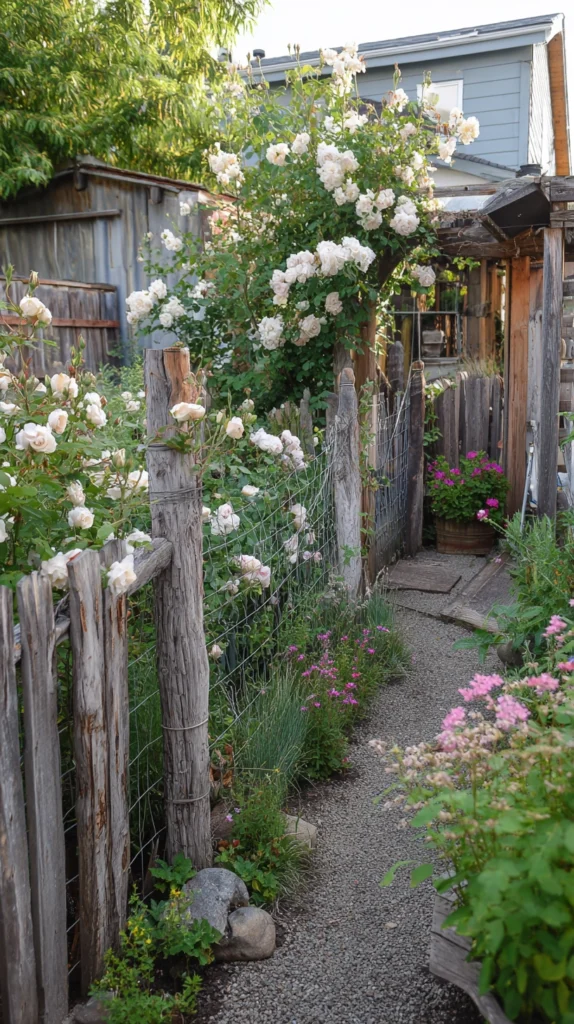
For gardens with a romantic, planted, slightly overgrown aesthetic — the English country cottage sensibility of abundant planting, weathered surfaces, and the beautiful accumulation of things grown and gathered over time — a duck run designed to look like an organic extension of the garden rather than an imposed structure creates a backyard poultry setup of genuine charm.
Use rustic timber posts left to weather naturally, a woven hazel or willow panel along one or two sides, and climbing plants — a hardy rose, a honeysuckle, a wisteria trained along the run’s exterior fence — that over two or three seasons will dress the structure in living material that makes it inseparable from the surrounding planting.
A small gate with a wrought iron latch, a handmade ceramic tile with the ducks’ names above the door, a planted border along the run’s exterior edge — these details give the run the character of something that belongs to the garden rather than something that has been placed in it.
3. The Elevated Platform Run with Integrated Duck House
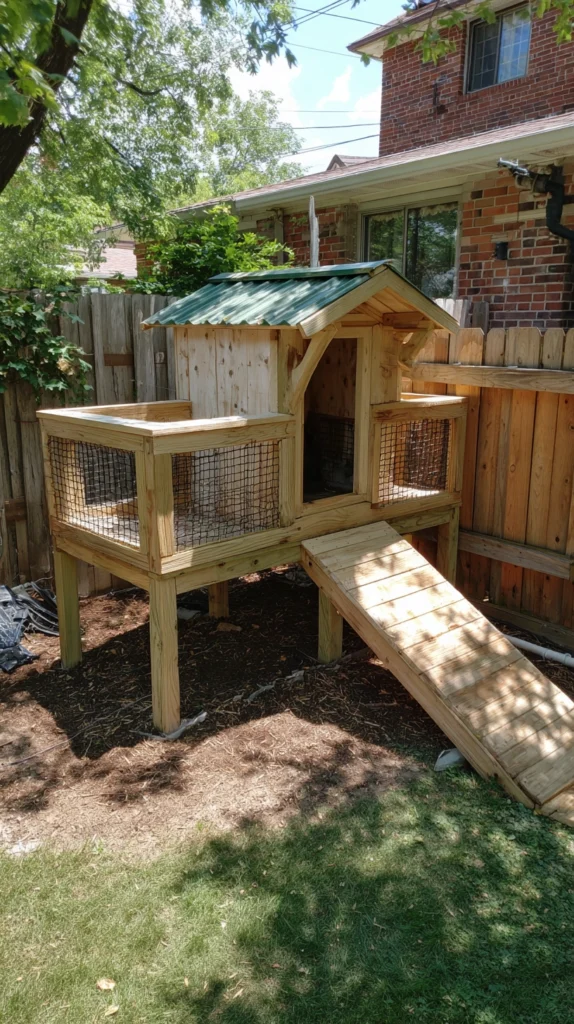
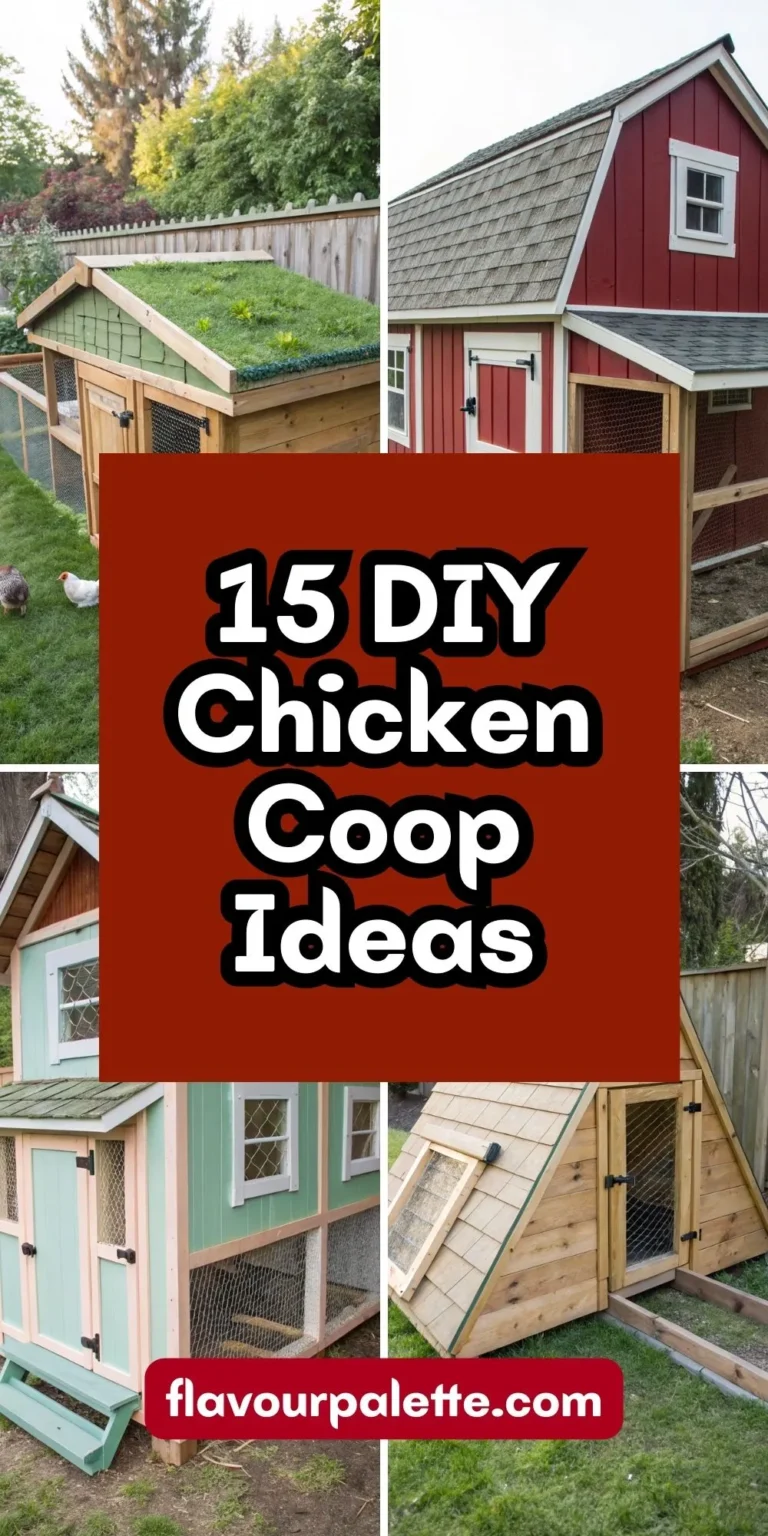
A duck run built around an elevated duck house — the house raised on a platform sixty to ninety centimeters above the ground, with the run extending below and around the platform at ground level — is both a highly practical design and a visually interesting one.
The elevated house protects ducks from ground-level predators while providing a dry, warm sleeping environment above the damp of the ground, and the platform creates a sheltered zone beneath it — effectively a covered area within the run where ducks can retreat from heavy rain without returning to the sleeping quarters.
The platform and house can be designed with considerable architectural ambition: a simple gabled roof in a contrasting timber, a painted exterior in a considered color, a ramp with cross-battens for grip. At ground level, the run is enclosed in welded wire on a treated timber frame, with a separate entry gate for the keeper.
The visual effect of the whole structure — a small elevated house with a ground-level enclosure — has a miniature architectural quality that is genuinely appealing in the right garden context.
4. The Geometric Hexagonal Run

The hexagonal or octagonal duck run — an enclosure whose plan is a regular polygon rather than the conventional rectangle — is more complex to build than a rectangular run but rewards the additional construction effort with a visual result that is distinctly more interesting and more architecturally considered.
The multiple angles of a hexagonal plan create a structure that reads as designed rather than simply built, and the absence of long, parallel fence runs gives the enclosure a more compact, concentrated appearance that often sits more comfortably in a garden space than an equivalent rectangular run.
The hexagonal form also suits a central water feature — a circular pool or a round raised pond positioned at the geometric center of the hexagon, equidistant from all sides — in a way that rectangular runs cannot accommodate as naturally. Frame the run in painted steel or powder-coated aluminum for the most precise geometric result.
5. The Corten Steel Frame Run
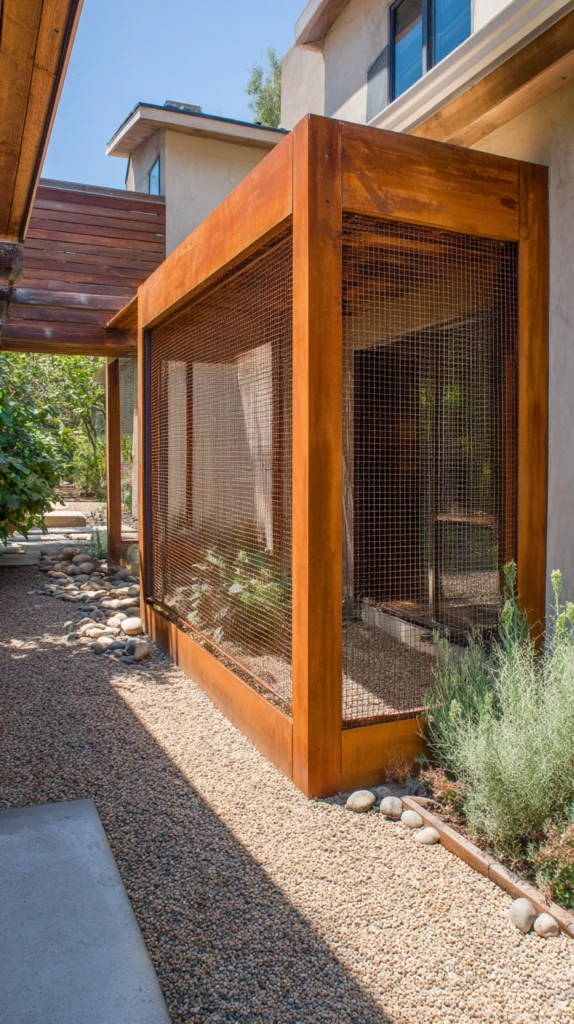
Corten steel — the self-oxidizing weathering steel that develops a rich, stable rust patina and has become one of contemporary garden design’s most valued materials — brings an industrial refinement to the duck run that is unlike anything achievable in timber or conventional steel.
A duck run framed in Corten steel posts and rails, with galvanized mesh panels clipped between the Corten members, is a structure of genuine material quality — heavy, permanent, weather-resistant to a degree that timber cannot match, and developing in visual richness over time as the Corten’s characteristic rust-orange patina deepens and stabilizes.
The warm amber tones of weathered Corten work beautifully with the green of surrounding planting, and the material’s association with serious landscape architecture gives the duck run an elevated status within the garden that other materials struggle to achieve. This design is a long-term investment rather than a budget solution, but the resulting structure will outlast any timber alternative significantly.
6. The Painted Timber Run in a Heritage Garden Color
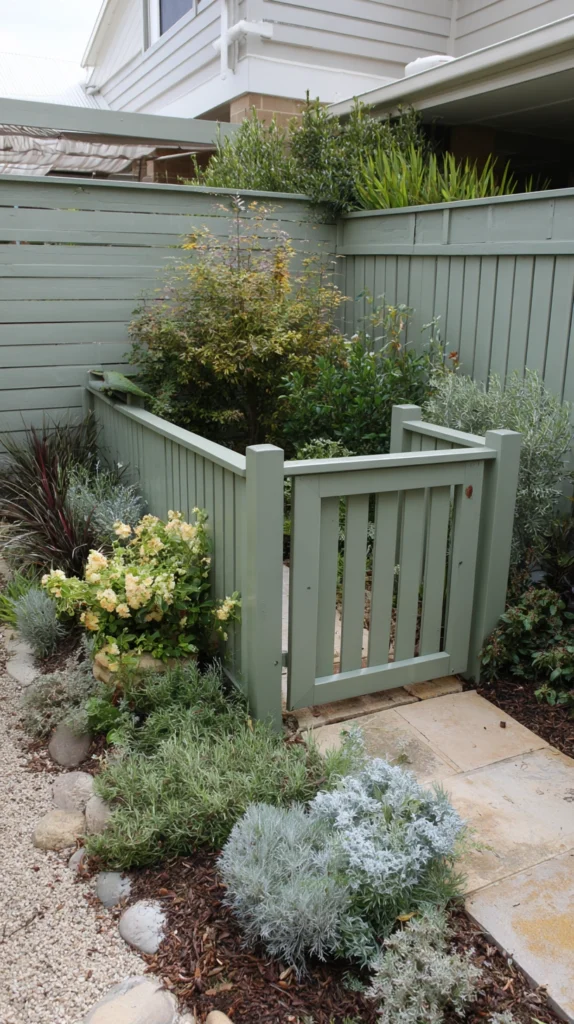
Paint transforms a timber duck run from a brown wooden structure into a designed element with color, character, and a clear relationship to the garden’s overall palette, and the choice of color is the single most powerful aesthetic decision in a painted timber run’s design.
Heritage paint colors — the deep, complex tones developed by quality exterior paint manufacturers — give a run a visual presence and depth that standard fence or shed colors cannot approach.
A deep sage green run disappears into a planted garden in the most beautiful way. A soft slate blue reads as architectural and considered against a warm stone or brick backdrop. A dark charcoal or near-black run creates a dramatic contrast with the silver of galvanized wire mesh and the green of surrounding planting that is genuinely striking.
A terracotta or burnt orange run brings warmth and a Mediterranean quality to the backyard. Choose a color from the same palette as other painted garden elements — furniture, fencing, outbuildings — for the most coherent overall result.
7. The Modular Expandable Run System
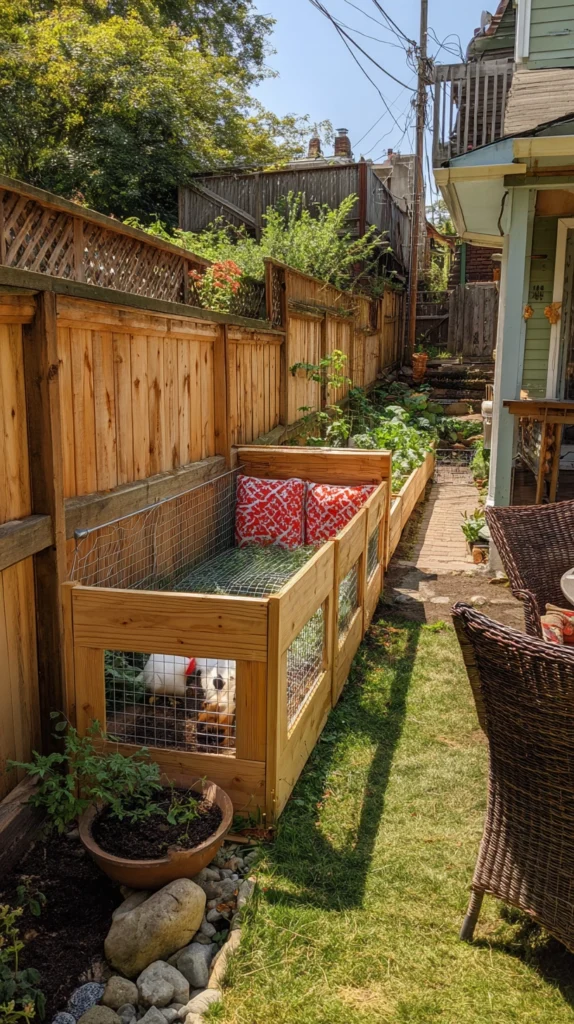
A duck run designed on a modular principle — built from standardized panels that can be added, removed, or reconfigured as the duck flock grows or the garden’s use changes — offers a practical flexibility that fixed-design runs cannot match.
Each panel is a self-contained unit of consistent dimensions — typically one to two meters wide and two meters tall — constructed from treated timber or powder-coated aluminum with welded wire mesh infill, and the panels connect to the corner and gate posts with a simple clip or bolt system that allows the run’s footprint to be altered without rebuilding from scratch.
The modular system is also more manageable for a single person to build than a large continuous structure, since each panel can be assembled separately and then connected on site. Design the individual panels with care — the quality of the panel components determines the aesthetic quality of the assembled run — and choose a connection system that is both secure and easy to operate with gloved hands in cold weather.
8. The Raised Bed Border Run

Integrating raised planting beds into the perimeter of the duck run — beds planted outside the wire with herbs, flowers, and ornamental grasses that create a planted border around the enclosure’s exterior — is a design approach that softens the visual impact of the wire and posts dramatically and creates a run that sits within a planted context rather than standing isolated in a bare section of the garden.
The raised beds should be positioned outside the ducks’ reach — directly against the exterior of the wire mesh — and planted with species that benefit from the proximity of the ducks without being accessible to them: pollinator-friendly flowers, culinary herbs, ornamental grasses, and hardy perennials that look beautiful throughout the growing season.
The border planting frames the run as a garden feature rather than a utility structure, and the visual transition from planted border to wire enclosure to duck activity within creates a layered landscape composition of genuine interest.
9. The Japanese-Inspired Zen Run
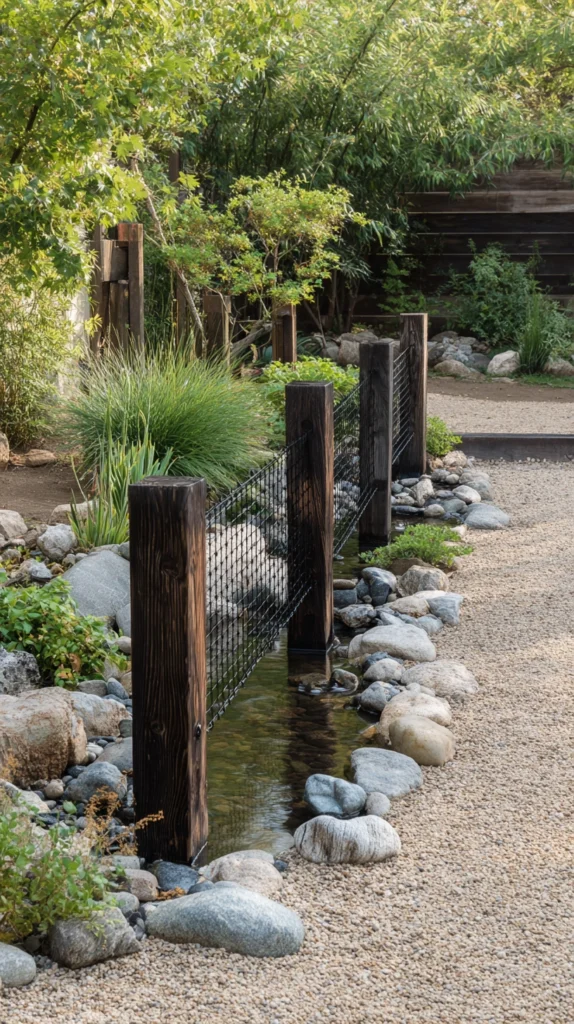
A duck run designed within a Japanese garden aesthetic — raked gravel, smooth river stones, bamboo elements, and the studied simplicity of the Japanese garden tradition — creates an outdoor poultry space of extraordinary calm and visual precision.
The run’s framing uses bamboo or dark-stained timber in simple horizontal and vertical members, with black-coated wire mesh for visual recession. The ground within the run is covered in a layer of coarse river gravel with a shallow stone-edged pool at the center, the edges of the pool laid with carefully chosen smooth stones.
A small bamboo water spout feeds the pool continuously. Outside the run, the surrounding garden is raked with gravel or moss, with carefully placed specimen stones and clipped azaleas or box. The ducks — particularly white or buff varieties — against this backdrop of monochrome simplicity create a visual composition of great beauty, and the sound of the water spout creates an acoustic environment of total calm.
10. The Greenhouse-Style Glass and Steel Run
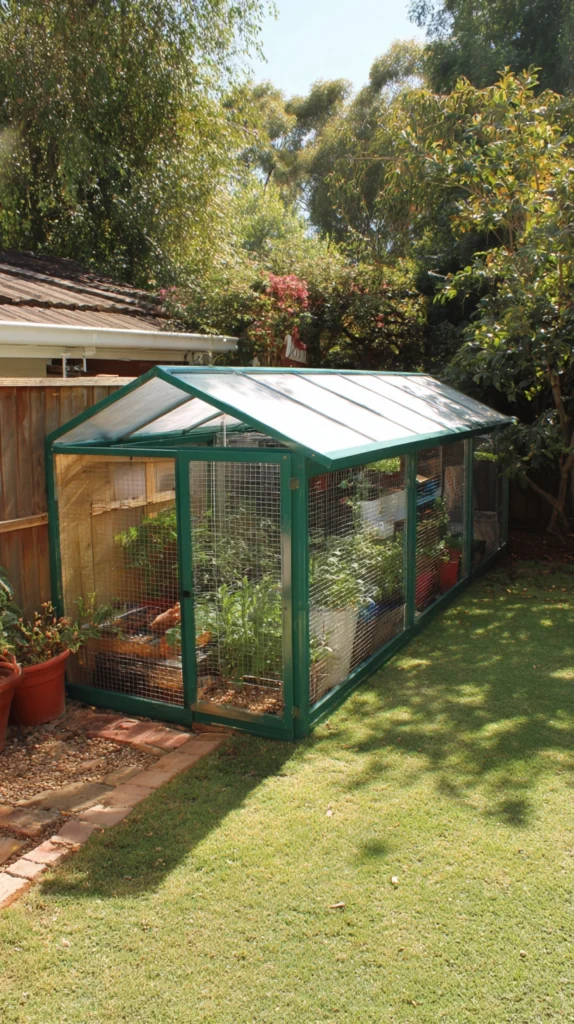
A duck run constructed from a greenhouse-style frame — slender steel or aluminum members supporting glass or polycarbonate panels in the roof sections, with wire mesh for ventilation in the wall sections — is perhaps the most architecturally ambitious residential duck run design available, and the result is a structure that looks nothing like a conventional poultry enclosure and everything like a designed garden building.
The glazed roof sections allow natural light to flood the run while providing rain protection over a generous portion of its footprint, creating a comfortable indoor-outdoor space for the ducks that is dry underfoot even in wet weather.
The steel or aluminum frame can be powder-coated in any color — black for a greenhouse aesthetic, white for a conservatory-inspired look, forest green for a Victorian glasshouse quality. This design is the most expensive on this list and the most demanding to construct or commission, but the result is a genuinely extraordinary duck run, and that adds rather than detracts from the value of the garden it occupies.
11. The Natural Woodland Run
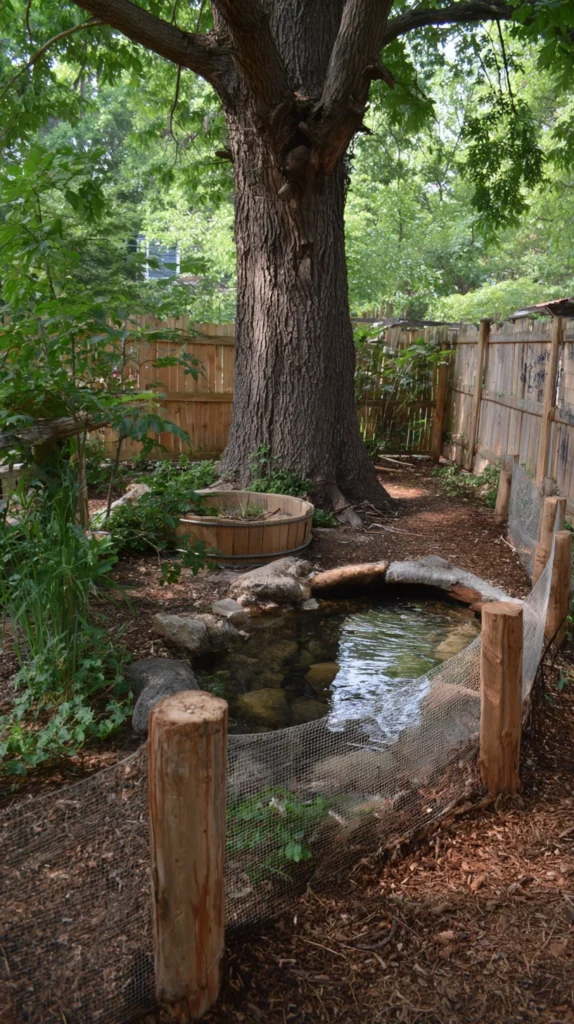
For gardens that adjoin or incorporate existing mature trees, a duck run designed to embrace the woodland context — using the trees as part of the run’s structure, incorporating natural fallen timber into its interior landscape, and planting the surrounding ground with shade-tolerant species that create a woodland floor aesthetic — creates a duck habitat of exceptional naturalism and beauty.
The run’s wire mesh is attached to existing trees where possible, with supplementary posts in galvanized steel where no suitable tree exists, creating an organic, irregular perimeter that follows the natural positions of the trees rather than imposing a geometric form on the landscape.
Inside the run, the ground is covered in wood chip mulch, fallen branches provide perches and enrichment, and a shallow depression filled with water serves as the wading area. The woodland duck run is the most naturalistic design on this list and the one most likely to produce genuinely contented, behaviorally enriched ducks.
12. The Reclaimed Material Run
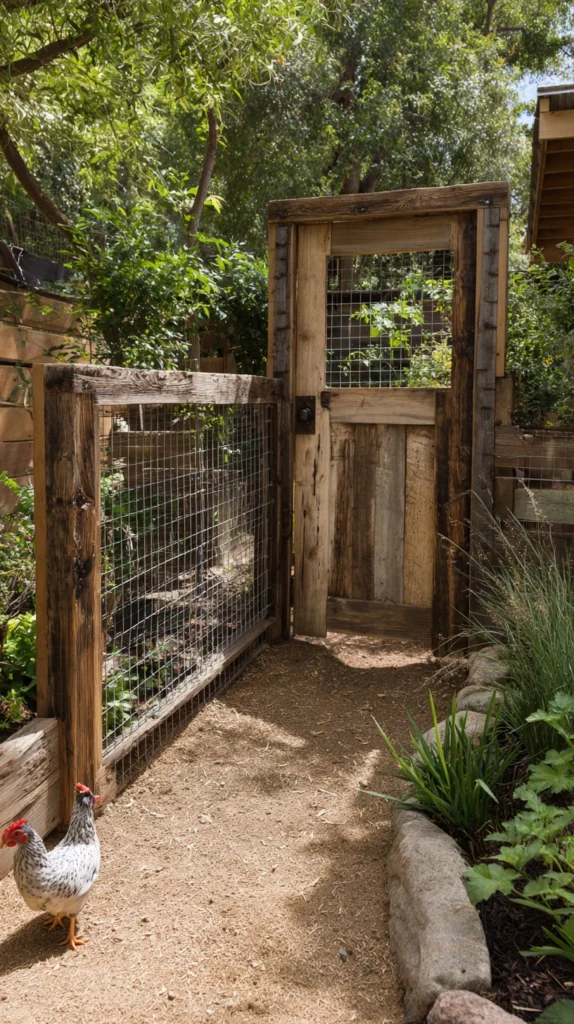
A duck run constructed primarily from reclaimed and repurposed materials — salvaged timber, old corrugated metal sheets, reclaimed roof tiles, secondhand wire fencing, vintage door hardware — creates a structure with the patina, character, and material honesty of something built over time and with genuine resourcefulness.
The aesthetic of the reclaimed material run is inherently imperfect and inherently charming, and the combination of mismatched materials unified by weather, paint, and careful composition creates a structure that looks like a working farm building in miniature — purposeful, unpretentious, and full of the visual interest that only real material history can provide.
This approach is also significantly more economical than new-material construction, and the process of sourcing the components from salvage yards and reclamation centers has a pleasurable, treasure-hunt quality of its own.
13. The Night-Lit Feature Run
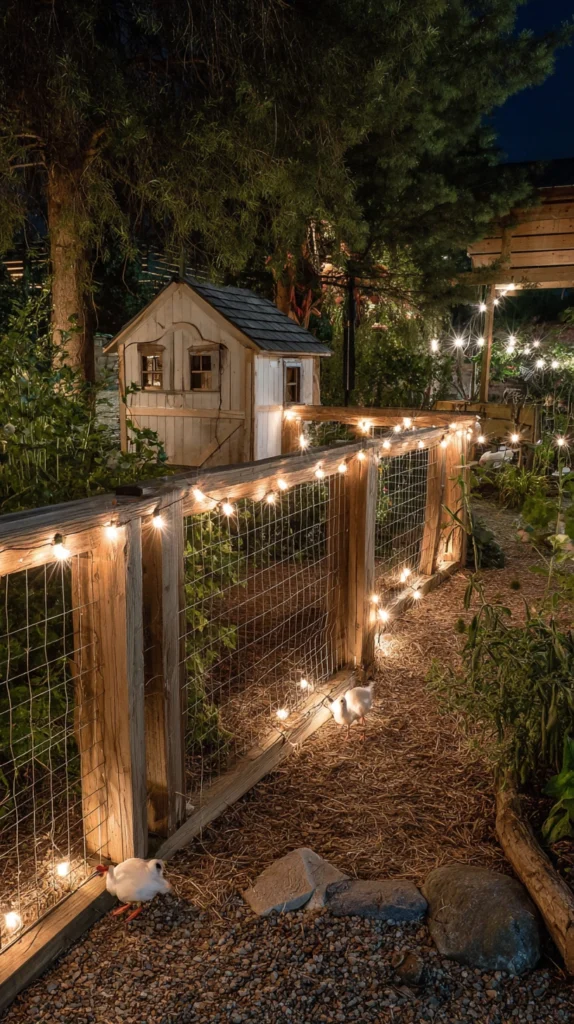
The addition of outdoor lighting to a duck run is a consideration that most keepers overlook entirely, and yet the duck run as a lit feature in the backyard garden — particularly in a domestic setting where the garden is visible from the house in the evening — can be extraordinarily beautiful.
Low-voltage pathway lighting along the run’s perimeter. Solar-powered spotlights illuminate the duck house and the surrounding planted border. Warm string lights draped along the run’s top rail, creating a gentle overhead glow that defines the run as a feature within the garden’s evening landscape.
The ducks themselves are safely housed after dark, so the lighting serves the human experience of looking at the run from the house or garden purely. A well-lit duck run, visible through a kitchen or living room window on a winter evening, is one of those small domestic pleasures that is difficult to quantify and easy to appreciate.
14. The Food Forest Integrated Run
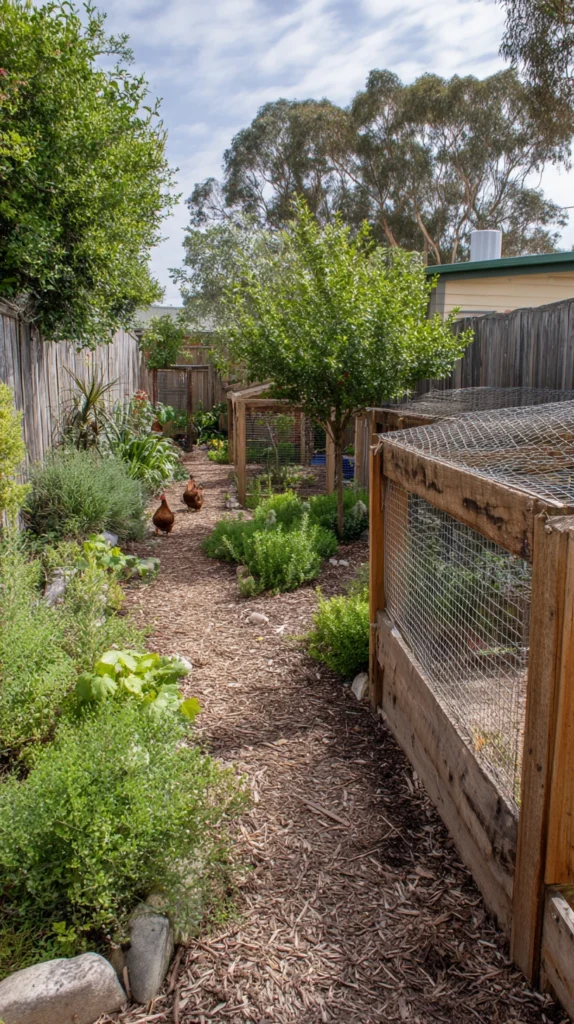
The food forest duck run integrates the duck enclosure into a productive garden system in which the ducks contribute to the health and productivity of the surrounding plants while benefiting from the shelter, foraging, and habitat enrichment that the planting provides.
The run is designed as a rotating system — the enclosed area is divided into two or more sections that the ducks access alternately, allowing vegetation to recover in the resting section between duck rotations. The surrounding and dividing plantings include fruit trees whose fallen fruit the ducks harvest, berry bushes whose ground-level fruit supplements the ducks’ diet, and compost-producing plants whose cut material feeds the run’s ground.
This integrated system is the most productive and most ecologically sophisticated design on this list, and the resulting landscape — ducks moving through a planted food-producing environment — is the most genuinely sustainable form of backyard duck keeping available to the domestic gardener.
15. The Show Run with Viewing Bench
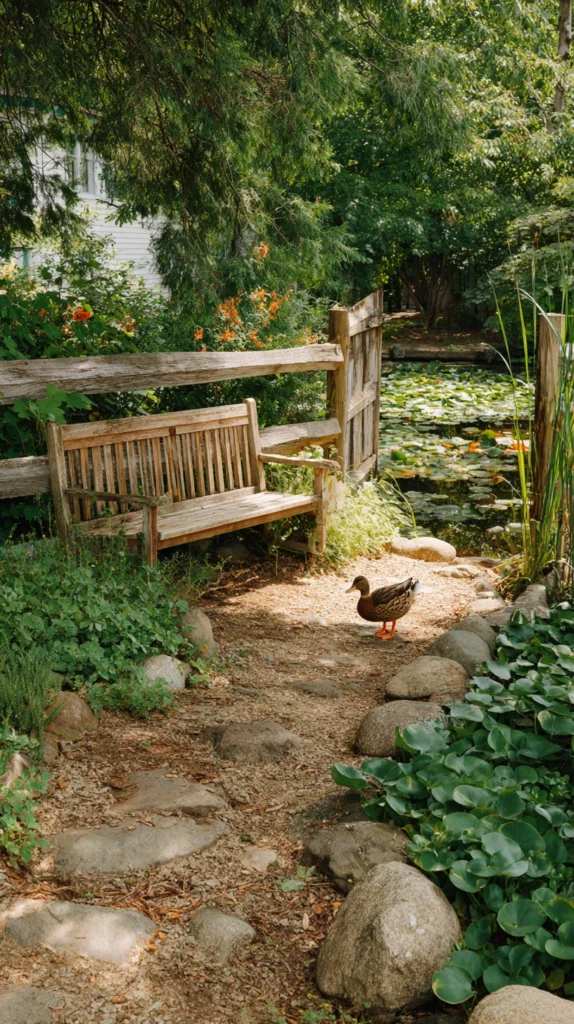
The duck run designed with genuine entertainment and observation in mind — a spacious, beautifully landscaped enclosure with a dedicated viewing bench positioned outside the wire where the keeper and guests can sit and watch the ducks at close range — represents the highest expression of the backyard duck keeping aesthetic and reflects a truth that all committed duck keepers eventually discover: that watching ducks is one of the most reliably restorative activities available in the domestic landscape.
The viewing bench is positioned at the run’s most active and most visually interesting point — beside the wading pool, overlooking the feeding area — and is built from the same materials as the run’s frame for visual coherence.
The run itself is planted with interest and enrichment at every point, so that the view from the bench is always animated by duck activity. A small side table beside the bench, a cup holder built into the armrest — these small details acknowledge that sitting and watching your ducks is not an incidental activity but a designed one, worthy of the same care and attention as any other aspect of the outdoor living experience.