15 Brilliant Duck Coop Ideas to Transform Your Backyard
Ducks are one of the most rewarding backyard animals you can keep. They are hardy, characterful, genuinely entertaining to watch, and remarkably good at taking care of themselves given the right environment. What they need above everything else is a well-designed coop — a space that keeps them safe from predators, dry in wet weather, and comfortable throughout every season.
The good news is that a duck coop does not have to be an eyesore. With thoughtful design and good materials, a duck coop can become one of the most charming features in a backyard — a functional structure that looks as considered and beautiful as any other garden building. The ideas on this list prove that practical and attractive are not mutually exclusive when it comes to duck housing.
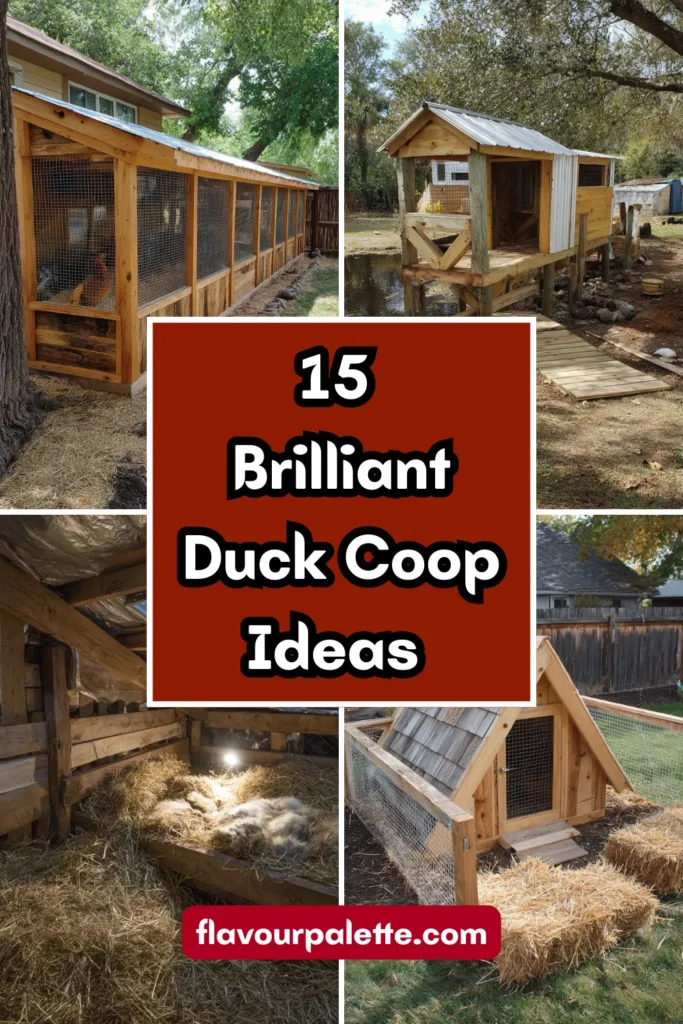
Here are 15 brilliant duck coop ideas that are safe, functional, and genuinely great to look at.
1. Classic Timber A-Frame Duck Coop
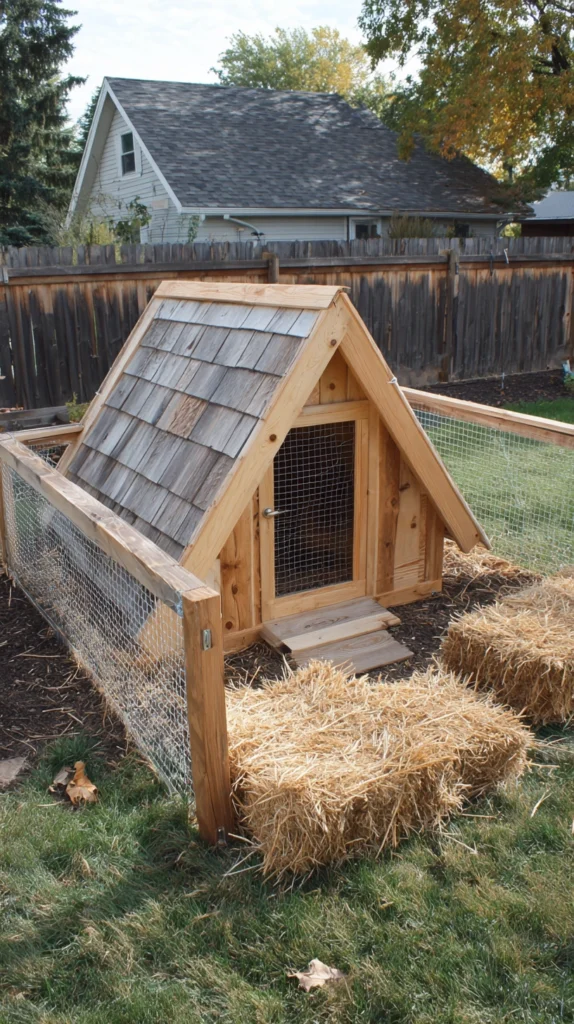
The A-frame duck coop is the most classic and widely built design for good reason. The steeply pitched roof sheds rain efficiently, the simple triangular structure is straightforward to build from basic timber, and the compact footprint makes it suitable for backyards of almost any size.
Build the A-frame from pressure-treated timber for the structural elements and use exterior-grade plywood or shiplap cladding for the sides. Add a hinged roof panel or a full-length door on one side for easy cleaning access — this is non-negotiable in any duck coop design. Line the interior floor with a thick layer of straw bedding and add a low ramp at the entrance for easy duck access.
Pro Tip: Make the A-frame coop at least 30 percent larger than you think you need for your current number of ducks. Duck keepers almost universally acquire more ducks than originally planned — it is one of the most reliable patterns in backyard poultry keeping. Building with expansion in mind from the beginning is considerably easier and more economical than adding to an undersized structure later.
2. Converted Garden Shed Duck Coop
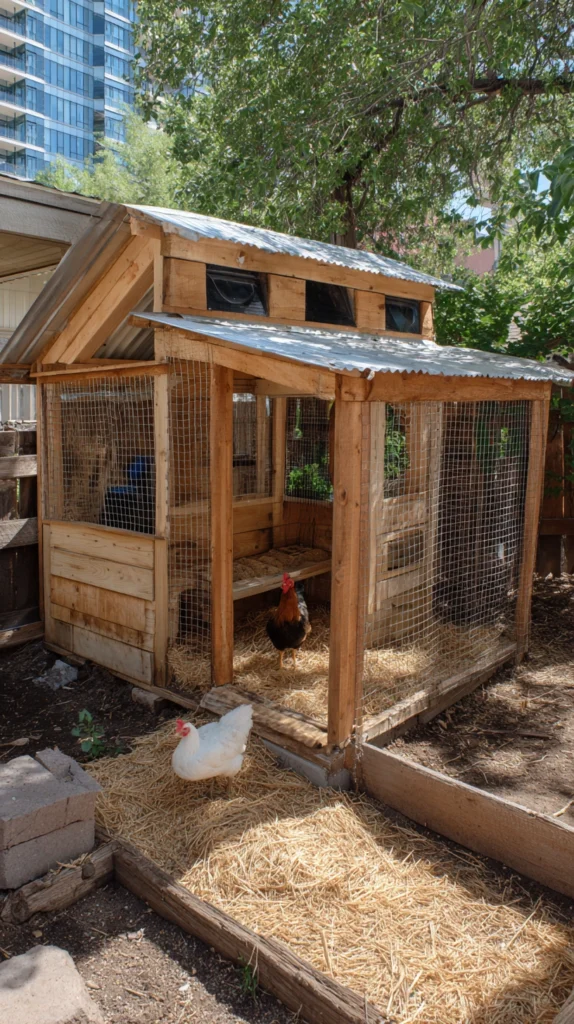
A redundant garden shed converted into a duck coop is one of the most practical and cost-effective duck housing solutions available. The shed provides generous space, solid construction, and an existing structure that simply needs modification rather than full construction from scratch.
Add ventilation openings near the roof line — covered with predator-proof wire mesh — to ensure adequate airflow without drafts at duck level. Install a small pop hole door at ground level for duck access and a full-size human door for cleaning and egg collection. Line the floor with removable timber boards covered in straw for easy cleaning and replace the shed windows with mesh panels for summer ventilation.
Pro Tip: Install a concrete or paving slab apron around the entrance of a converted shed duck coop to prevent the ground immediately outside the door from becoming a waterlogged mud pit. Ducks are messy drinkers, and the area around any coop entrance deteriorates rapidly into deep mud without a hard surface to absorb the traffic. A simple slab apron costs very little and makes the daily management of the coop significantly more pleasant.
3. Duck Coop with Integrated Pond
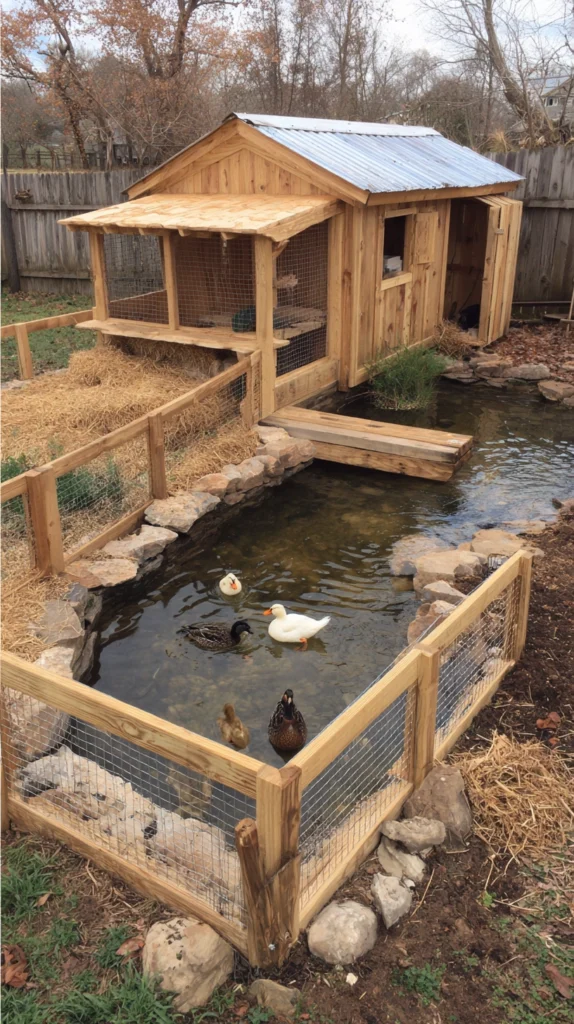
A duck coop designed with a small integrated pond or water feature within the enclosed run area creates a complete duck habitat that provides everything ducks need in a single, self-contained space. Ducks are water birds at heart, and access to water for bathing, preening, and dabbling is as important to their welfare as the coop shelter itself.
The pond does not need to be large — even a shallow, lined basin of one to two square metres gives ducks adequate water access for bathing and natural behaviour. Use a butyl rubber liner set into an excavated shallow depression, edge with timber boards or natural stone, and ensure easy drainage for regular water changes. Position the pond within the enclosed run rather than outside it to prevent predator access.
Pro Tip: Install the pond drain at the lowest point of the run rather than requiring manual emptying with a pump or bucket. Duck pond water becomes fouled quickly and needs changing at least twice a week — a gravity drain that empties the pond directly to a suitable drainage point makes this essential maintenance task a two-minute job rather than a twenty-minute one. Easy maintenance is the difference between a pond that gets changed regularly and one that becomes neglected.
4. Raised Duck Coop on Stilts
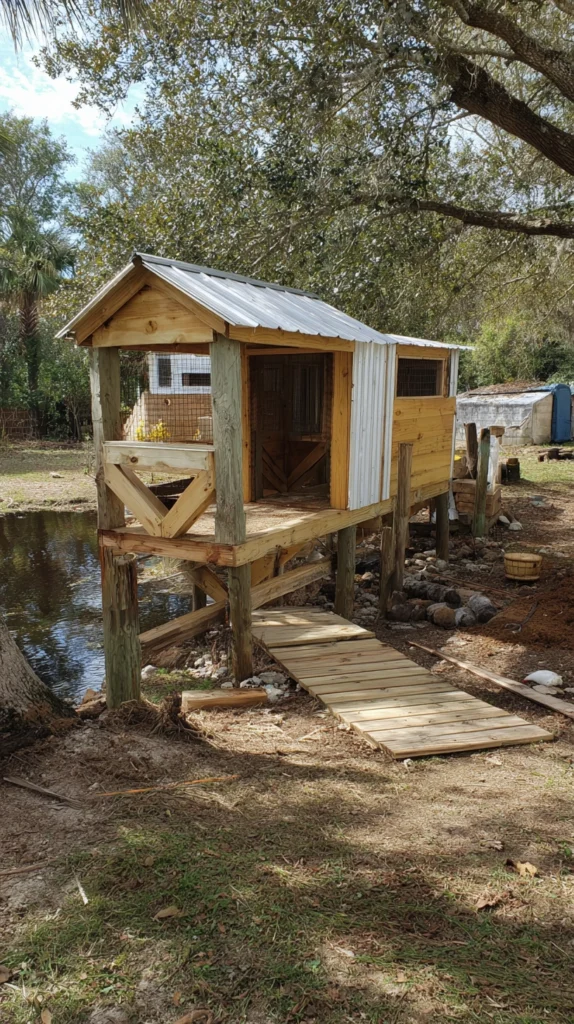
A duck coop raised on timber stilts — with the sleeping and nesting area elevated 40 to 60 centimetres above ground level — creates a more predator-resistant structure than a ground-level coop and uses the sheltered space beneath as a covered outdoor area where ducks can shelter from rain without being confined to the main coop.
The raised design also improves ventilation beneath the floor of the coop, reducing moisture and condensation that can lead to respiratory problems in ducks over time. Build a simple ramp from the ground to the coop entrance — ducks adapt to ramps quickly and use them without hesitation once familiar with the routine.
Pro Tip: Cover the underside of the raised floor with a layer of galvanised wire mesh rather than leaving it open to the ground. Predators — particularly rats and mink — are highly capable of entering through the underfloor space of a raised coop if the gap is large enough. A wire mesh floor barrier eliminates this vulnerability without affecting the ventilation benefits that make raised coop design so valuable for duck welfare.
5. Painted Storybook Duck Coop
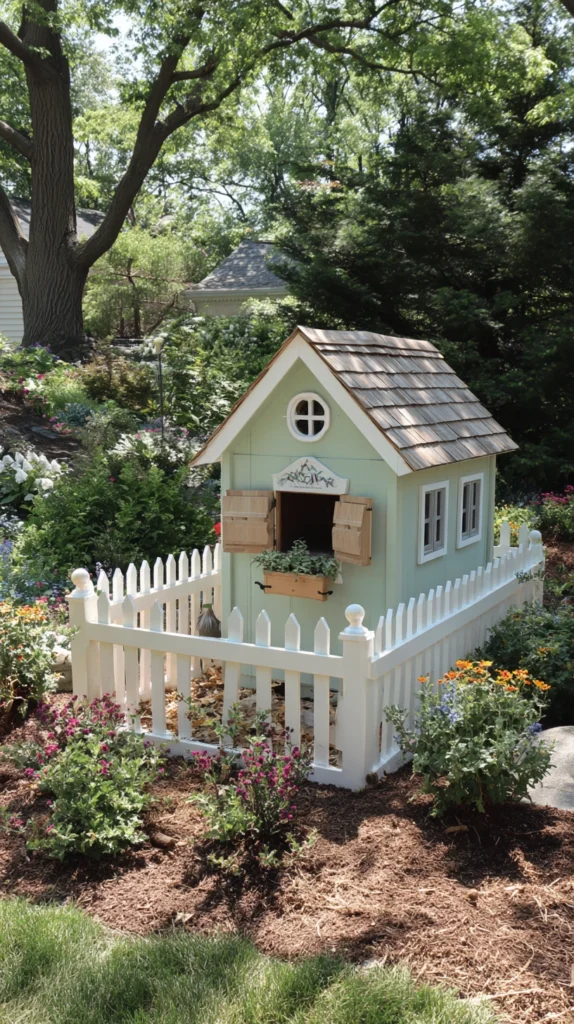
A duck coop painted in cheerful colors with decorative details — window boxes of artificial flowers, a painted picket fence around the run, a small nameplate above the door — creates a backyard feature of genuine charm that children love and that makes the practical business of duck keeping feel like part of the garden’s designed aesthetic rather than an agricultural intrusion.
Choose exterior masonry or timber paint in colors that complement the wider garden palette — a soft sage green, a warm duck egg blue, or a cheerful barn red all work beautifully on a small timber coop. Add simple painted details — a scalloped roofline, a decorative ventilation panel cut in a heart or star shape — that give the coop a storybook quality without compromising its practical function.
Pro Tip: Use exterior paint specifically formulated for timber rather than general masonry paint on a wooden duck coop. Timber-grade exterior paint contains flexibility agents that allow the finish to expand and contract with the wood through seasonal temperature changes without cracking or peeling. General masonry paint on timber becomes brittle and deteriorates within a single season of outdoor exposure.
6. Duck Coop with Separate Brooding Area
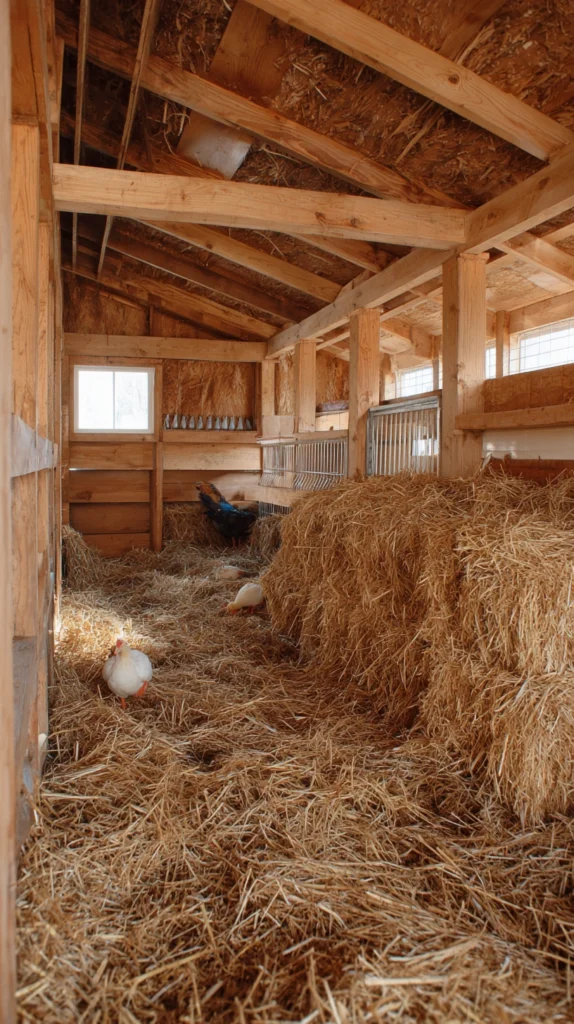
A coop designed with a partitioned brooding area — a small, enclosed section within the main coop structure that can be separated from the main sleeping space — provides a dedicated space for a nesting duck and her eggs that protects them from disturbance by other flock members. This is particularly important in a mixed flock where different ducks have different space and privacy requirements.
The brooding partition can be as simple as a removable timber panel that divides the coop interior when needed and is stored away when not in use. The brooding area should be slightly darker and more enclosed than the main coop space — ducks prefer to nest in a sheltered, private spot, and a darker, enclosed area encourages natural nesting behaviour.
Pro Tip: Line the brooding area floor with a deeper layer of nesting material than the main coop — at least 15 to 20 centimetres of clean straw creates the deep, insulating nest that a brooding duck instinctively wants to create.
A shallow layer of bedding in the brooding area will be scraped aside and rearranged by the duck until she achieves the nest depth she needs — providing adequate depth from the beginning saves her the effort and keeps the brooding area tidy.
7. Duck Coop with Large Covered Run
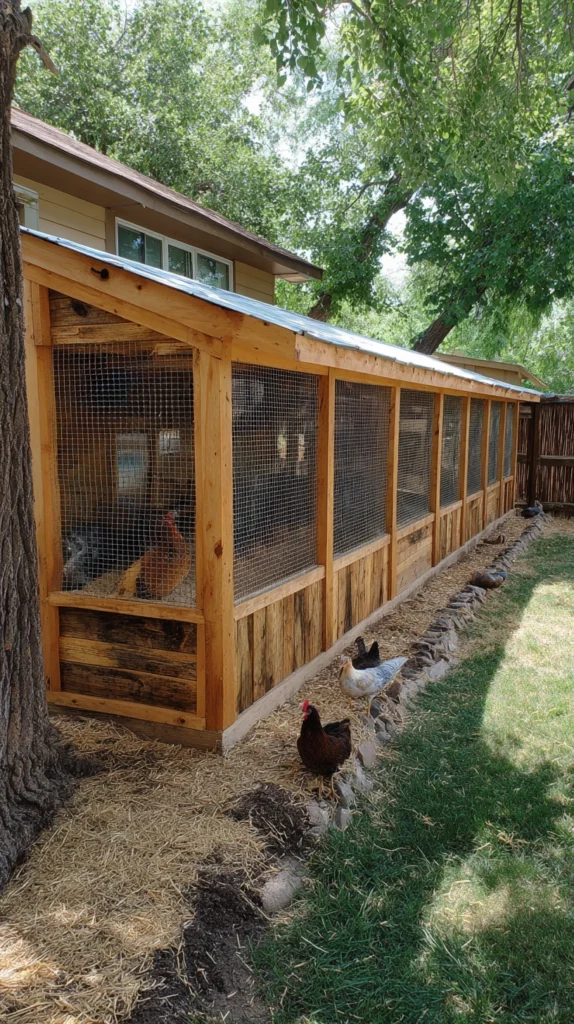
A coop attached to a large covered run — a generously sized enclosed outdoor space with a solid or mesh roof — gives ducks safe outdoor access in all weather conditions and at all hours without requiring the keeper to be present to supervise. The covered run protects from aerial predators like hawks and owls, while the enclosed sides protect from ground predators.
Size the run generously — a minimum of four square metres per duck is a good starting point, and more is always better for duck welfare and natural behaviour. Use a solid corrugated metal or polycarbonate roof panel over at least half the run to provide a dry outdoor area in wet weather, with the remainder covered in predator-proof wire mesh for light and ventilation.
Pro Tip: Bury the wire mesh perimeter of the covered run at least 30 centimetres into the ground and bend it outward at 90 degrees before backfilling — creating an L-shaped underground skirt around the entire run perimeter.
This underground skirt prevents foxes, badgers, and other determined predators from digging under the wire and into the run from outside. Surface-level wire mesh alone is not sufficient protection against digging predators in most rural and suburban environments.
8. Natural Wood and Stone Duck Coop
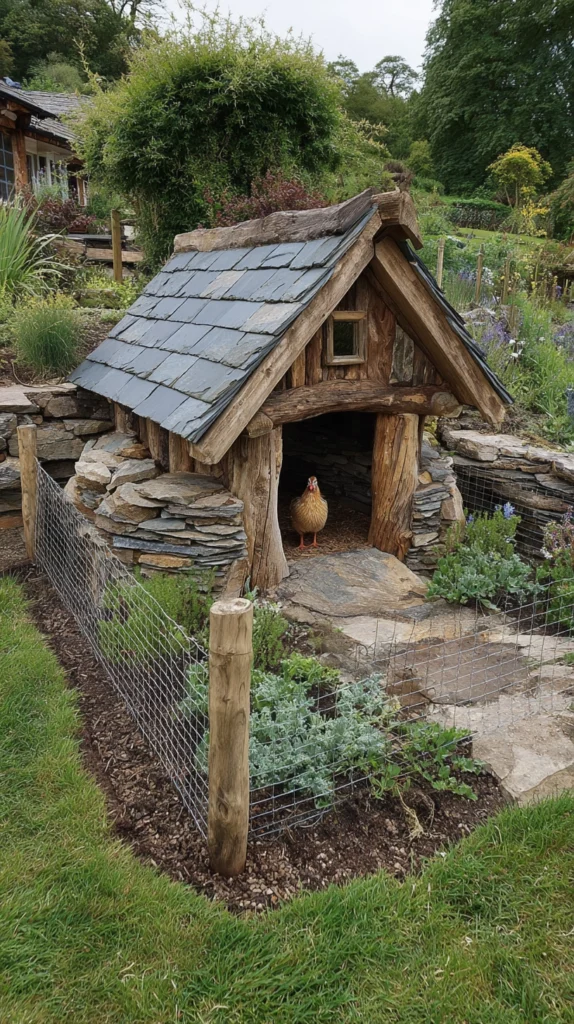
A duck coop built from natural materials — rough-sawn timber, dry stone walling, a slate or turf roof — creates a backyard structure of genuine rustic beauty that looks as though it has been part of the landscape for generations. This approach suits country gardens, rural properties, and any backyard where the aesthetic prioritises natural materials over painted and processed finishes.
Use locally sourced stone for the lower walls if budget and skills allow, or create the impression of stone with a dry-stack stone veneer applied to a timber frame structure. A slate or cedar shake roof adds to the natural aesthetic and provides excellent weather protection. The combination of natural wood and stone creates a coop that looks genuinely beautiful from every angle.
Pro Tip: Ensure the interior of a natural stone or stone-veneer duck coop is well insulated despite the thick walls. Stone walls provide thermal mass but in a small structure like a duck coop they can create a damp, cold environment in winter if adequate insulation and ventilation are not incorporated into the design. Line the interior with a layer of rigid insulation board behind a timber interior cladding for warmth without condensation.
9. Duck Coop with Automatic Door
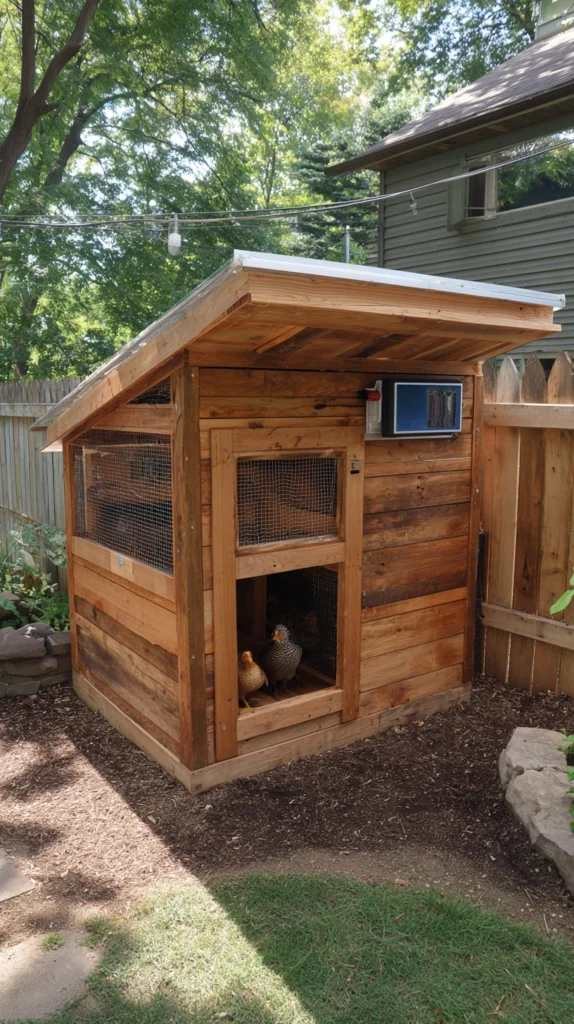
An automatic pop hole door — a small motorised door on a timer or a light sensor that opens at dawn and closes at dusk — is one of the most practically valuable additions to any duck coop design. It eliminates the need for the keeper to be present at first light to release the ducks and at last light to secure them, which is one of the most significant practical constraints of duck keeping for busy households.
Install the automatic door on the pop hole entrance of any coop design — they are available as retrofit units that fit most standard pop hole sizes. Light-sensor operated doors are more reliable than timer-operated ones because they respond to actual dawn and dusk rather than a fixed time setting that requires seasonal adjustment.
Pro Tip: Test and monitor an automatic door system for at least two weeks before relying on it completely for overnight predator security. Automatic doors occasionally malfunction, stick in the open position, or respond incorrectly to artificial light sources that trigger them at the wrong time. Monitoring the system during an initial period while continuing to manually check every evening identifies any reliability issues before they create a predator vulnerability.
10. Duck Coop Inside a Predator-Proof Enclosure
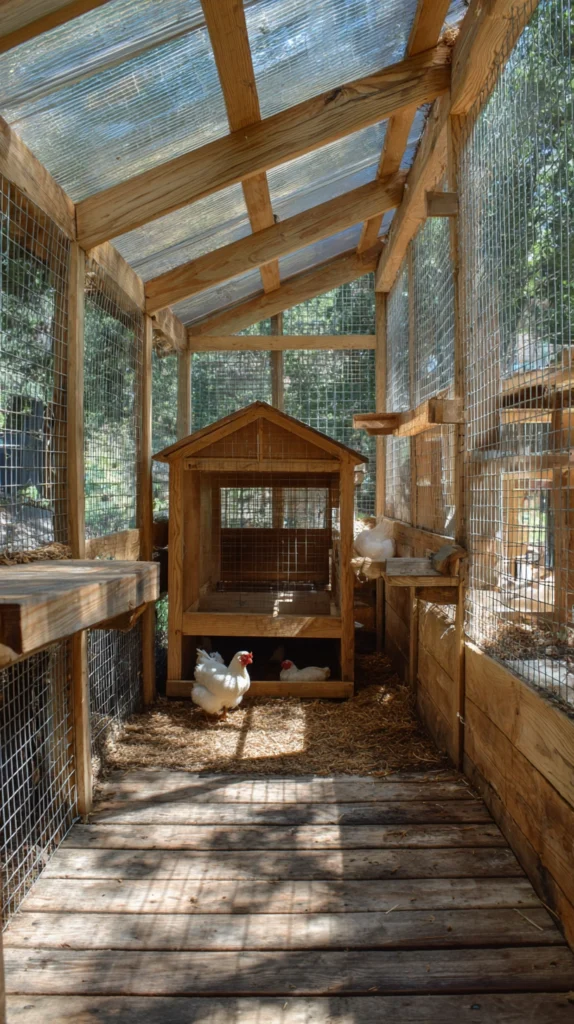
For duck keepers in areas with significant predator pressure — rural areas with foxes, badgers, mink, or urban areas with urban foxes and rats — housing the entire duck coop within a dedicated predator-proof enclosure provides a level of security that no amount of coop reinforcement alone can match.
The outer enclosure is built from heavy-gauge galvanised wire mesh on all sides and the roof, with the buried perimeter skirt described above providing underground protection. The duck coop sits within this secure outer pen — providing two layers of protection between any predator and the ducks inside. The outer enclosure also provides a generous run area that is genuinely secure without requiring constant supervision.
Pro Tip: Use 19-gauge or heavier galvanised wire mesh for a predator-proof enclosure rather than standard chicken wire. Standard chicken wire is designed to keep poultry in rather than predators out — determined foxes and mink can push through or chew through standard chicken wire with relative ease. Heavy-gauge welded wire mesh resists both pushing and chewing and provides the level of predator resistance that the term predator-proof genuinely requires.
11. Duck Coop with Egg Collection Hatch
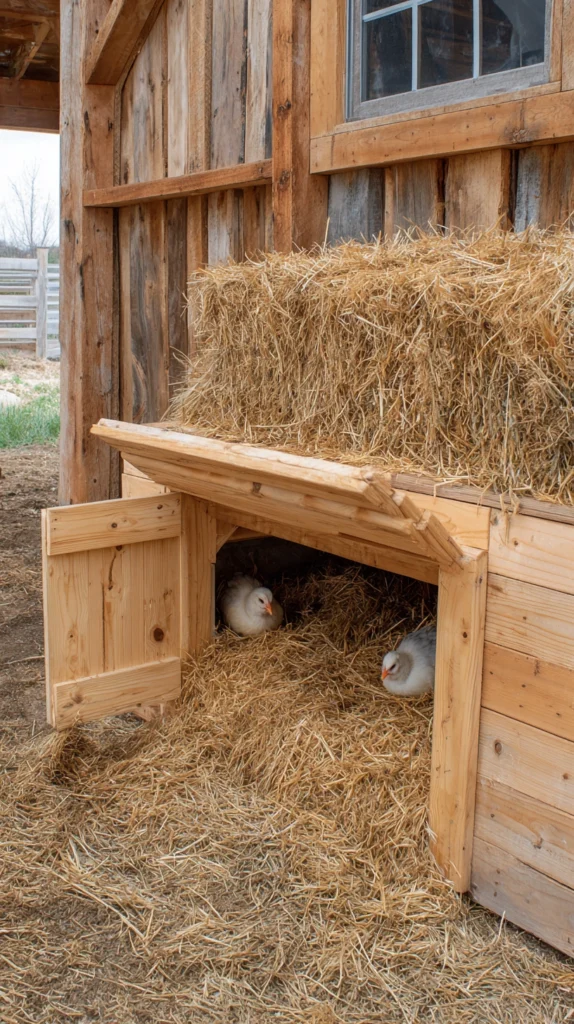
A small external egg collection hatch — a hinged panel in the side of the coop that provides direct access to the nesting area from outside without requiring the keeper to enter the main coop — makes the daily task of egg collection faster, cleaner, and considerably more convenient. Duck eggs are typically laid in the early morning and a quick lift of the external hatch retrieves them without disturbing the flock.
Position the collection hatch at a comfortable working height on the exterior of the coop — typically at waist height — with the nesting area positioned directly inside at the same level. A simple hook-and-eye latch secures the hatch when closed, and a handle allows easy one-handed opening when carrying a collection basket.
Pro Tip: Line the area immediately inside the egg collection hatch with a thick, soft layer of clean straw that is deeper than the main coop floor level. The slightly sunken, well-lined nesting area encourages ducks to lay consistently in the same spot — making egg collection reliable and predictable — and the thick straw cushions eggs against cracking when they are laid. Consistent laying location and intact eggs are both directly served by this simple design detail.
12. Duck Coop with Solar Lighting
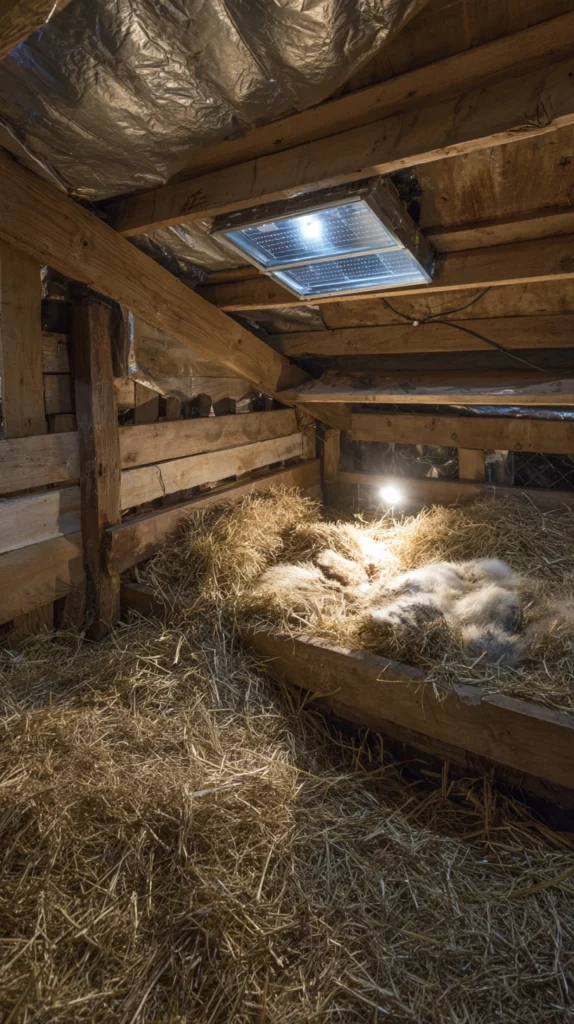
Installing a small solar-powered LED light inside the duck coop extends the effective laying day during shorter winter months — supplementary light stimulates egg production during the reduced daylight hours of autumn and winter and maintains a more consistent laying pattern year-round. A simple solar panel on the coop roof with a small LED fixture inside is all that is required.
Solar lighting also makes early morning and late evening coop management significantly more practical during the darker months of the year. Being able to see clearly inside the coop when collecting eggs before dawn or checking on the flock after dusk makes routine management tasks faster and more thorough than working by torchlight.
Pro Tip: Use a warm-toned LED bulb rather than a cool white one inside a duck coop with supplementary lighting. Cool white light is more disruptive to natural duck behaviour patterns than warm white light and can cause stress in the flock during the transition from outdoor to indoor environments in the evening. Warm white light mimics the quality of late afternoon natural light and creates a calmer, less disruptive transition for the ducks at the end of each day.
13. Duck Coop with Compost Integration
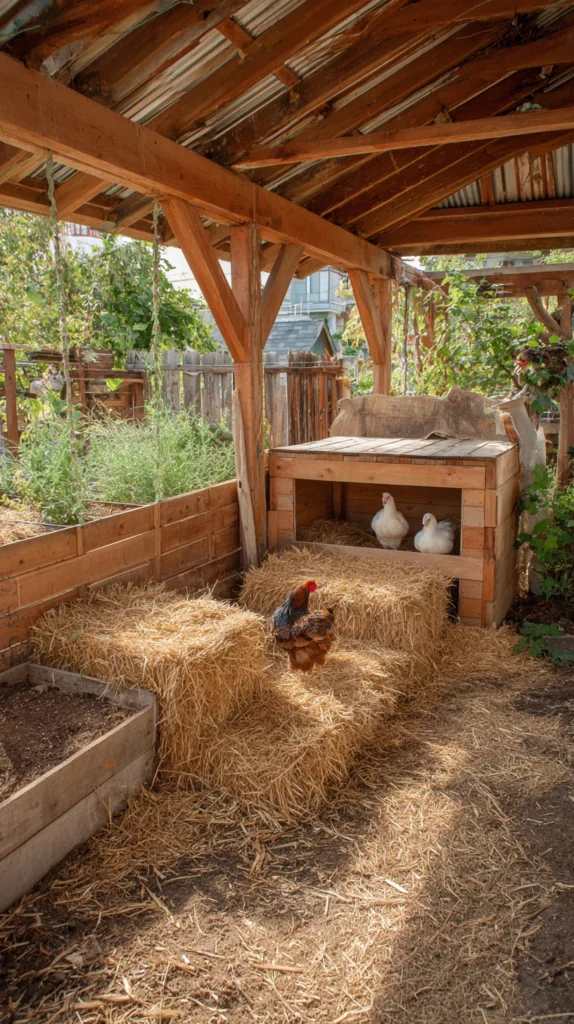
A duck coop designed with direct integration to a compost system — where the soiled bedding from the coop is deposited directly into an adjacent compost bay rather than bagged and removed — creates a genuinely closed-loop system that turns the most time-consuming maintenance task of duck keeping into a productive garden resource. Duck manure is one of the most nitrogen-rich and valuable natural fertilisers available.
Position a timber compost bay directly adjacent to the coop cleaning door so that soiled bedding can be forked directly from the coop into the compost without any intermediate handling or transportation. A two-bay system — one bay actively receiving fresh material, one bay maturing — provides a continuous supply of finished compost ready for the garden throughout the year.
Pro Tip: Add carbon-rich material — dry leaves, cardboard, or additional straw — to the compost bay every time a load of nitrogen-rich duck bedding is added. Duck manure and soiled straw are very high in nitrogen, and without adequate carbon to balance the ratio, the compost heap will become anaerobic, smelly, and slow to break down. The correct carbon-to-nitrogen balance produces compost that is odour-free, fast-decomposing, and genuinely excellent for the garden.
14. Duck Coop with Children’s Viewing Window
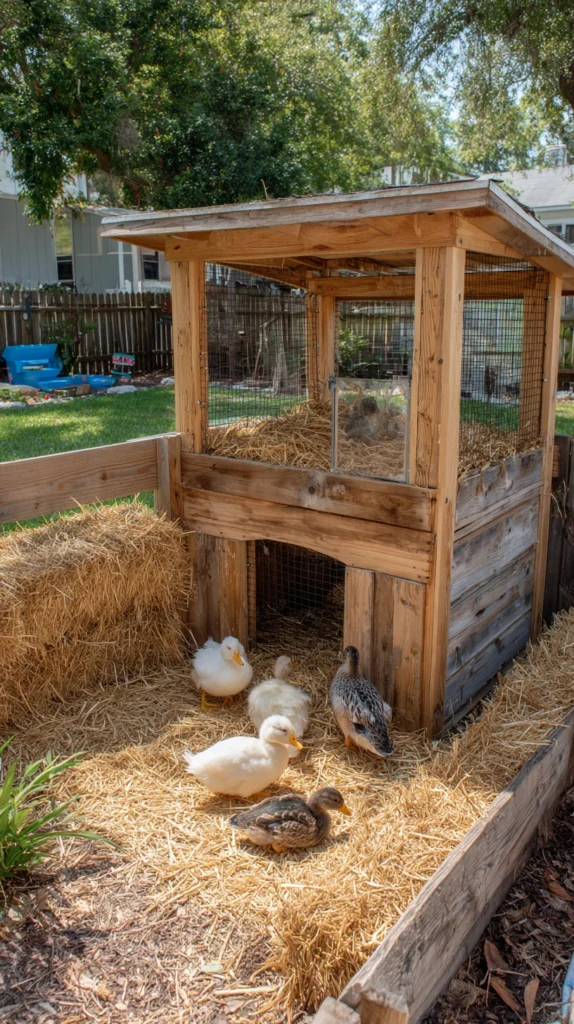
A duck coop designed with a clear perspex viewing window — at child height on one wall of the coop — gives children the ability to observe the ducks inside the coop without disturbing them, creating a daily wildlife watching experience that makes duck keeping genuinely educational and engaging for young family members.
Install a small perspex panel — 30 by 30 centimetres is adequate — in the coop wall at a height that allows children to view comfortably without bending or stretching.
Frame the perspex in timber and seal the edges thoroughly to prevent drafts. The viewing window creates a connection between the children and the ducks that makes the daily care routine feel like an adventure rather than a chore.
Pro Tip: Position the children’s viewing window on the wall opposite the main coop door so that it looks into the area of the coop where the ducks naturally rest and gather. A window that looks into a corner that ducks rarely use provides little viewing value.
Understanding where the ducks spend most of their time inside the coop — typically away from the entrance, toward the back or sides — and positioning the window to face this area maximises its use and enjoyment.
15. Mobile Duck Tractor
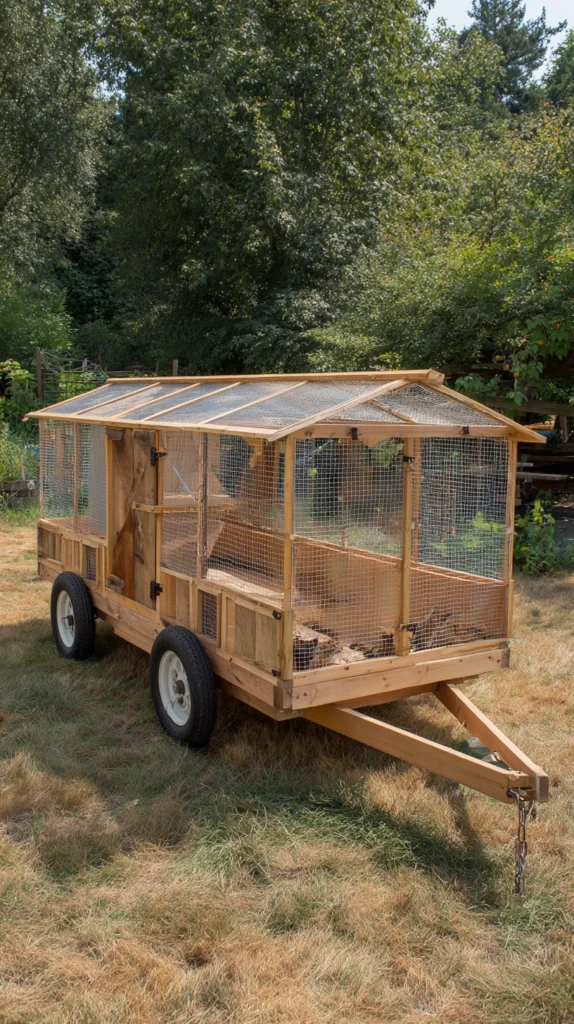
A mobile duck tractor — a lightweight, moveable coop and run combination on wheels or skids that can be relocated around the garden — allows duck keepers to rotate the grazing area regularly, preventing any single area from becoming permanently damaged by concentrated duck traffic and giving ducks access to fresh ground and natural forage on a regular basis.
Build the mobile tractor from lightweight timber — avoiding the heavy hardwoods that make a moveable structure genuinely unmanageable — with a simple enclosed sleeping area at one end and an open wire-covered run extending behind it. Attach a handle at the front and small wheels or smooth skids at the rear for easy one-person relocation across the garden.
Pro Tip: Move the duck tractor to a fresh position every two to three days rather than waiting until the current position shows obvious damage. Proactive rotation before visible ground damage occurs allows the vacated area to recover quickly and completely between visits. Waiting until the ground is visibly damaged means the recovery period is significantly longer and the garden never fully returns to its original condition in heavily used areas.
Build It Right and Your Ducks Will Thrive
A well-designed duck coop is one of the best investments a backyard duck keeper can make. It protects the flock, simplifies daily management, and creates a garden feature that adds genuine character and charm to any outdoor space.
Build generously, build securely, and build with both the ducks and the keeper in mind. A coop that is easy to clean, easy to access, and genuinely predator-proof is one that will serve its purpose beautifully for many years — and the ducks that live in it will reward that investment with health, contentment, and a steady supply of the most beautiful eggs in the neighbourhood.