15 DIY Outdoor Bench Ideas You Can Build This Weekend
An outdoor bench is one of those additions to a garden or outdoor space that seems simple on the surface but delivers an enormous amount of value in practice. It creates a place to sit, a reason to spend time outside, a spot to rest tools during gardening, a surface for potted plants, and a design feature that gives structure and intention to an outdoor space that might otherwise feel unfinished.
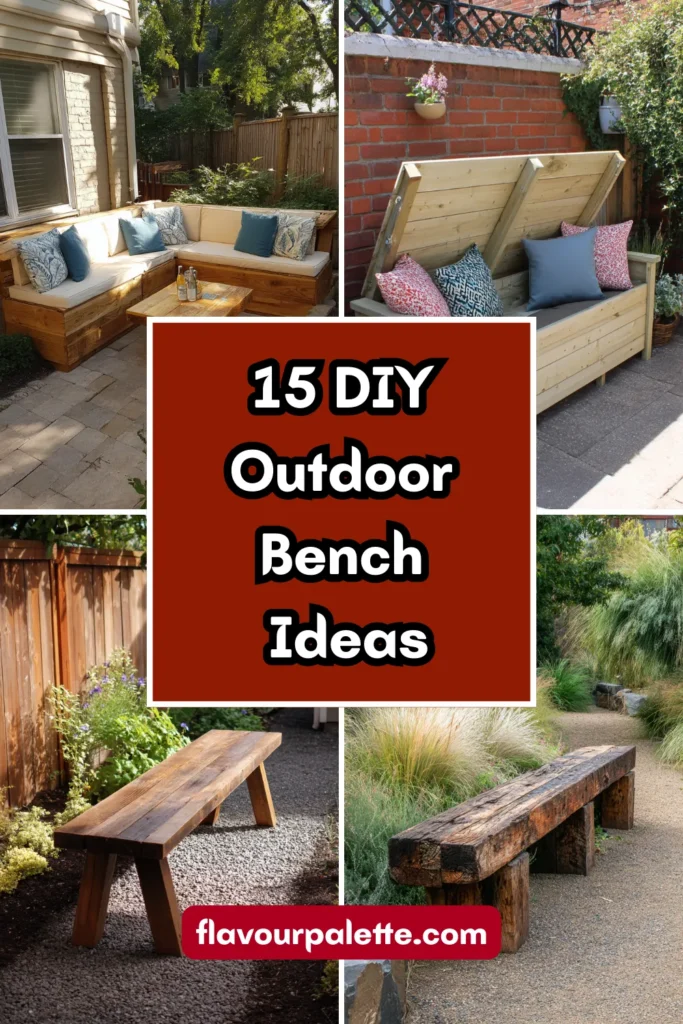
The best part is that building your own outdoor bench is one of the most achievable DIY projects available to a home builder at almost any skill level. The materials are affordable and widely available, the tools required are basic, and the construction methods — even for more ambitious designs — are well within reach of anyone willing to take their time and follow a plan carefully.
Here are 15 DIY outdoor bench ideas ranging from genuinely beginner-friendly to impressively ambitious — all buildable at home with standard tools and materials.
1. Simple 2×4 Timber Bench
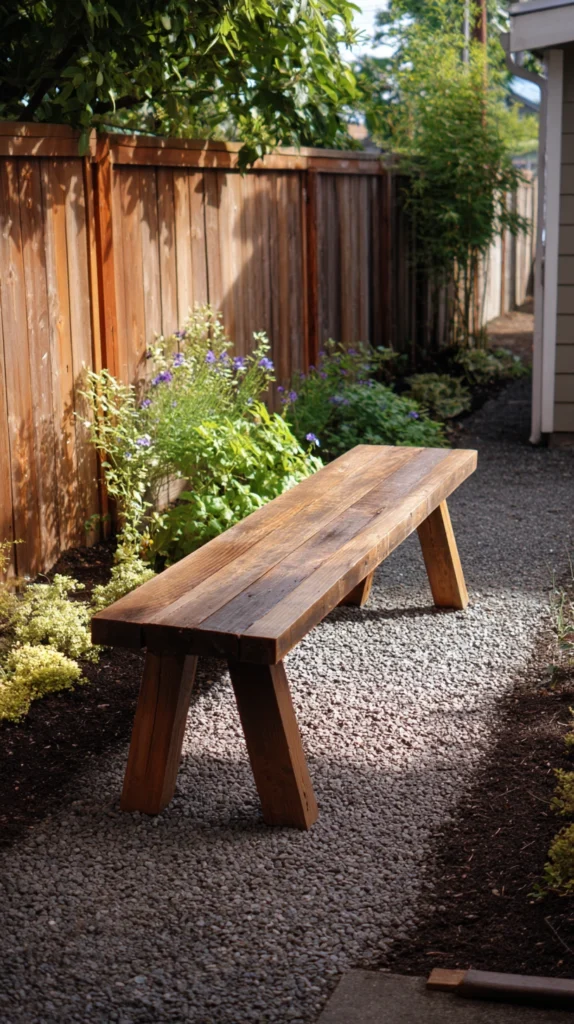
The 2×4 timber bench is the classic starting point for any outdoor bench building project — and there is a very good reason it has been the go-to beginner bench design for generations. It requires nothing more than standard dimensional timber, a saw, a drill, and a handful of screws, and the finished result is a sturdy, good-looking bench that will last for years with minimal maintenance.
Cut your 2×4 lengths to the desired bench dimensions, construct a simple rectangular frame for the base with four legs, and lay three or four 2×4 planks across the top as the seat. Sand all surfaces smooth, finish with an exterior wood stain or decking oil in your chosen color, and the whole project is achievable in a single afternoon for a total material cost that is a fraction of any comparable retail bench.
Pro Tip: Cut the four legs of a simple 2×4 bench at a slight outward angle — around 5 to 10 degrees — rather than perfectly vertical. Angled legs give the bench a more elegant, considered silhouette than straight vertical legs and significantly improve lateral stability, making the bench considerably harder to tip sideways under load. A simple angled cut on a mitre saw achieves this in seconds.
2. Concrete and Timber Bench
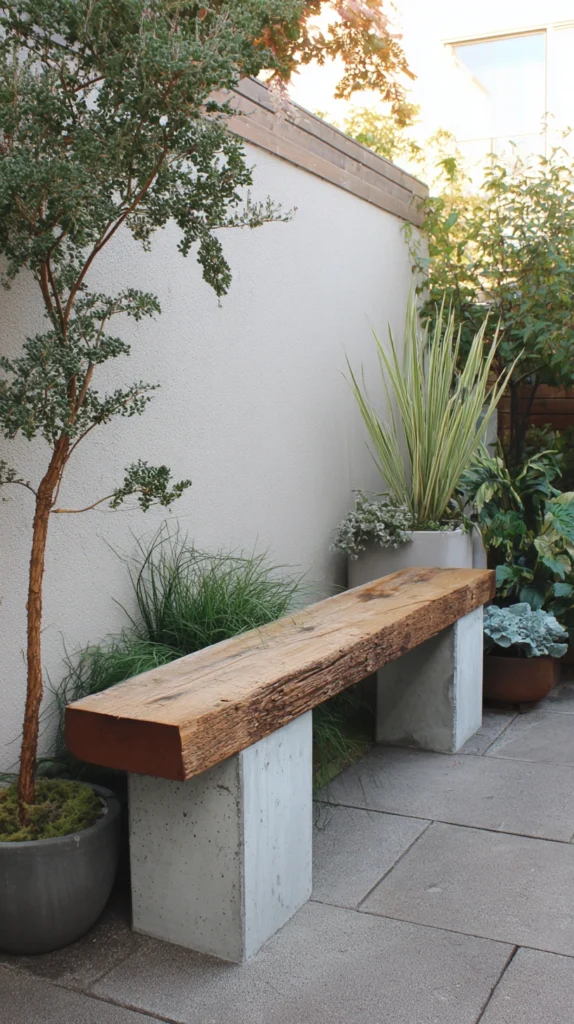
A bench combining a poured concrete base with a natural timber seat is one of the most striking and architecturally resolved DIY outdoor bench designs available. The contrast between the raw, industrial quality of the concrete and the warmth of the natural timber creates a piece that looks genuinely designed and considerably more expensive than the materials involved would suggest.
Build simple rectangular timber molds for the two concrete leg supports, mix and pour your concrete, allow to cure fully for at least 48 hours, strip the molds, and bolt a hardwood timber seat plank — teak, oak, or iroko all work beautifully — across the top of both supports with recessed bolt heads. The finished bench has a permanent, architectural quality that makes it feel like a feature of the garden rather than a piece of furniture placed within it.
Pro Tip: Add a handful of glass fibre strands or a piece of steel mesh reinforcement into the concrete mix before pouring the leg supports. Concrete is strong in compression but weak in tension — reinforcement dramatically reduces the risk of cracking if the bench legs are subjected to sideways loads, frost expansion, or ground movement over time. Reinforced concrete leg supports will outlast the timber seat by decades.
3. Pallet Wood Outdoor Bench
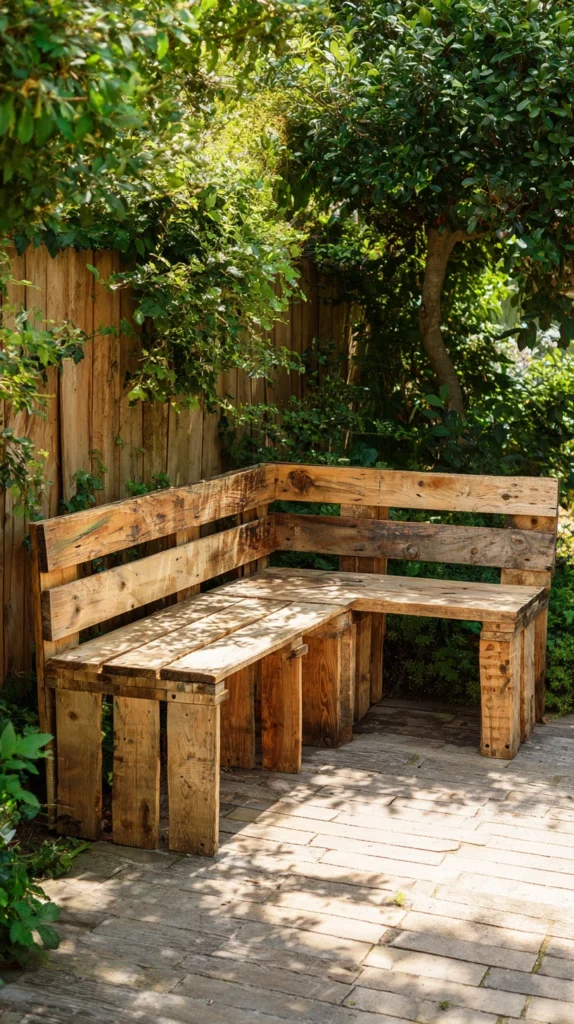
Pallet wood is one of the most widely available, inexpensive, and characterful materials available for DIY outdoor bench building. The weathered, rustic quality of reclaimed pallet timber — with its natural colour variation, visible nail holes, and occasional rough texture — gives a pallet bench an authentic, artisan quality that new timber simply cannot replicate.
Disassemble pallets carefully to avoid splitting the boards, select the best and most consistent planks for the seat surface, construct a simple frame from the heavier pallet stringers, and assemble with exterior screws. Sand the seat surface thoroughly to remove any rough patches or splinters, and finish with a good quality exterior decking oil to protect the wood and enhance its natural character.
Pro Tip: Source pallets marked with the stamp HT — heat treated — rather than MB — methyl bromide treated. HT pallets have been treated with dry heat to kill pests and pathogens and are completely safe for use in garden furniture. MB pallets have been treated with a chemical fumigant that can be harmful to humans and should never be used for furniture, raised beds, or any application involving regular human contact.
4. Garden Bench with Built-In Planter Boxes
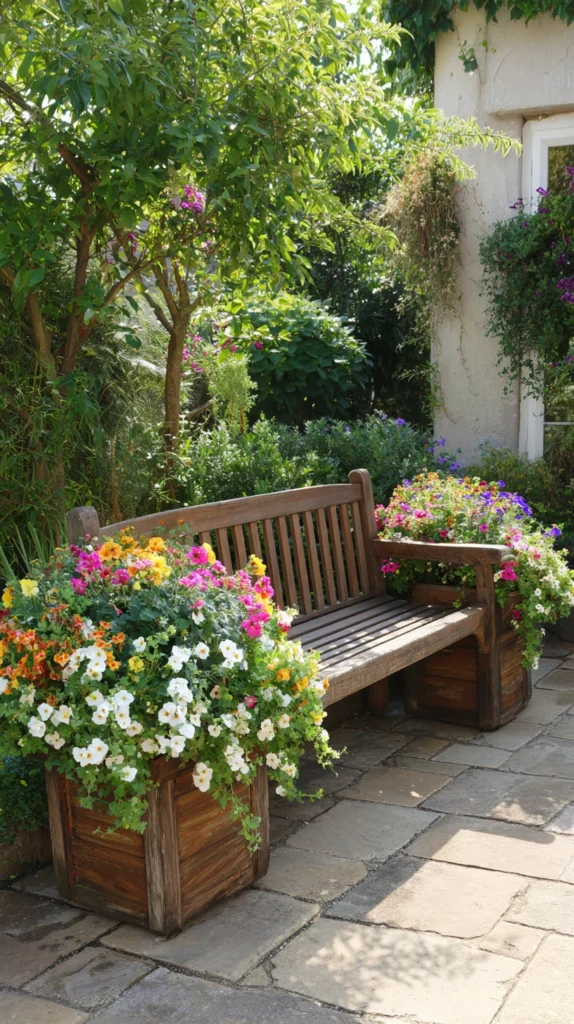
A bench with integrated planter boxes at one or both ends is one of the most clever and multifunctional DIY outdoor bench designs available. The bench provides seating while the planter boxes frame it with living greenery — flowers, herbs, trailing plants, or small shrubs — creating a garden feature that is simultaneously functional furniture and a planted display.
Construct the central bench seat from timber planks on a simple frame, then build two box planters of matching timber to the same height as the bench seat and attach them securely at each end. Line the planter boxes with heavy-duty plastic sheeting before filling with compost to protect the timber from continuous moisture contact and significantly extend the life of the wood.
Pro Tip: Build the planter boxes at the ends of a bench-with-planters design slightly taller than the bench seat rather than exactly the same height. Planter boxes that sit a few centimetres higher than the seat create a natural armrest effect on both sides of the bench — a practical comfort improvement that makes the bench considerably more pleasant to sit on for extended periods without any additional construction complexity.
5. Log Slice Bench
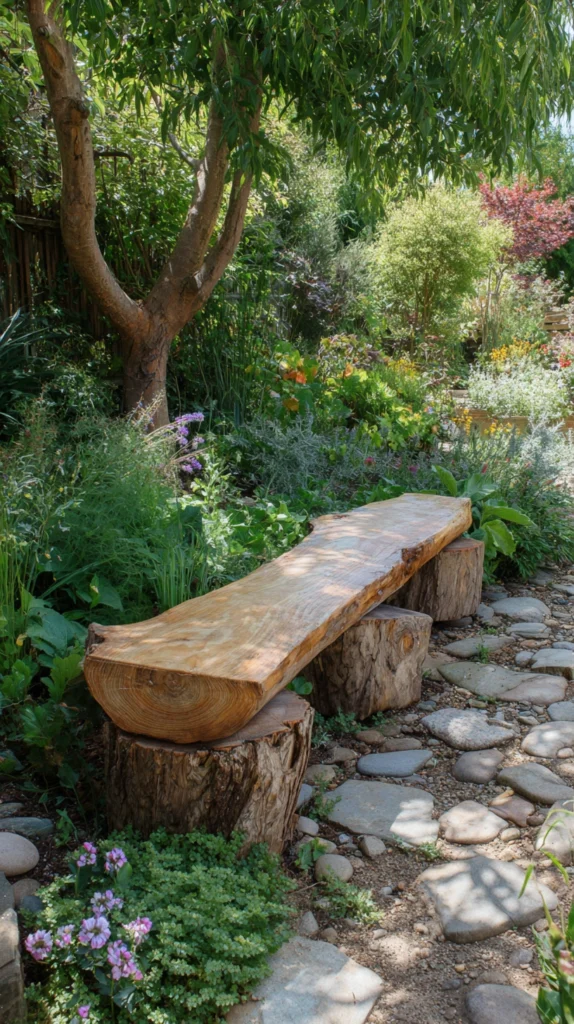
A series of large log cross-sections — rounds cut from a substantial tree trunk — used as legs supporting a long timber plank seat creates one of the most organically beautiful and naturally characterful outdoor bench designs imaginable. Every log round is completely unique in its grain pattern, bark texture, and natural color variation, giving each bench built this way a completely individual character.
Source suitable log rounds from a fallen garden tree, a local sawmill, or a timber merchant. Cut them to a consistent height for the bench legs, allow them to dry thoroughly if freshly cut, and bolt a hardwood plank seat across the top of two or three log rounds positioned at appropriate intervals. The result looks like something from a forest designer’s workshop and costs almost nothing to build.
Pro Tip: Seal the cut faces of log rounds used as bench legs with an end grain sealer or a generous coat of exterior PVA before installation. End grain — the cut face of a log — absorbs water far more rapidly than the side grain and is the primary entry point for moisture that causes checking, cracking, and accelerated decay in outdoor log furniture. Sealing the end grain dramatically slows moisture absorption and extends the working life of the log legs significantly.
6. Steel Hairpin Leg Garden Bench
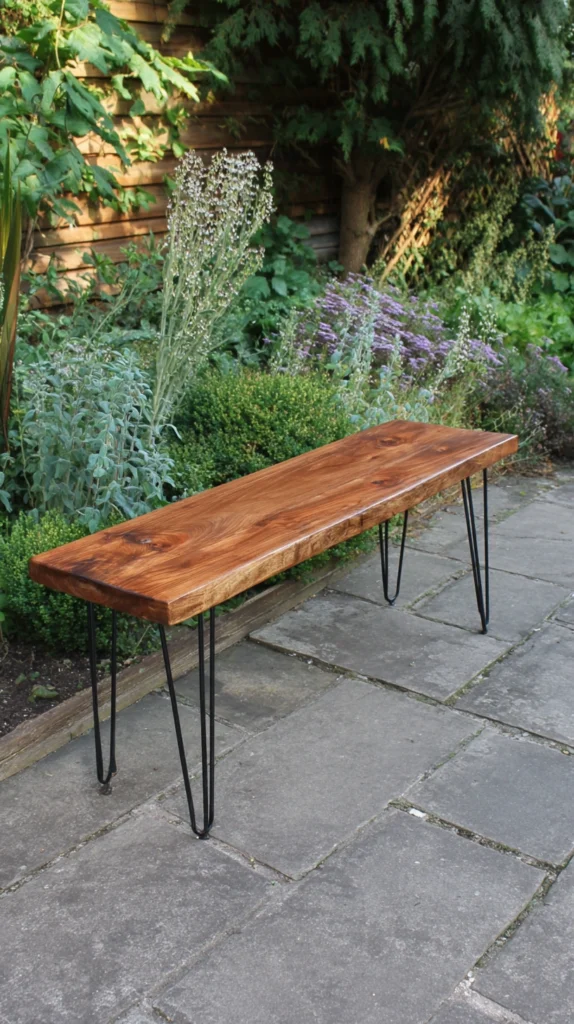
Hairpin legs — the slender, elegant steel rod legs originally associated with mid-century modern furniture design — translate beautifully into outdoor bench design when made from powder-coated steel or stainless steel rated for exterior use. The combination of the delicate, geometric hairpin leg with a solid timber seat plank creates a bench that is simultaneously minimal, modern, and genuinely striking in an outdoor setting.
Source exterior-rated hairpin legs in your chosen height and finish — matte black, raw steel, and brushed stainless all look excellent — and attach them to a carefully finished hardwood seat plank with the supplied mounting plates and screws. The whole assembly takes less than an hour, and the finished bench looks like a piece of designer garden furniture at a fraction of the retail price.
Pro Tip: Choose a timber species with genuine natural weather resistance for the seat plank of a hairpin leg outdoor bench — teak, iroko, or accoya are all excellent choices. The exposed, minimal design of a hairpin leg bench means the timber seat is the primary visual element of the piece, and any warping, cracking, or rapid weathering of an unsuitable timber species will be immediately obvious and significantly detract from the clean, designed aesthetic.
7. Curved Garden Bench Around a Tree
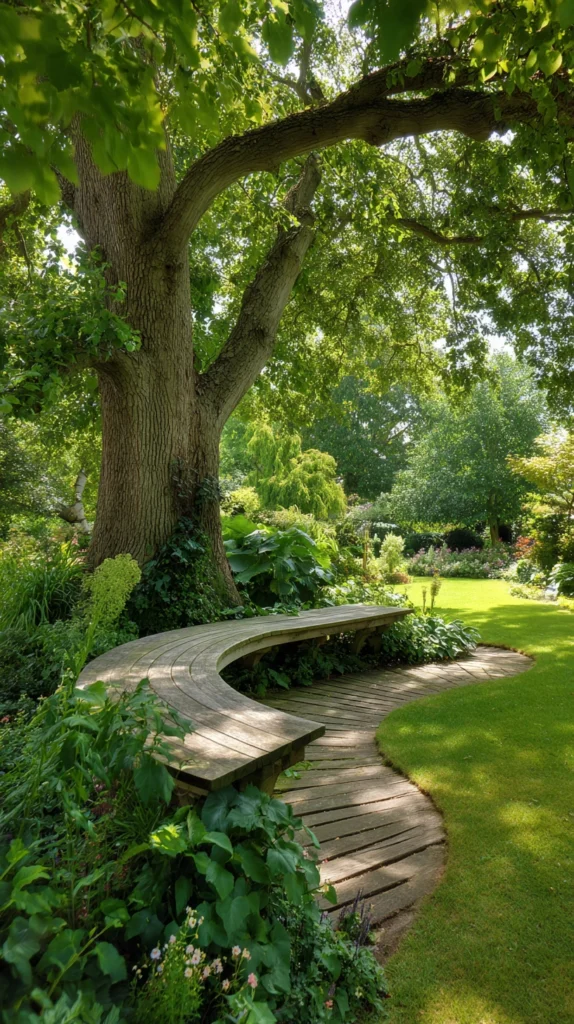
A curved bench built around the base of a mature garden tree is one of the most beautiful and site-specific outdoor bench designs possible — a piece that could only exist in this exact spot in this exact garden, making it genuinely unique to the space it inhabits. It transforms the base of a tree from dead, difficult-to-plant ground into the most inviting sitting area in the garden.
Construct the bench from curved timber sections — either steam-bent planks, segments of curved timber cut on a bandsaw, or straight planks arranged in short segments around the curve — supported on simple timber or steel leg structures positioned between the tree roots. Leave adequate clearance between the bench structure and the tree trunk to allow for continued growth without the bench constricting or damaging the bark.
Pro Tip: Never attach a curved tree bench directly to the trunk of the living tree — not with screws, bolts, brackets, or any other fixing method. Penetrating the bark of a living tree creates entry points for disease and fungal infection, and a bench fixed rigidly to the trunk will cause damage as both the tree and the bench expand and move with temperature and moisture changes. Support the bench entirely on its own independent leg structure positioned clear of the trunk.
8. Storage Bench with Lift-Up Seat
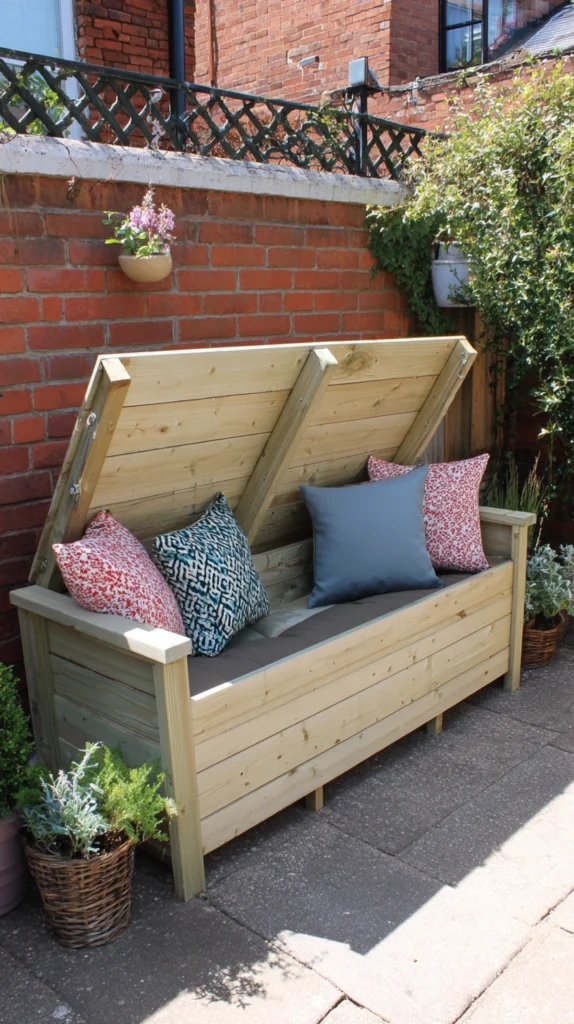
A garden bench with a lift-up seat concealing a storage compartment beneath is one of the most practically intelligent outdoor bench designs available — particularly valuable in a garden where tools, cushions, children’s outdoor toys, or general garden equipment need accessible, weatherproof storage without a dedicated shed or outbuilding.
Construct a simple rectangular box frame from exterior-grade plywood or timber planks, hinge a timber seat panel to the back edge of the top opening, and add a simple latch at the front to keep the seat securely closed. Line the interior with a weatherproof membrane or paint with a waterproof sealant, and finish the exterior to match the rest of your outdoor furniture. The storage capacity of even a modest garden storage bench is genuinely transformative.
Pro Tip: Install a simple drain hole — a 10 to 12 millimetre diameter hole drilled through the floor panel of the storage compartment — in a garden storage bench to prevent water from accumulating inside if any moisture penetrates past the sealed lid. A small amount of water ingress in heavy rain is almost inevitable with any outdoor storage, and a drain hole prevents this from pooling and causing damp damage to stored cushions, tools, or equipment over time.
9. Cinder Block and Timber Bench
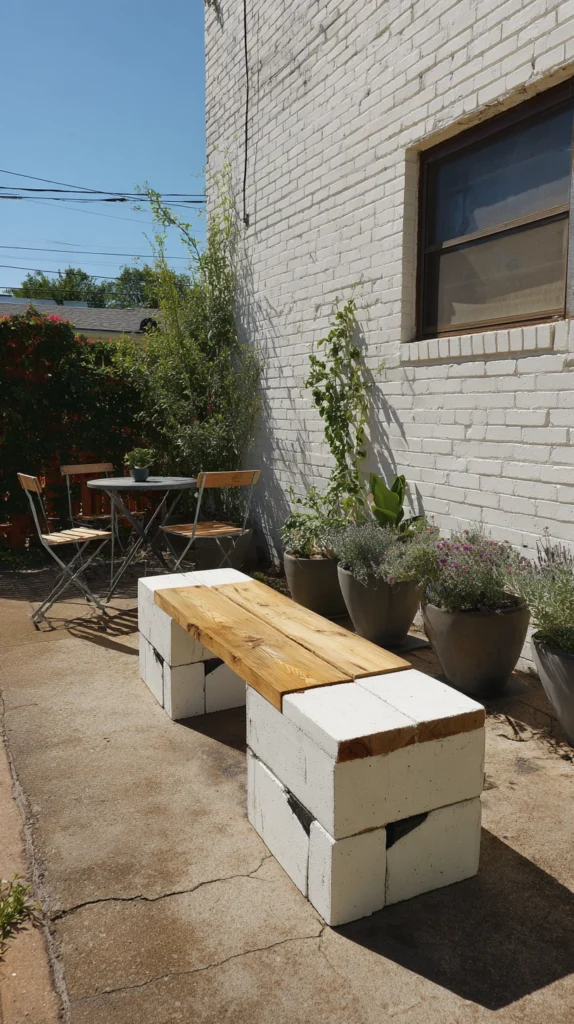
A bench constructed from stacked cinder blocks or concrete breeze blocks with timber planks laid across the top is one of the most affordable, quickest, and surprisingly attractive outdoor bench designs possible. The industrial rawness of the concrete block contrasts with the warmth of natural timber creates a combination that suits modern, industrial, and urban garden aesthetics particularly well.
Stack two columns of cinder blocks to your desired bench height — typically two or three blocks high — at the appropriate spacing for your chosen seat plank length, and lay two or three timber planks across the top. No adhesive is strictly necessary for a light garden bench, though a bed of construction adhesive between courses significantly improves stability in a permanent installation.
Pro Tip: Paint cinder blocks used as outdoor bench supports in an exterior masonry paint before assembly for a considerably more finished and designed look. Raw cinder blocks in their natural grey have an unfinished quality that can look unintentional rather than industrial. The same blocks painted in a crisp white, a charcoal grey, or a terracotta tone look clean, considered, and deliberately chosen — the difference between a building material repurposed for furniture and a piece of furniture that happens to be made from concrete blocks.
10. Rustic Branch and Log Bench
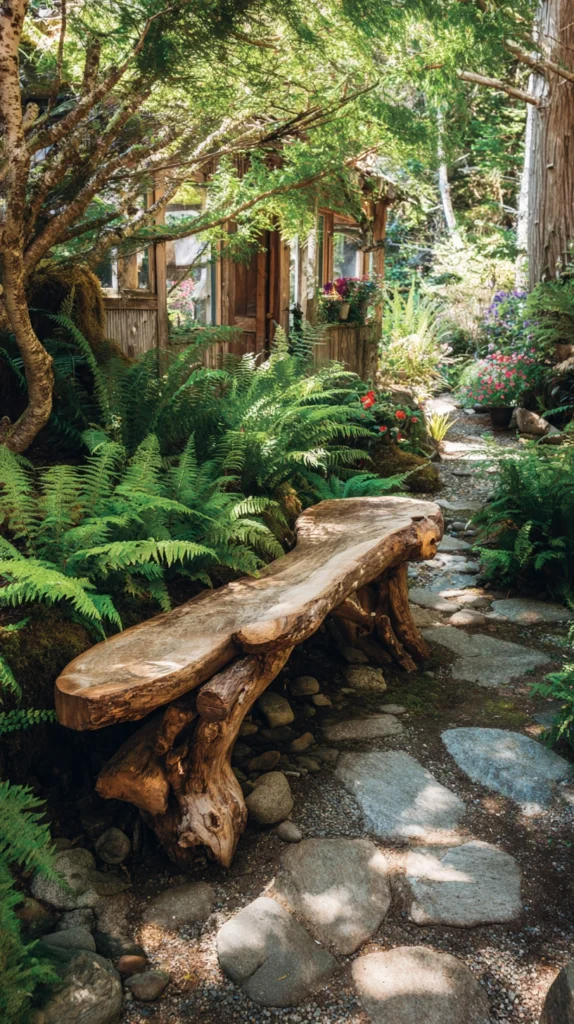
A bench built entirely from natural branches and logs — with no processed or manufactured materials beyond the screws or bolts holding it together — creates the most organic, naturalistic outdoor furniture possible. The irregular forms, natural curves, and bark-covered surfaces of rustic branch furniture give it a character and warmth that no manufactured piece of garden furniture can replicate.
Select straight-ish branches of sufficient diameter for the legs and frame — at least 8 to 10 centimetres in diameter for structural members — and flatter, more uniform branches or split logs for the seat surface. Join with heavy exterior screws or coach bolts and allow the natural irregularity of the materials to become the aesthetic of the finished piece rather than something to be corrected or apologised for.
Pro Tip: Remove the bark from branches used in a rustic outdoor bench before construction. Bark harbours moisture, insects, and fungal spores that accelerate decay in outdoor timber, and it also tends to separate from the wood naturally over time as the branch dries — leaving a patchy, unattractive finish. Debarked branches dry more evenly, last significantly longer outdoors, and develop a beautiful silver-grey weathered patina that looks genuinely stunning in a garden setting.
11. Floating Wall-Mounted Garden Bench
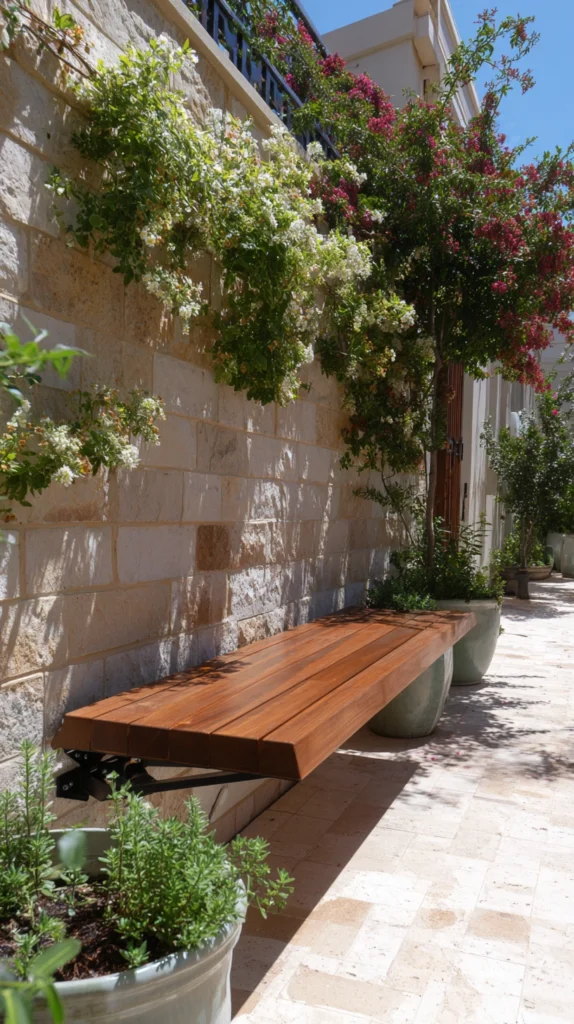
A bench cantilevered from a garden wall — bolted securely to the wall structure with no floor-level legs — creates a clean, architectural, and space-efficient seating solution that is particularly valuable in small gardens, courtyard spaces, and terraces where floor space is limited and a freestanding bench would feel obstructive.
Mount two or three substantial steel or timber brackets into the garden wall with heavy-duty masonry fixings driven into solid brick or block — never into mortar joints or render alone — and lay a hardwood timber plank seat across the brackets. The finished bench appears to float from the wall with no visible means of support, creating a minimal, modern aesthetic that looks exceptional against a rendered, brick, or stone garden wall.
Pro Tip: Use brackets rated for at least three times the expected load for a wall-mounted garden bench — accounting for the weight of the timber seat, the maximum number of seated adults, and a safety margin beyond that. Wall-mounted seating that fails under load is a genuine safety hazard, and the consequences of an inadequate fixing are considerably more serious than the modest additional cost of properly rated brackets and masonry fixings.
12. Reclaimed Railway Sleeper Bench
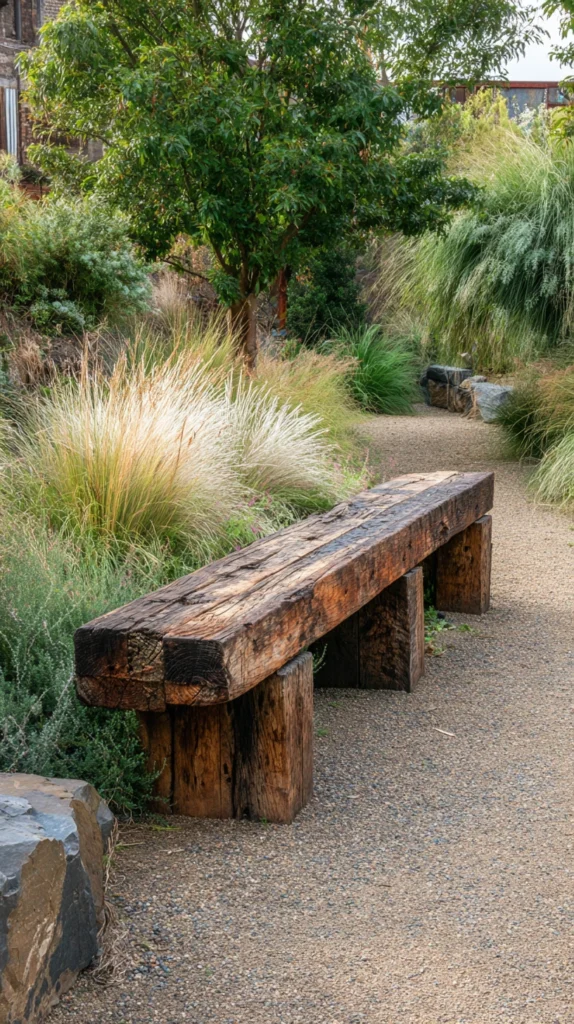
Railway sleepers — the heavy, dense, and extraordinarily durable timber beams originally used as track supports in rail infrastructure — make one of the most permanent and characterful outdoor bench materials available. Their weight, density, and natural weather resistance give a sleeper bench a solidity and permanence that lighter timber furniture simply cannot match.
A single reclaimed railway sleeper of appropriate length, supported on two shorter sleeper sections, stood on end as legs and fixed with heavy coach bolts, creates a bench of remarkable simplicity and genuine visual power. The sheer mass of the material, the visible history in the weathered surface, and the deep, rich color of the treated timber give a sleeper bench a quality that improves with every year it sits in the garden.
Pro Tip: Source reclaimed rather than new railway sleepers for outdoor bench building wherever possible. Reclaimed sleepers have already completed their initial weathering and dimensional movement, which means they are significantly more stable and less prone to cracking or twisting than new sleepers that have not yet fully dried.
Reclaimed sleepers also carry a surface character — oil staining, weathering marks, and the visual evidence of their working life — that gives them a beauty that new sleepers simply do not possess.
13. Garden Bench with Backrest and Armrests
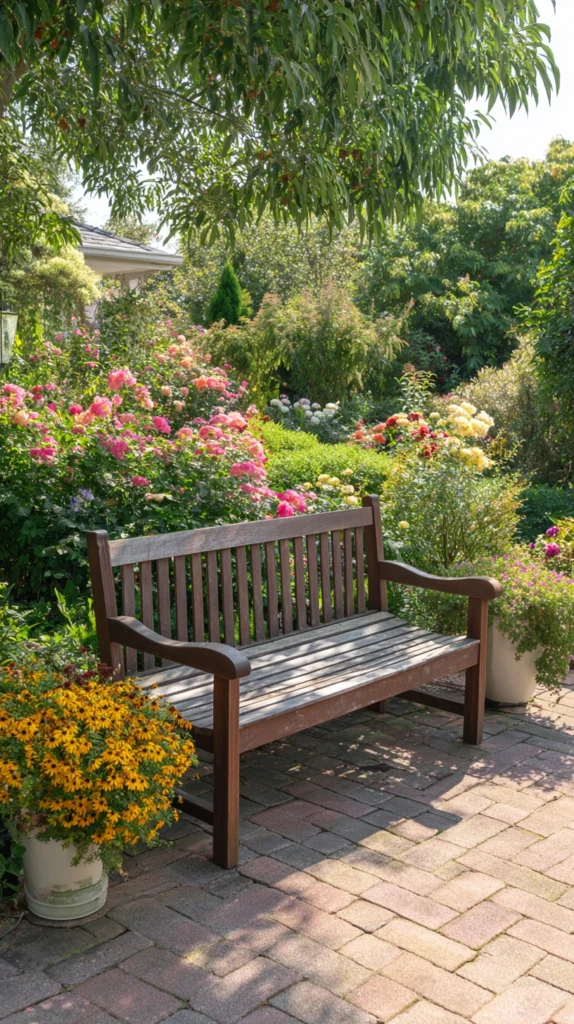
Moving beyond the simple backless bench to a design with a proper backrest and armrests is the step that transforms a basic outdoor seating surface into a genuinely comfortable garden chair — a bench you actually want to sit in for an extended period rather than perching on briefly between garden tasks.
Construct the seat and base frame in the standard way, then add two vertical back uprights rising from the rear legs, a series of horizontal back slats spanning between the uprights at an appropriate reclined angle, and two horizontal armrest planks extending forward from the top of each back upright to rest on a short front support post. The additional construction complexity is modest, and the comfort improvement is substantial.
Pro Tip: Set the backrest of a garden bench with a recline angle of around 5 to 10 degrees from vertical rather than building it perfectly upright. A slight backward lean to the backrest immediately makes a garden bench considerably more comfortable for relaxed sitting because it naturally supports the lower back and encourages a more relaxed, open posture. A perfectly vertical backrest feels rigid and uncomfortable for anything beyond brief perching.
14. Painted Statement Outdoor Bench
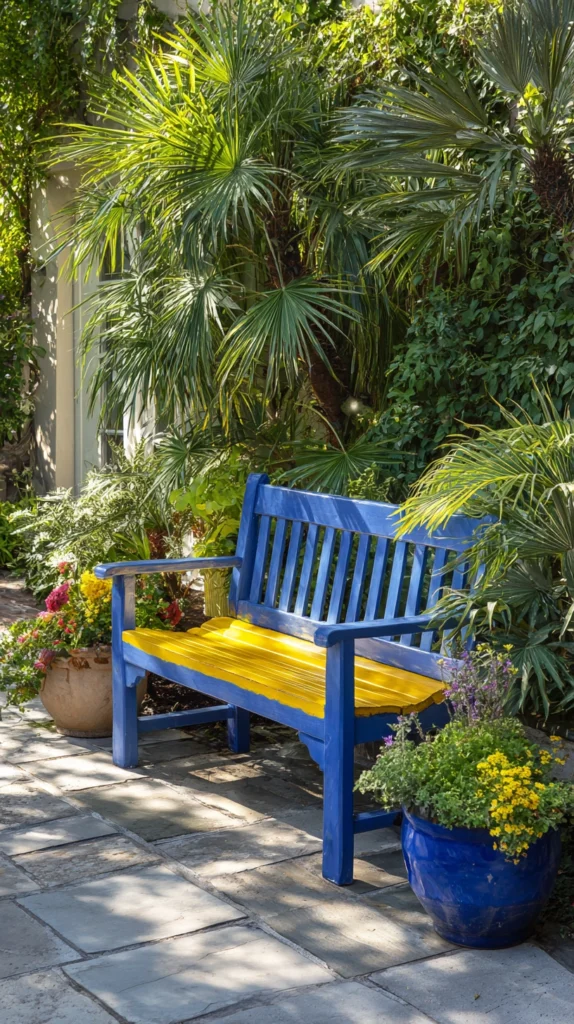
Sometimes the most impactful thing you can do with a simple outdoor bench design is to build it in a straightforward, classic style and then paint it in a genuinely bold, unexpected color that makes it a statement piece in the garden. A simple slatted garden bench in a vivid cobalt blue, a deep forest green, a rich terracotta, or a bright sunshine yellow becomes an entirely different object — a piece of garden sculpture as much as functional furniture.
Build a classic slatted bench design in exterior-grade pine or softwood — a material that accepts paint beautifully and is considerably more affordable than hardwood — sand thoroughly, prime with an exterior wood primer, and apply two coats of a high-quality exterior paint in your chosen color. The finished bench will become the most talked-about feature in the garden.
Pro Tip: Choose an exterior paint specifically formulated for timber garden furniture rather than a standard exterior masonry or wall paint for a painted outdoor bench. Furniture-grade exterior paint contains flexibility agents that allow the finish to expand and contract with the timber as temperatures change throughout the seasons — preventing the cracking and peeling that rigid wall paints develop quickly on timber surfaces subjected to the temperature extremes of outdoor use.
15. Modular Corner Garden Bench
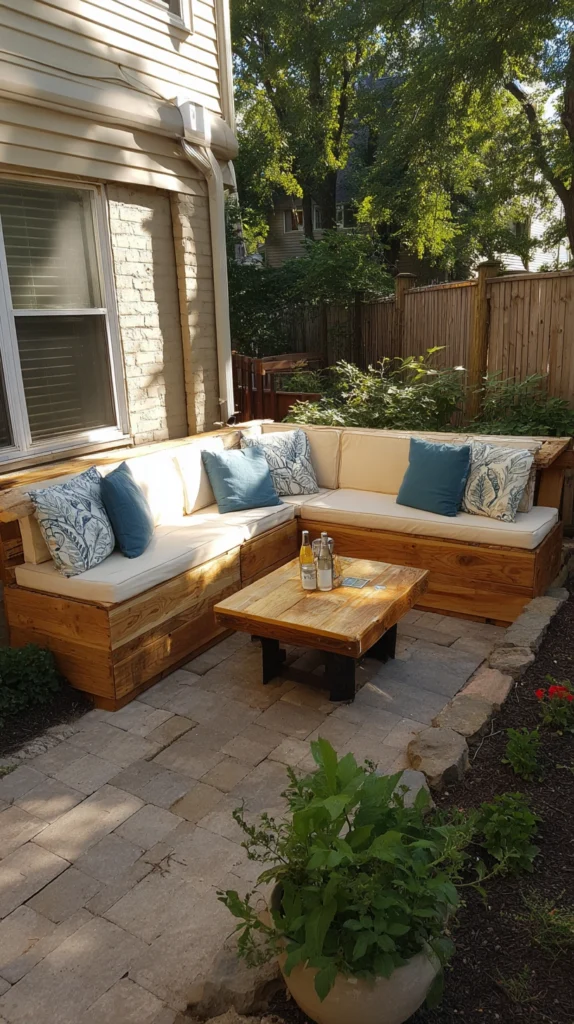
A modular corner bench — two bench sections meeting at a 90-degree angle in the corner of a terrace, deck, or garden seating area — creates the most generous, sociable, and space-efficient outdoor seating arrangement possible from a DIY bench project. The corner configuration seats more people in a smaller footprint than two separate benches, creates a natural gathering space with an enclosed, intimate quality, and defines the seating area as a room within the garden.
Build two standard bench sections to match dimensions and join them at a 90-degree angle with a corner section that bridges the two runs and provides a continuous seat surface around the corner. A matching back table surface in the corner angle — at seat height or slightly lower — creates a surface for drinks and plates that makes the corner bench a complete outdoor entertaining setup.
Pro Tip: Build the two sections of a modular corner garden bench as independent, free-standing units that bolt together rather than as a single, permanently joined structure.
Independent sections that connect with bolts can be separated and reconfigured as the garden layout evolves, moved independently for storage or maintenance, and transported if you move house — a significant practical advantage over a rigidly joined structure that becomes permanently fixed to a single configuration and location.
The Best Seat in Your Garden Is the One You Built Yourself
There is something particularly satisfying about sitting on a bench you made with your own hands. It is not just a place to sit — it is evidence of something you were capable of, a permanent fixture in your garden that started as a pile of timber and became something genuinely useful and beautiful through your own effort and skill.
Pick the design that suits your garden, your skill level, and your available weekend time. Gather the materials, clear some space to work, and start building. Your garden has been waiting for exactly this — a place to sit and enjoy everything you have created within it.