15 DIY Garden Arch Ideas for Climbing Plants
A garden arch is one of the simplest ways to add structure, charm, and vertical interest to an outdoor space. Whether placed at an entrance, along a pathway, or as a focal point in the garden, an arch instantly creates a sense of depth and intention. When paired with climbing plants, it transforms into a living feature that evolves with the seasons.
DIY garden arches are especially appealing because they can be tailored to your garden’s size, style, and budget. From rustic wood designs to modern metal frames, there’s an option for every type of garden.
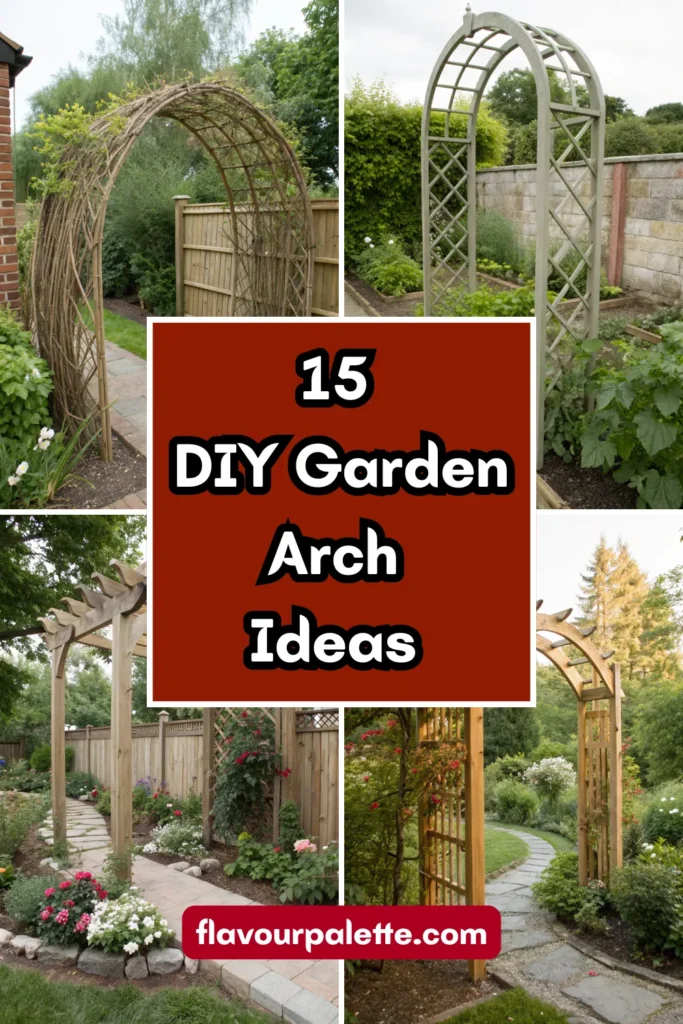
Below are 15 DIY garden arch ideas that combine beauty and practicality, helping climbing plants thrive while enhancing the overall look of your outdoor space.
1. Classic Wooden Garden Arch
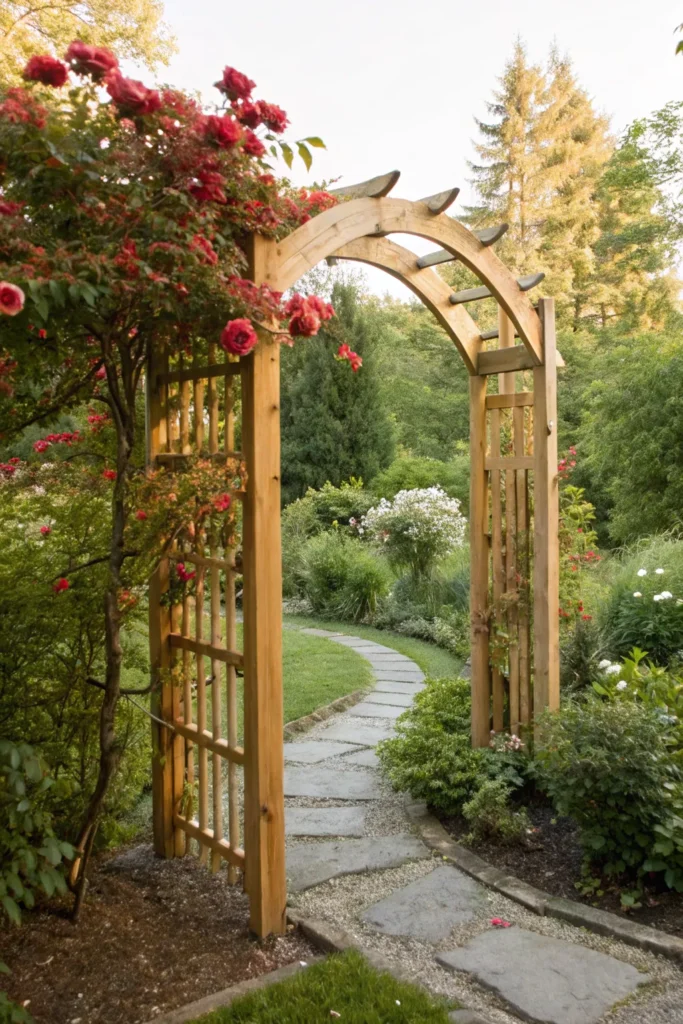
A classic wooden garden arch is a timeless choice that works well in both traditional and modern gardens. Built using treated timber or cedar, this type of arch provides sturdy support for climbing roses, clematis, or jasmine.
The natural texture of wood blends beautifully with greenery and softens hard landscaping elements. With a simple rectangular or curved top design, it’s easy to construct and can be customized with paint or stain to match your garden’s style.
2. Rustic Branch Arch
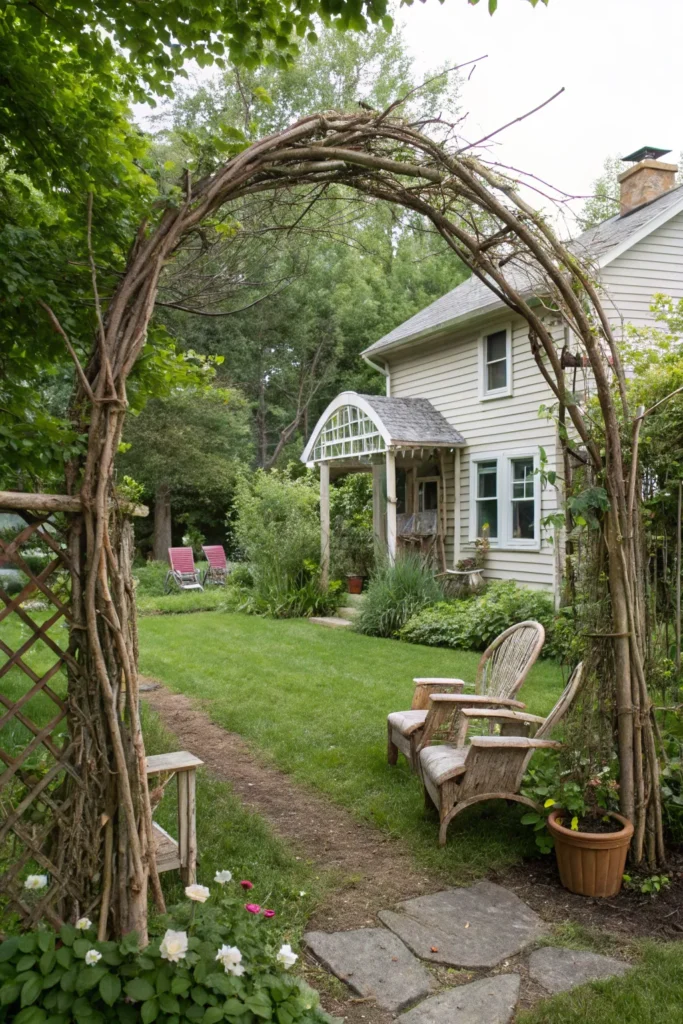
For a more organic and budget-friendly option, a rustic branch arch offers a charming, handmade look. Fallen branches or reclaimed wood can be assembled into a natural frame that feels effortlessly integrated into the garden.
This type of arch is ideal for informal gardens or cottage-style landscapes. Climbing plants weave through the branches naturally, creating a relaxed and whimsical appearance over time.
3. Metal Pipe Garden Arch
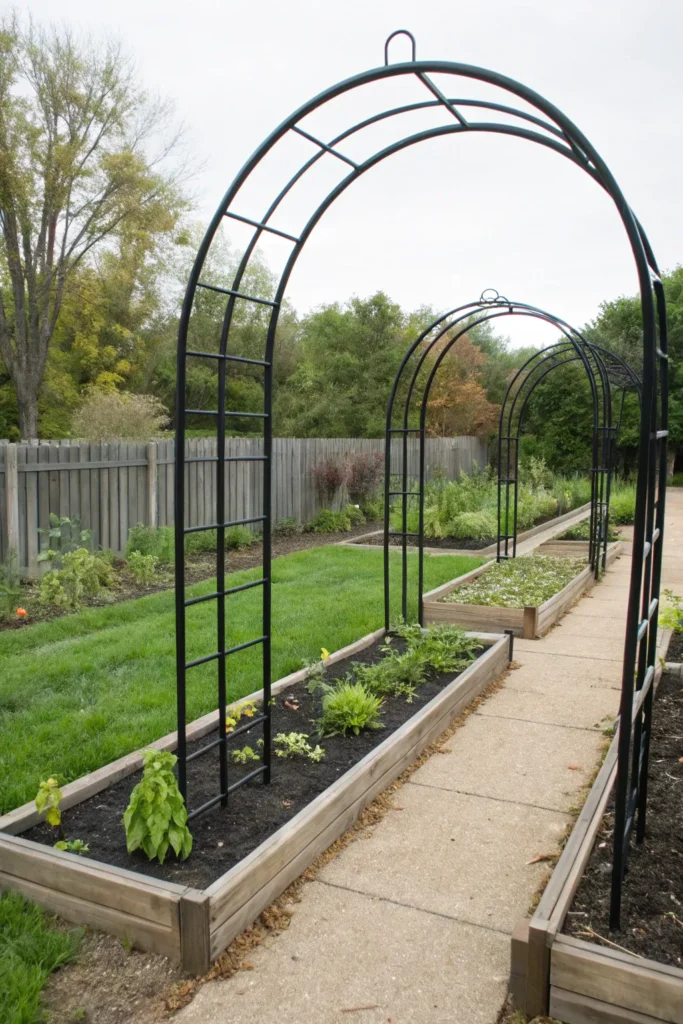
A DIY metal pipe arch is a great solution for gardeners looking for a modern, minimalist aesthetic. Using galvanized steel or black iron pipes, this arch provides strong, long-lasting support for heavy climbers like wisteria or grapevines.
The clean lines of metal contrast beautifully with lush foliage, making it a striking focal point. This design works especially well in contemporary gardens or urban outdoor spaces.
4. Recycled Ladder Arch
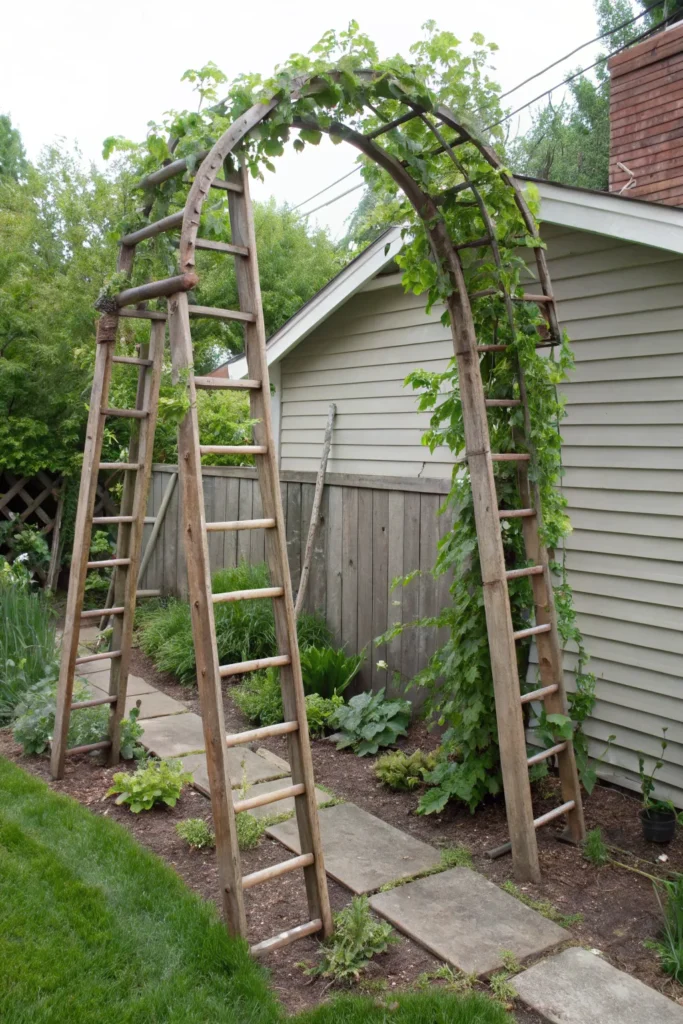
Repurposing old ladders into a garden arch is both creative and sustainable. Two wooden ladders can be placed opposite each other and connected at the top with beams to form a functional archway.
This design offers built-in rungs that give climbing plants plenty of grip as they grow upward. It’s an excellent choice for vegetable gardens or informal backyard spaces.
5. Bamboo Garden Arch
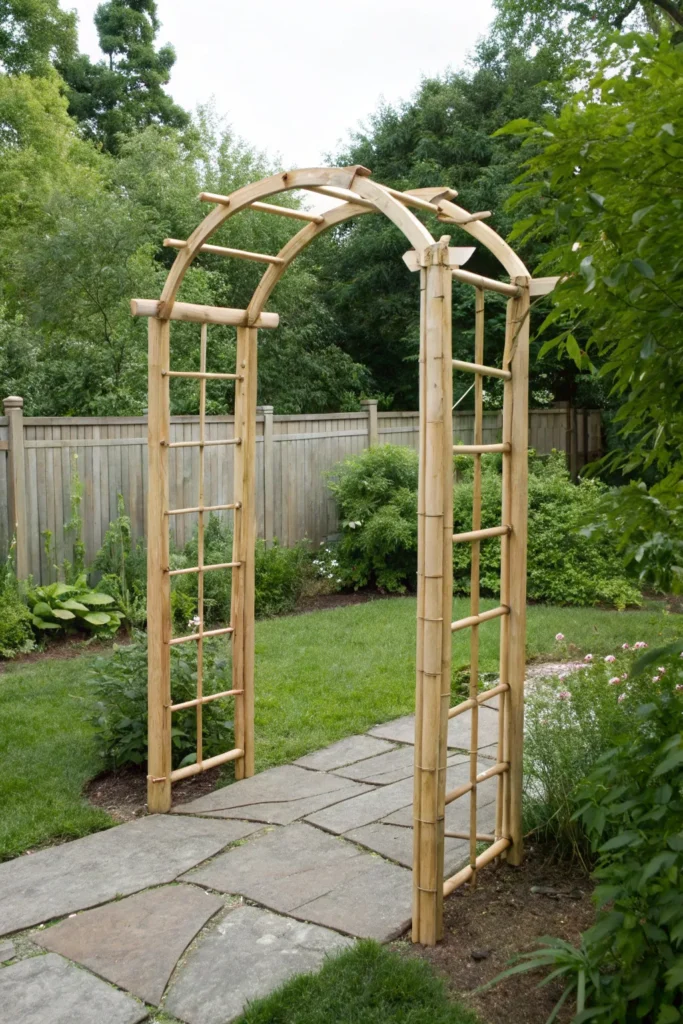
Bamboo is lightweight, affordable, and surprisingly strong, making it an excellent material for a DIY garden arch. Tied together with garden twine or wire, bamboo poles create a flexible structure that supports fast-growing climbers.
This style suits tropical or Zen-inspired gardens and works well with plants like morning glory or passionflower. Bamboo arches are easy to replace or adjust as plants mature.
6. Arbor-Style Garden Arch
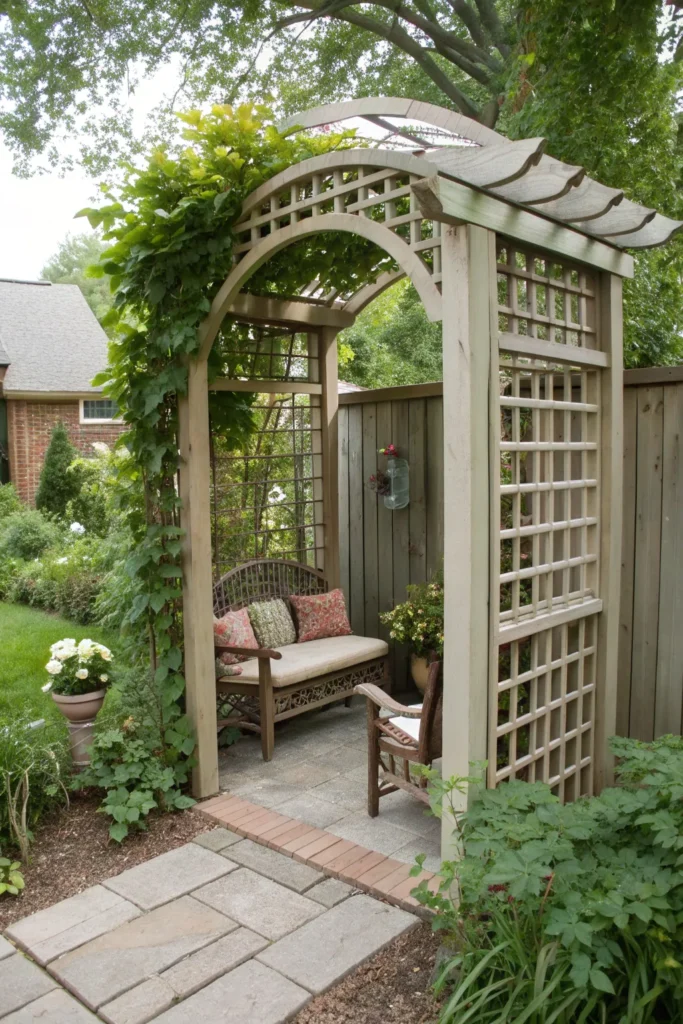
An arbor-style arch combines vertical posts with a slatted or lattice-style top. This design provides additional shade and a more defined garden feature.
DIY arbors are ideal for creating entrances between garden zones or framing pathways. The lattice encourages climbing plants to spread evenly, creating a lush overhead canopy over time.
7. Cattle Panel Garden Arch
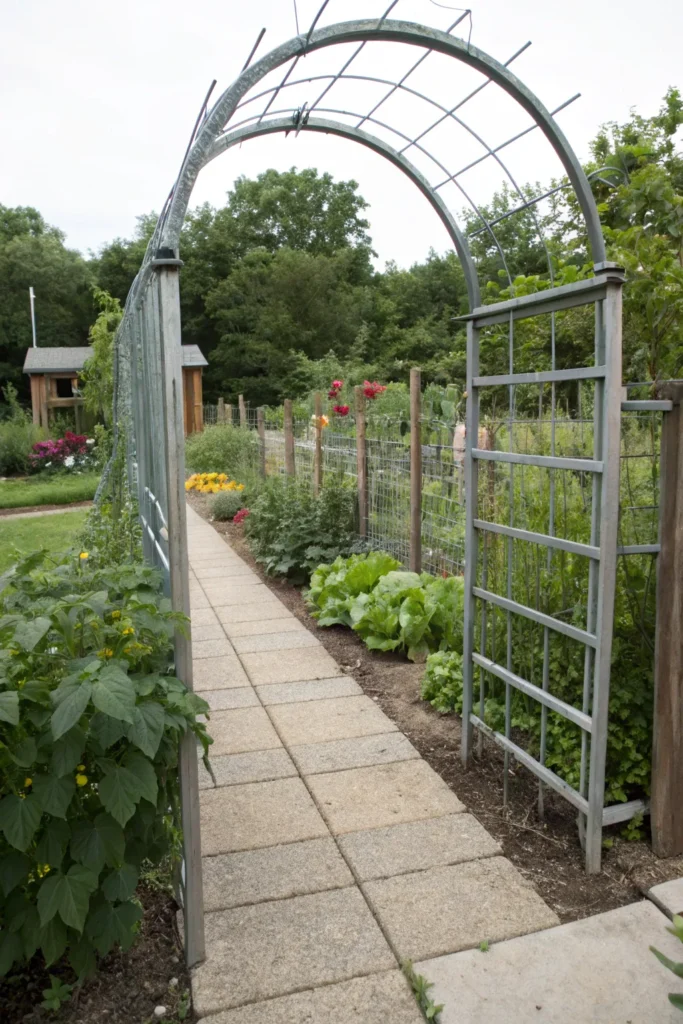
Cattle panels are heavy-duty wire panels commonly used in agriculture, but they also make excellent garden arches. Bent into an arch shape and secured at both ends, they create a wide, sturdy structure.
This option is perfect for vegetable gardens, especially for climbing crops like beans, cucumbers, or squash. It’s durable, affordable, and surprisingly easy to install.
8. PVC Pipe Garden Arch
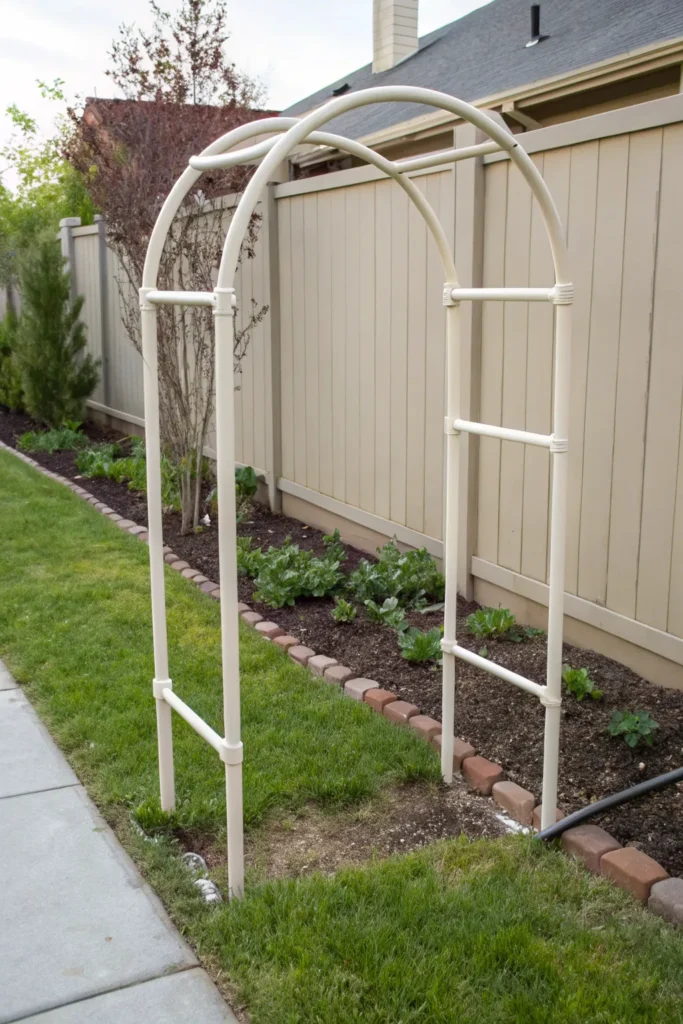
PVC pipe offers a lightweight and low-cost solution for DIY garden arches. Pipes can be bent and connected to create curved or rectangular shapes, depending on your preference.
While PVC may not have the natural beauty of wood or metal, it can be painted to blend in with the garden. It works best for seasonal climbers or temporary garden setups.
9. Pergola-Inspired Arch
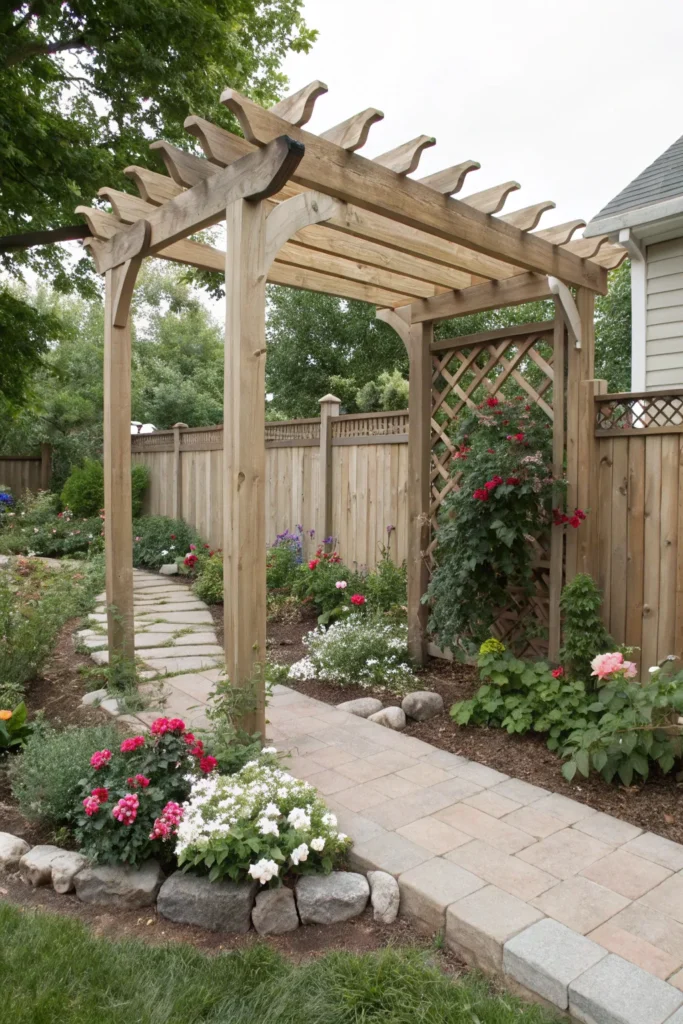
A pergola-inspired arch extends beyond a simple archway by adding crossbeams for extra support. This structure creates a dramatic garden feature that feels architectural and intentional.
This design is ideal for long-term climbers such as grapevines or roses. It also provides partial shade, making it functional as well as decorative.
10. Wire Mesh Garden Arch
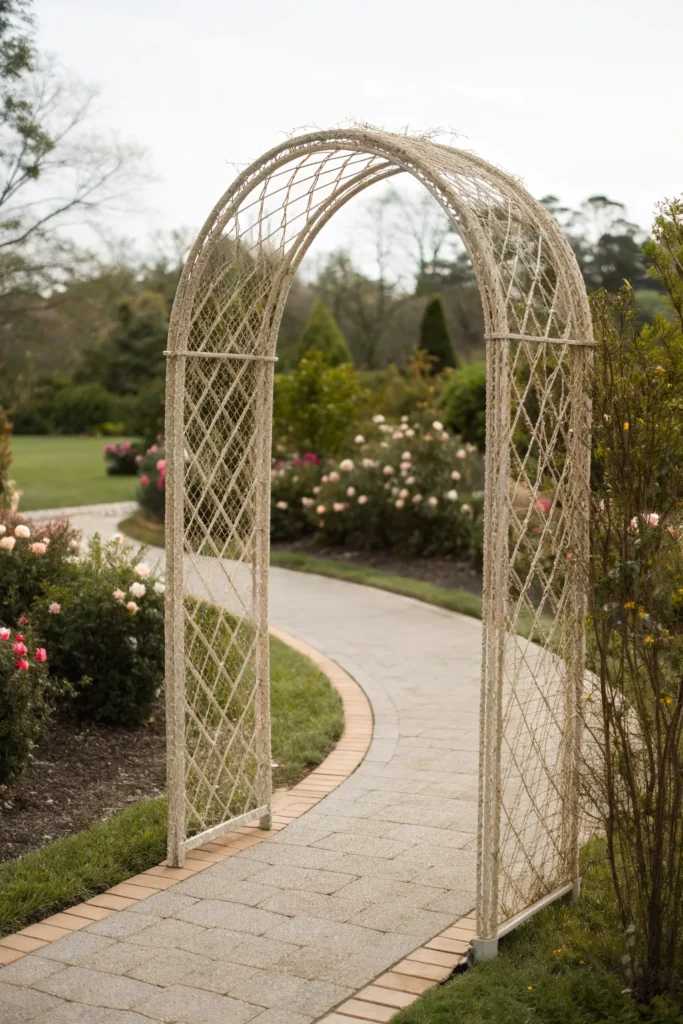
Wire mesh arches are lightweight yet effective for supporting delicate climbing plants. Garden fencing or hardware cloth can be shaped into an arch and secured with stakes.
This option allows plants to climb freely without overpowering the structure. It’s especially useful for flowering vines that benefit from plenty of airflow and light.
11. Willow or Flexible Branch Arch
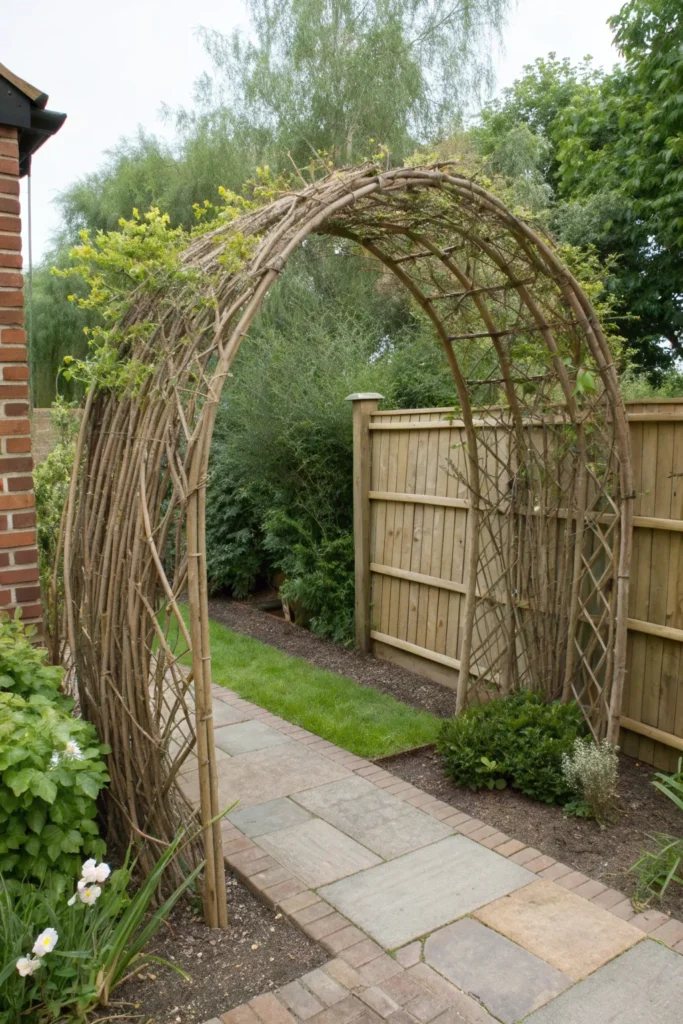
Willow branches or other flexible saplings can be woven into an arch shape for a living, evolving structure. As the branches root and grow, the arch becomes part of the garden itself.
This natural approach suits eco-friendly gardens and creates a unique, organic focal point. Over time, it requires minimal maintenance as the structure strengthens naturally.
12. Minimalist Square Arch
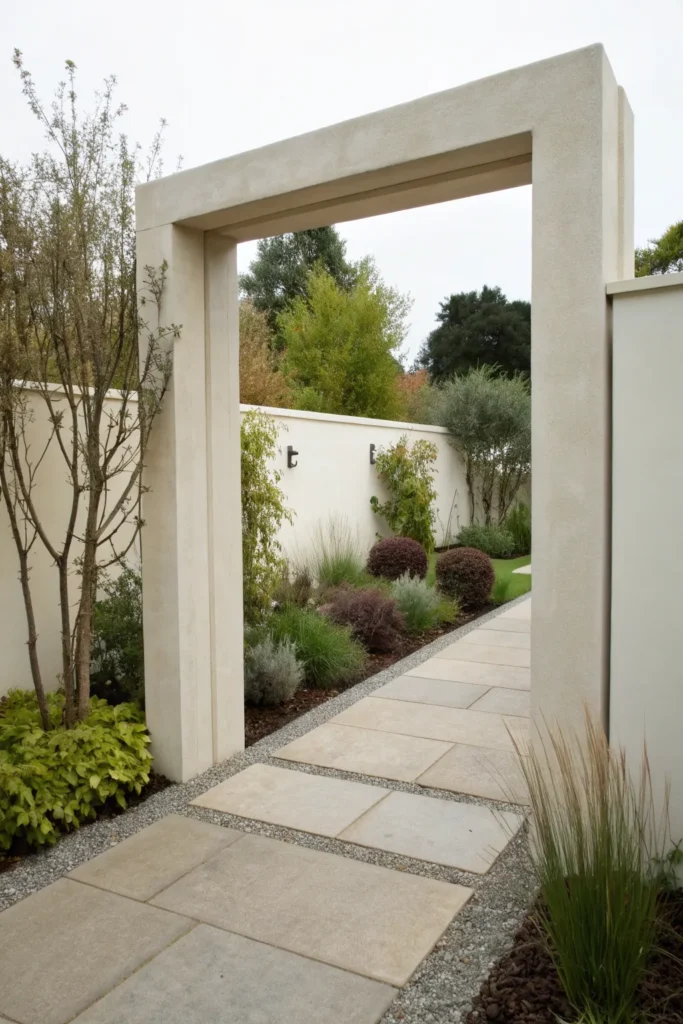
A square or rectangular garden arch offers a clean, modern alternative to traditional curved designs. Built from wood or metal, this style creates strong lines that frame pathways or entrances.
Minimalist arches pair beautifully with contemporary planting schemes and structured garden layouts. Climbing plants soften the edges while maintaining the design’s simplicity.
13. Repurposed Door Frame Arch
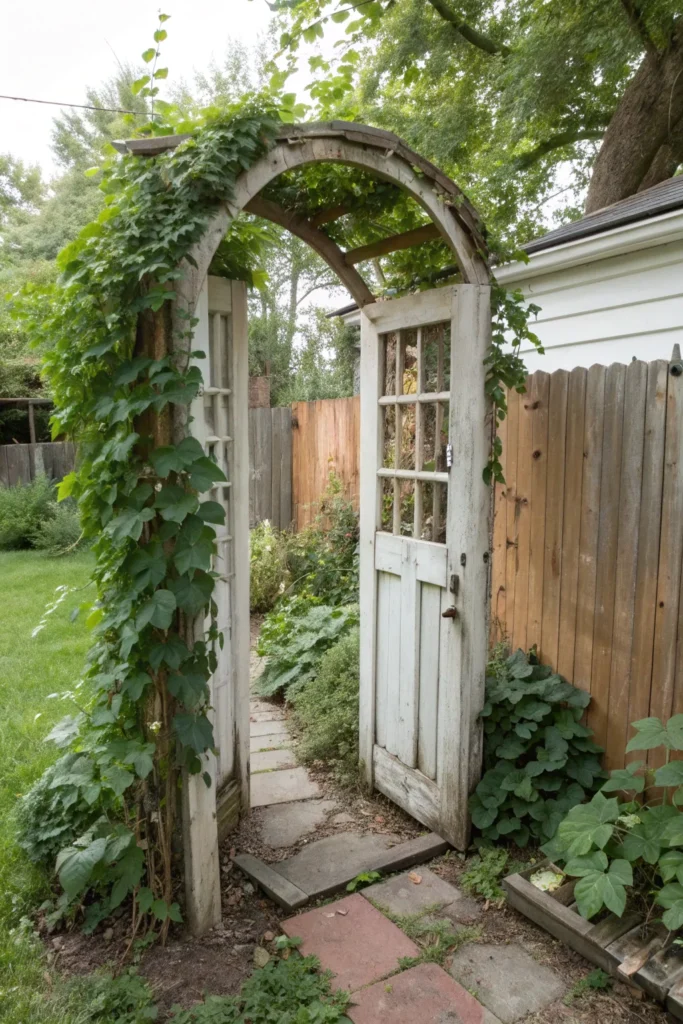
Old door frames can be transformed into charming garden arches with a bit of creativity. Removing the door and reinforcing the frame creates a unique, architectural feature.
This idea works well in vintage or eclectic gardens. As climbing plants grow around the frame, it becomes a visually striking blend of old and new.
14. Trellis Panel Arch
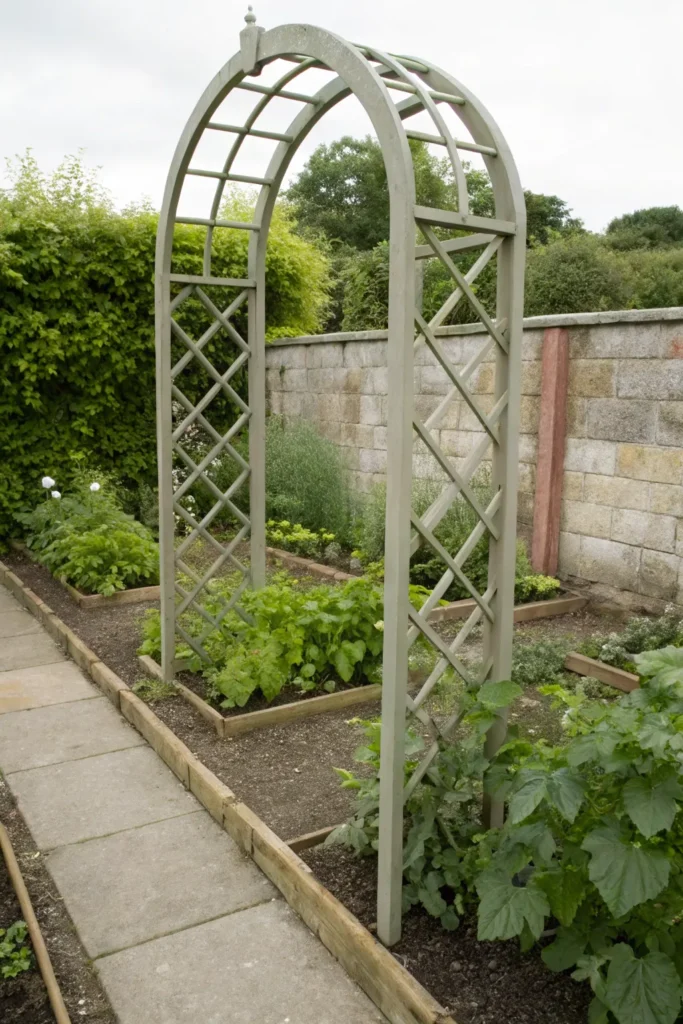
Combining trellis panels into an arch offers both structure and versatility. Trellises provide multiple attachment points for climbing plants, encouraging even growth.
This style works well in both decorative gardens and functional spaces, such as herb or vegetable gardens. It’s easy to build and adapt to different garden sizes.
15. Freestanding Entry Arch
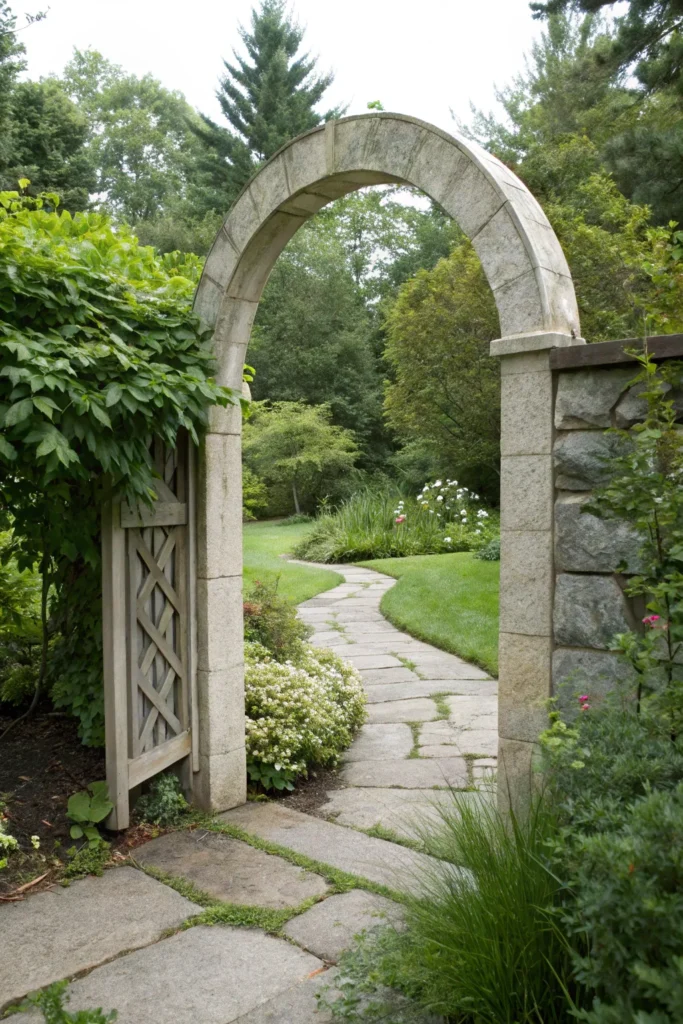
A freestanding garden arch doesn’t rely on fences or walls, making it highly flexible in placement. Built with strong posts anchored into the ground, it can be positioned anywhere in the garden.
This design is ideal for creating a dramatic entrance or focal point. When covered in flowering climbers, it becomes a welcoming and visually stunning feature.
DIY garden arches allow you to shape your outdoor space in a personal and practical way. With the right materials and thoughtful placement, these structures support healthy climbing plants while adding character and depth to your garden. Whether your style is rustic, modern, or somewhere in between, a DIY garden arch can become a lasting and beautiful part of your landscape.