
15 Cozy DIY Outdoor Reading Nooks You’ll Want in Your Backyard
There is something about reading outdoors that makes even an ordinary afternoon feel genuinely restorative. The combination of fresh air, natural light, birdsong, and a good book creates a relaxed, contented absorption that no indoor reading environment—however comfortable—can quite replicate.
The only thing that makes outdoor reading better is a dedicated space designed specifically for it. This nook is sheltered enough to feel private, comfortable enough to stay in for hours, and beautiful enough to make you want to be there every time you pass it.

The best outdoor reading nooks are personal, considered, and built with a genuine understanding of how you actually want to spend time in them. They are not grand garden projects — they are intimate, human-scaled spaces that require more imagination than budget and more attention to comfort than architectural ambition.
Here are 15 cozy DIY outdoor reading nooks that will make you want to be outside with a book every chance you get.
1. Repurposed Garden Shed Reading Retreat
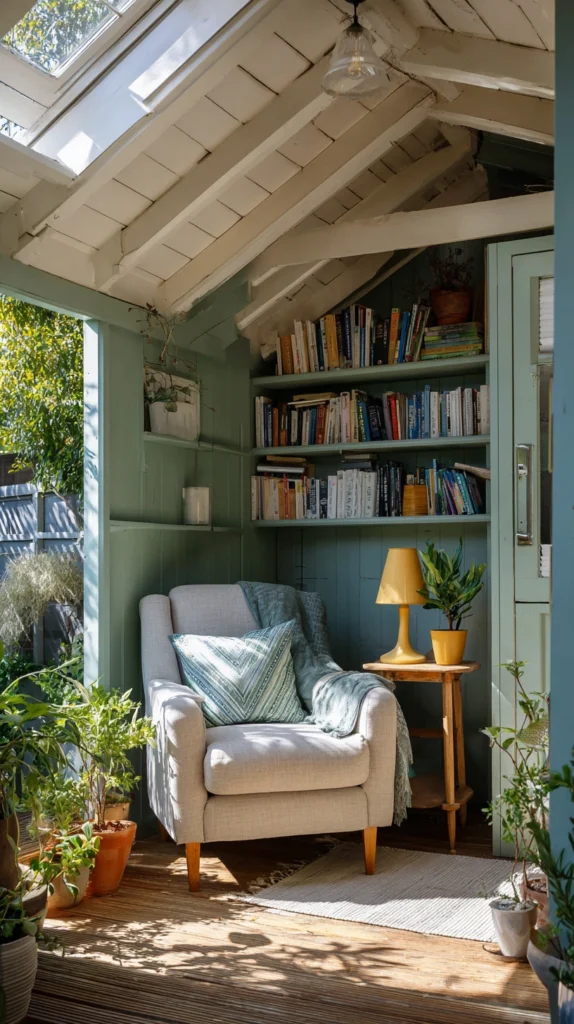
A redundant garden shed transformed into a dedicated reading retreat — cleared of tools and storage, insulated against temperature extremes, fitted with a comfortable chair and good lighting, and decorated with bookshelves, plants, and personal objects — creates the most complete and weather-independent outdoor reading nook available. The shed provides genuine shelter from rain and wind while maintaining its connection to the garden through windows and an open door on fine days.
Paint the interior in a warm, calm color — a soft sage green, a warm off-white, or a deep cocooning tone — and line one wall with simple timber bookshelves built from reclaimed wood and basic bracket supports.
Add a deeply cushioned armchair or a small loveseat, a reading lamp on a flexible arm, and a small side table for a cup of tea and a stack of to-be-read books. The result is a room entirely dedicated to the pleasure of reading that happens to sit in the garden.
Pro Tip: Install a small roof-mounted skylight in a shed reading retreat to introduce natural overhead light without sacrificing wall space to additional windows. A skylight provides the most even, shadow-free natural reading light available — significantly better than side window light, which creates glare on one side and shadow on the other — and the experience of reading beneath a skylight with the sound of rain overhead on a wet afternoon is genuinely extraordinary.
2. Hanging Hammock Reading Nook
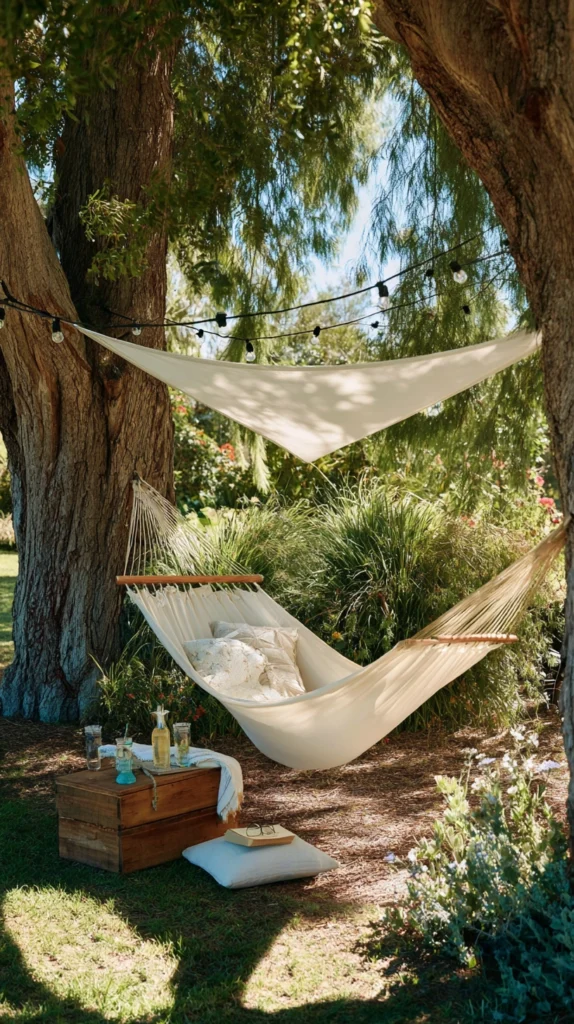
A hammock suspended between two mature trees — or between purpose-built timber posts where no suitable trees are available — with a simple canopy of waterproof fabric stretched overhead, a string of warm fairy lights for evening reading, and a small crate or stump beside it for a book and a drink creates an outdoor reading nook of pure, simple pleasure.
The gentle movement of a hammock while reading is one of life’s genuinely underrated pleasures — the slight swaying motion is calming in the same way that rocking chair movement is calming, and the horizontal reading position that a hammock naturally provides is deeply restful in a way that upright chair reading is not. Add a lightweight quilt or a soft throw for cooler afternoons and the hammock reading nook becomes a genuinely four-season destination in all but the harshest weather.
Pro Tip: Choose a hammock with a spreader bar at each end rather than a gathered rope hammock without spreaders for a more comfortable and stable reading platform. Spreader bar hammocks lie flat and wide rather than cocooning around the occupant — they are significantly easier to get in and out of, provide a flatter lying surface that is more comfortable for extended reading, and allow better air circulation around the body on warm summer afternoons.
3. Tree House Reading Platform
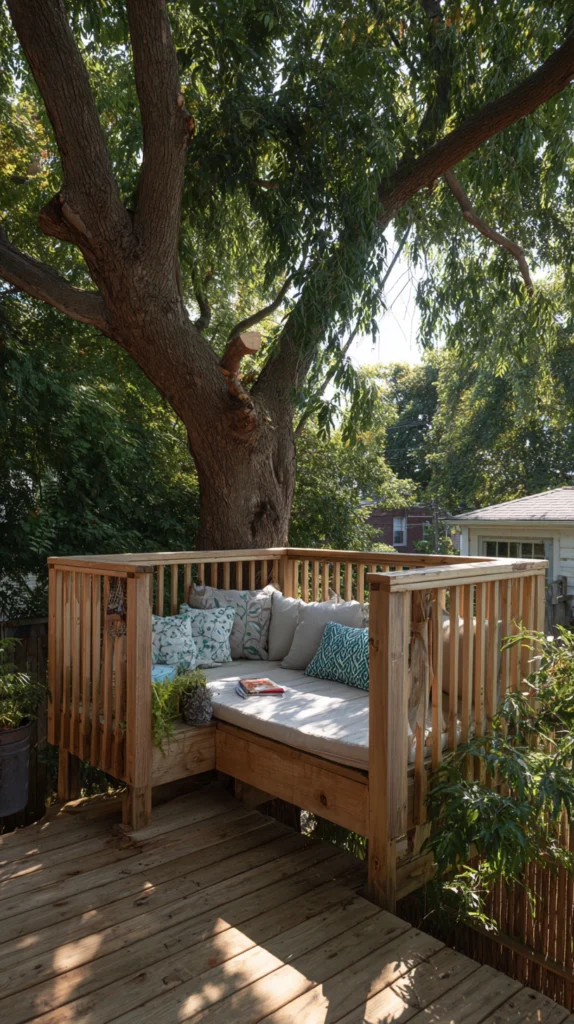
A simple reading platform built into or around a mature garden tree — not necessarily a full enclosed treehouse but a flat, railed platform at a modest height above the garden with comfortable seating and a partial canopy for shade — creates an outdoor reading nook of extraordinary appeal and a quality of childlike delight that makes it genuinely difficult to stay away from.
Build the platform from pressure-treated timber decking boards on a sturdy frame that is attached to the tree using tree-friendly fixings that allow for trunk growth — specialist tree attachment bolts that distribute load across a wider area without constricting the tree’s natural expansion. Add a simple timber railing on all open sides, a built-in bench with cushioned seating around the platform perimeter, and a partial shade canopy overhead.
Pro Tip: Consult a qualified arborist before attaching any structure to a mature garden tree — even apparently minor attachments affect the tree’s health and structural integrity in ways that are not always immediately obvious.
An arborist can advise on the appropriate attachment method, the load-bearing capacity of the specific tree, and any health considerations that might make the tree unsuitable for a platform attachment. This professional consultation protects both the tree and the safety of the structure built into it.
4. Pergola Corner Reading Nook
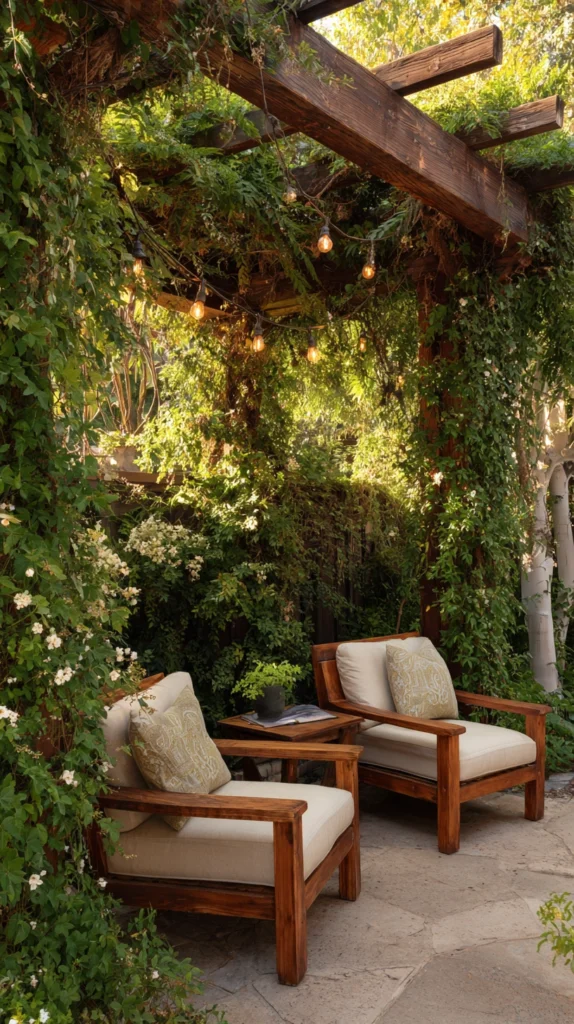
A defined corner reading nook within a larger pergola structure — a comfortable outdoor sofa or a pair of deep armchairs positioned in one corner of the pergola, sheltered on two sides by the pergola walls or growing climbers, with a small side table and overhead fairy lights — creates a private, sheltered reading destination within a wider outdoor living structure.
The corner position provides a sense of enclosure and privacy that open pergola seating lacks — the two solid or planted sides create a backdrop that makes the reading nook feel like a room within a room. Train a vigorous climber — jasmine, wisteria, or a climbing rose — along the two enclosed sides of the reading corner to create natural living walls of extraordinary fragrance and beauty that deepen and improve with every passing season.
Pro Tip: Install a small side table at the exact height needed to hold a book, a drink, and a reading lamp without requiring the reader to lean forward or reach awkwardly to access any of them.
The ideal reading side table height is level with the arm of the chair it accompanies — everything within easy reach of a relaxed, reclined reading position without any postural adjustment. This small ergonomic consideration makes more difference to reading comfort and the length of time spent in the nook than almost any other single design decision.
5. Garden Bench Alcove Reading Nook
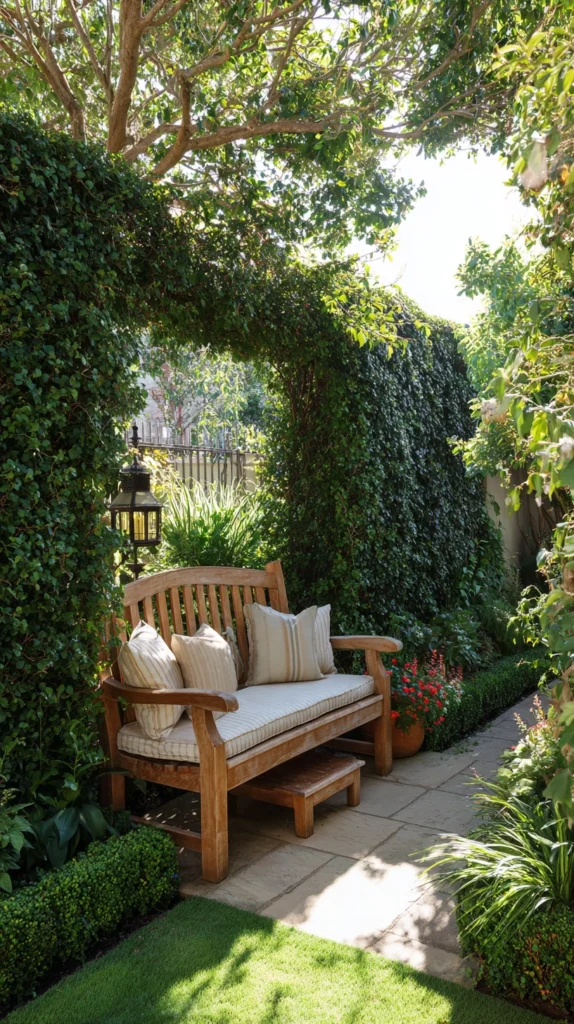
A built-in garden bench constructed within a planted alcove — a recessed seating area created by dense, clipped hedging on three sides, or by a timber back panel with trained climbers — creates an outdoor reading nook of complete natural privacy and quiet enclosure.
The hedging or climbing plant walls provide both visual privacy from the rest of the garden and a genuine reduction in ambient noise, making the alcove feel significantly more peaceful than open garden seating.
Build the bench from smooth hardwood timber — teak, iroko, or pressure-treated oak — with a deep seat and a slightly reclined back for comfortable sustained reading. Add a weatherproof cushion in a durable outdoor fabric for comfort and a simple pull-out footrest for full recline.
The alcove bench reading nook is the most architecturally permanent option on this list and the one that adds the greatest enduring value to the garden.
Pro Tip: Orient the garden bench alcove so that it faces away from the house and toward the most beautiful view the garden offers — whether that is a flowering border, a water feature, or simply a pleasant open green view.
A reading nook that faces toward the house loses the sense of being away from domestic life that makes outdoor reading so genuinely restorative. Facing away — into the garden, toward the boundary, or toward a natural view — creates the psychological separation from the house that gives the reading nook its quality of retreat.
6. Converted Playhouse Reading Den
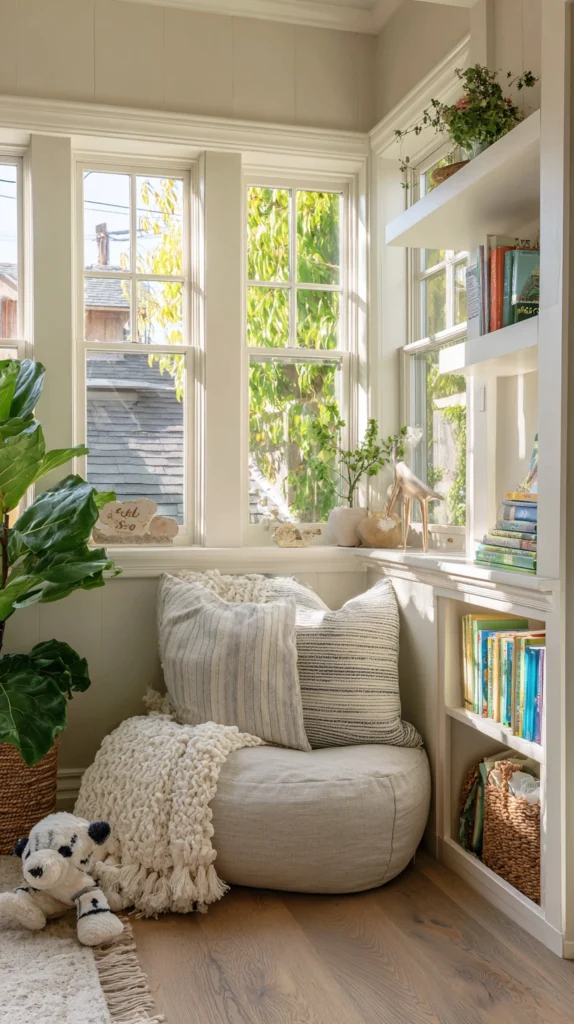
A children’s playhouse that has been outgrown and repurposed as an adult reading den creates one of the most charming and completely enclosed outdoor reading nooks available.
Stripped of its children’s furniture and fittings, repainted in a sophisticated adult color, fitted with a daybed or a single armchair, and dressed with bookshelves, plants, and good lighting, a converted playhouse becomes a genuinely beautiful and completely private outdoor reading room.
The small scale of a playhouse — which felt cramped to adult visitors when used as a children’s space — becomes an asset as a reading den. The compact, enclosed dimensions create exactly the cozy, contained quality that the best reading nooks possess — just enough room for a chair, a shelf, a lamp, and a person — with the garden visible through the original playhouse windows on all sides.
Pro Tip: Replace the original playhouse windows with larger glazed panels — or add a glazed door in place of the original timber door — to maximise natural light in what is inherently a small, potentially dark interior space.
Good natural light is the single most important practical requirement of any reading nook, and a playhouse with minimal original window glazing will feel dark and uninviting as a reading space, regardless of how beautifully it is otherwise decorated and furnished.
7. Willow Tunnel Reading Nook
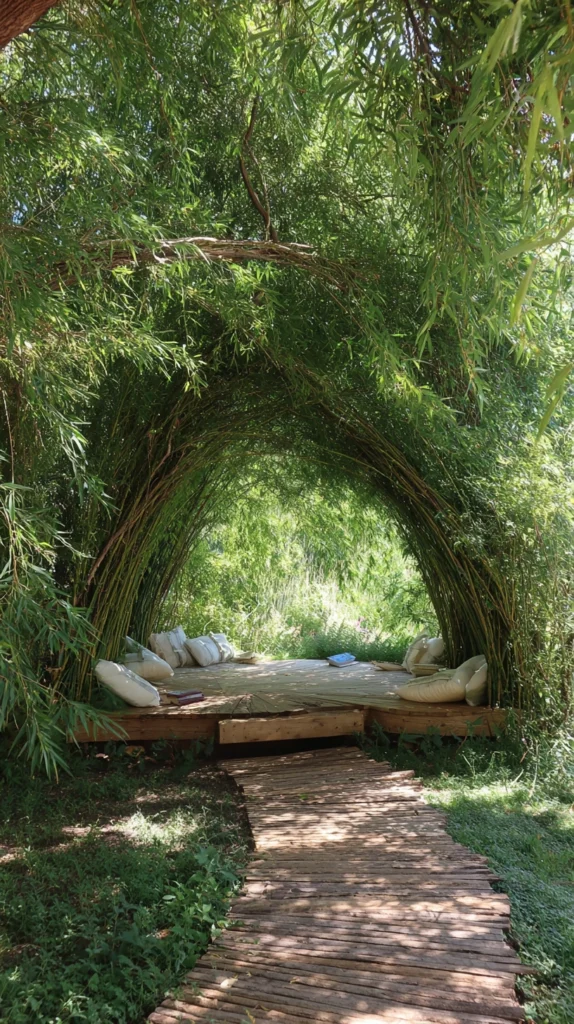
A living willow tunnel — a series of planted willow rods woven into an arching tunnel form and allowed to grow and thicken over multiple seasons — creates a completely natural, living outdoor reading nook of extraordinary organic beauty.
The interior of a mature willow tunnel on a summer afternoon — cool, green, rustling gently, completely enclosed in living growth — is one of the most magical garden environments it is possible to create.
Plant the willow rods in two parallel lines approximately 1.5 metres apart and weave the tops together as they grow, creating an arching roof of woven willow that thickens with each passing year.
After three to four seasons, the tunnel will be self-supporting, fully leafed in summer, and substantial enough to create a genuine sheltered interior. Place a simple weatherproof cushion on a low timber platform inside for seating.
Pro Tip: Plant the willow tunnel on a slight curve rather than in a perfectly straight line for a more organic, naturally beautiful result that feels discovered rather than constructed. A straight tunnel reads as a designed garden feature — a curved tunnel reads as something that grew naturally from the landscape.
The slight curve also creates a more enclosed interior that cannot be seen into from either end simultaneously, giving the reading nook within it a genuine quality of hidden privacy.
8. Rooftop Deck Reading Nook
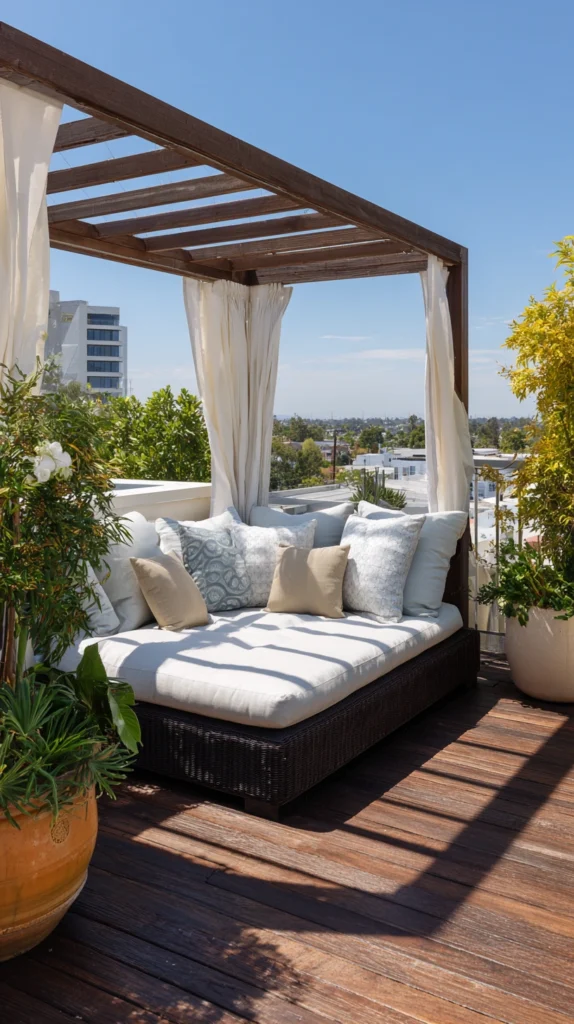
A small rooftop or elevated deck reading nook — accessible via a simple exterior staircase, furnished with a weatherproof daybed or a pair of deep outdoor chairs, sheltered by a simple pergola or a retractable shade sail — creates an outdoor reading space with the most expansive views and the greatest sense of elevation and escape available in most garden settings.
The elevated position of a rooftop reading nook places the reader above the immediate garden level — above the fence lines, above the immediate neighbour sightlines, and with a view of the wider landscape beyond the garden boundaries.
This quality of elevated perspective and visual freedom creates a reading environment that feels genuinely removed from the immediate domestic world—the elevated retreat that makes a rooftop reading nook one of the most memorable and regularly used outdoor spaces in any home.
Pro Tip: Install a simple pulley system or a weatherproof storage box on the rooftop reading deck to store cushions, books, and throws, eliminating the need to carry them up and down the access staircase each time the space is used.
The single greatest barrier to regular use of any elevated outdoor space is the friction of bringing everything you need up to it each time — a simple storage solution on the deck itself eliminates that friction and makes the rooftop nook as easy to use spontaneously as any ground-level garden seat.
9. Sunken Garden Reading Pit
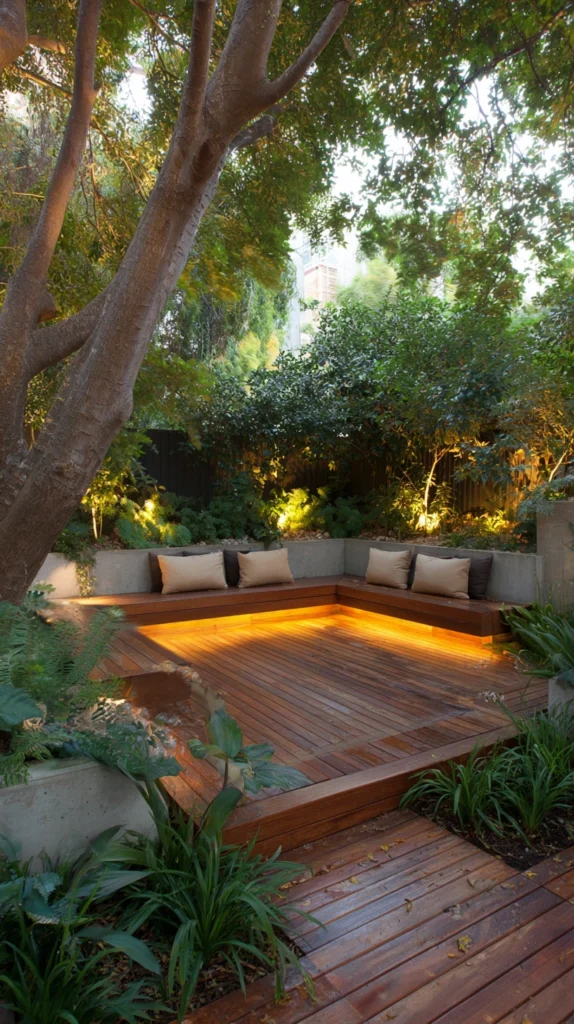
A sunken seating area — a square or circular pit excavated to a depth of 60 to 80 centimetres and lined with timber bench seating on all sides, with the garden at eye level when seated — creates an outdoor reading nook of extraordinary shelter, privacy, and natural enclosure.
The sunken position places the reader below the wind line, below the surrounding garden level, and within a natural bowl of earth that creates warmth and quiet shelter even on breezy days.
Line the sunken pit with smooth, comfortable timber bench seating built from pressure-treated hardwood, add deeply cushioned outdoor seat pads and back cushions, and install a simple overhead shade structure for sun protection on the sunniest days.
The sunken garden reading pit is one of the most sheltered outdoor seating formats available and transforms a flat, undifferentiated garden into a space with real topographical interest and variety.
Pro Tip: Install a simple drainage layer — a 15-centimetre layer of gravel beneath the pit floor — before laying any final floor surface in a sunken garden reading pit. A sunken area without drainage collects standing water after heavy rain and becomes waterlogged and unusable for days after a wet spell.
A properly drained pit floor drains immediately and is ready to use within hours of the heaviest rain — a critical practical consideration for a reading nook that needs to be available whenever the weather allows.
10. Bay Window Outdoor Reading Seat
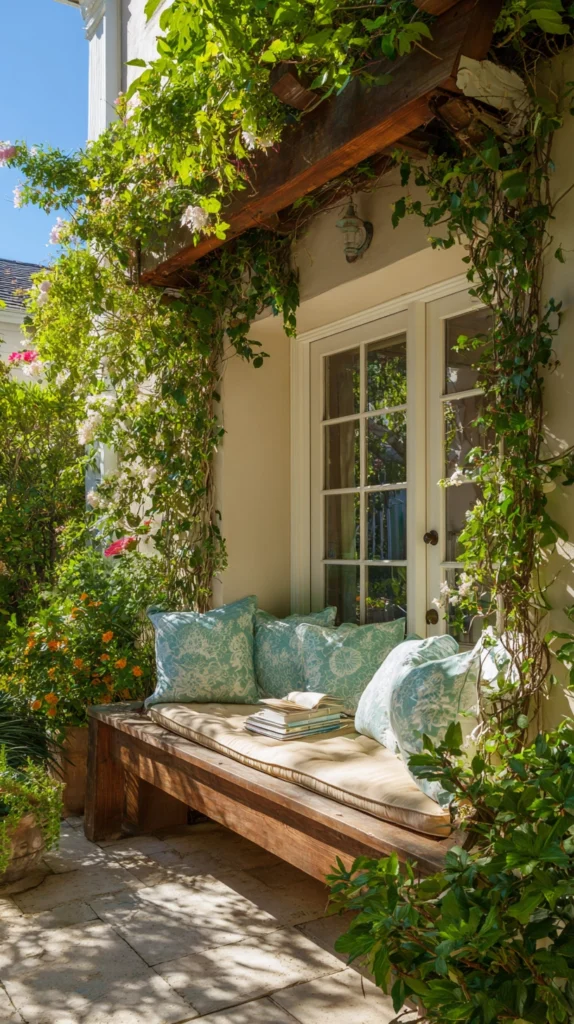
An outdoor bay window reading seat — a timber window seat structure built against the exterior wall of the house with a projecting bay roof above it and planted sides that create a sense of enclosure — creates the most house-connected outdoor reading nook available. The bay structure provides overhead shelter from light rain and creates a transitional space between the full interior and the open garden, capturing the best of both environments.
Build the bay seat from the same timber used in the house’s existing exterior trim for a visually cohesive result that looks designed rather than added as an afterthought. Add a deep, weatherproof, cushioned seat pad; side panels of climbing plants trained on wire supports; and a simple window box of fragrant herbs at seat level to enhance fragrance and connection to the planting of the wider garden.
Pro Tip: Position the outdoor bay reading seat on the side of the house that receives the most pleasant afternoon light rather than the side with the most convenient door access. Afternoon light — warm, low-angled, and soft — creates the most beautiful and comfortable reading light available outdoors.
Morning light is often too bright and directionally harsh for comfortable, sustained reading, while afternoon light, when properly oriented, creates a reading environment of genuinely extraordinary pleasantness.
11. Greenhouse Reading Corner
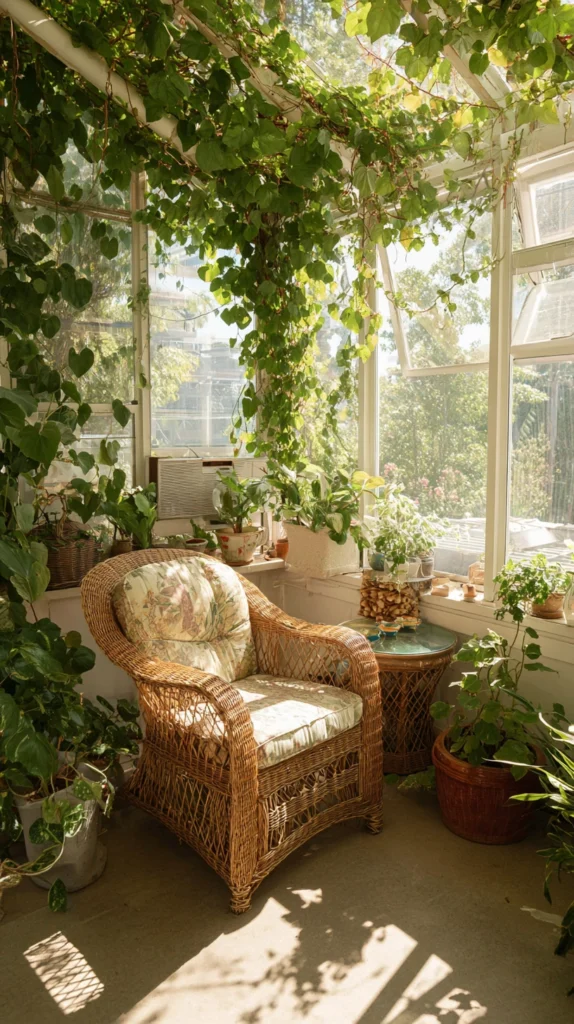
A corner of a garden greenhouse — cleared of growing beds and furnished with a comfortable chair, a small table, a collection of favourite plants, and warm ambient lighting — creates an outdoor reading nook of complete weather-independence and extraordinary sensory richness.
Reading surrounded by growing plants in the warm, humid, fragrant air of a greenhouse is a genuinely distinctive experience that no other outdoor reading environment can replicate.
The greenhouse reading corner works best in a greenhouse larger than strictly required for the growing operation —a corner permanently dedicated to seating takes productive growing space but creates a destination within the growing space that makes the greenhouse genuinely enjoyable to spend time in, rather than simply functional to work in.
The combination of productivity and pleasure in a single garden building is one of the most satisfying and livable uses of outdoor space.
Pro Tip: Install a small electric fan heater — rated for damp environments — in the greenhouse reading corner to extend the usable season into autumn and early spring when the greenhouse temperature without supplementary heating is too cold for comfortable reading.
A greenhouse that is pleasant to read in from early March through to late November represents nine months of outdoor reading weather — a significantly more generous season than any unheated outdoor reading nook can provide.
12. Pallet Wood Reading Deck
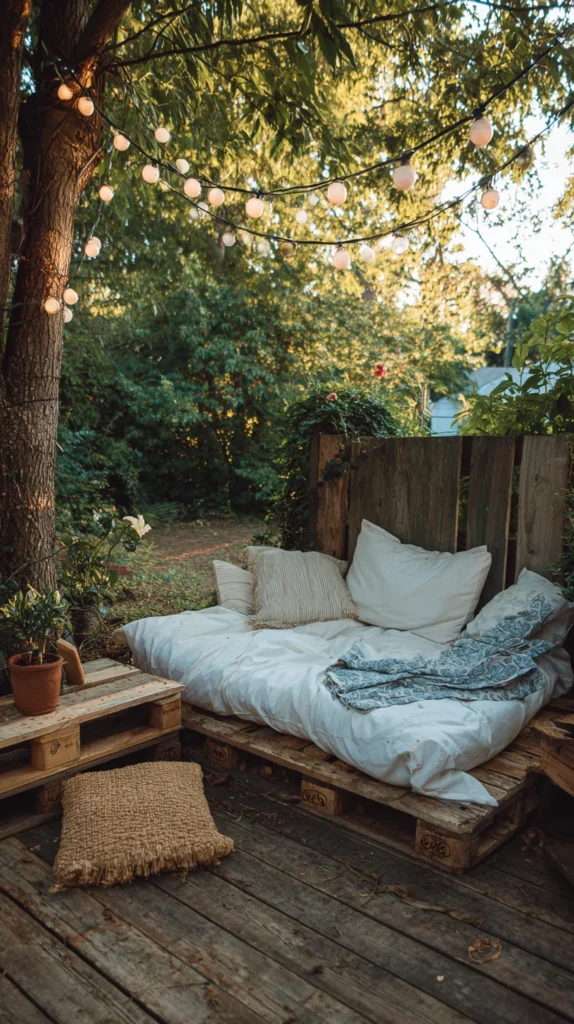
A simple raised reading deck built from reclaimed timber pallets — stacked to create a low platform, topped with a smooth timber decking surface, and surrounded by potted plants, string lights, and weatherproof cushioned seating — creates a charming, affordable, and completely customisable outdoor reading nook that can be assembled in a single weekend without specialist construction skills.
The pallet wood deck aesthetic has a relaxed, resourceful quality that suits an informal garden reading nook perfectly. Stack two pallets to create a low platform, lay smooth timber boards across the top surface for a comfortable, splinter-free seating area, add low-maintenance potted plants on all sides to create an enclosure, and string warm fairy lights overhead for evening reading sessions that extend the nook’s usefulness well into the evening hours.
Pro Tip: Source heat-treated, not chemically treated, pallets for any outdoor furniture or decking project where skin contact is involved. Pallets marked with the letters HT have been heat-treated for pest control and are safe for garden furniture use.
Pallets marked with MB have been treated with methyl bromide — a toxic chemical that makes them entirely unsuitable for any application where they will be in contact with people, food, or growing plants. Always check the pallet marking before use.
13. Secret Garden Reading Nook
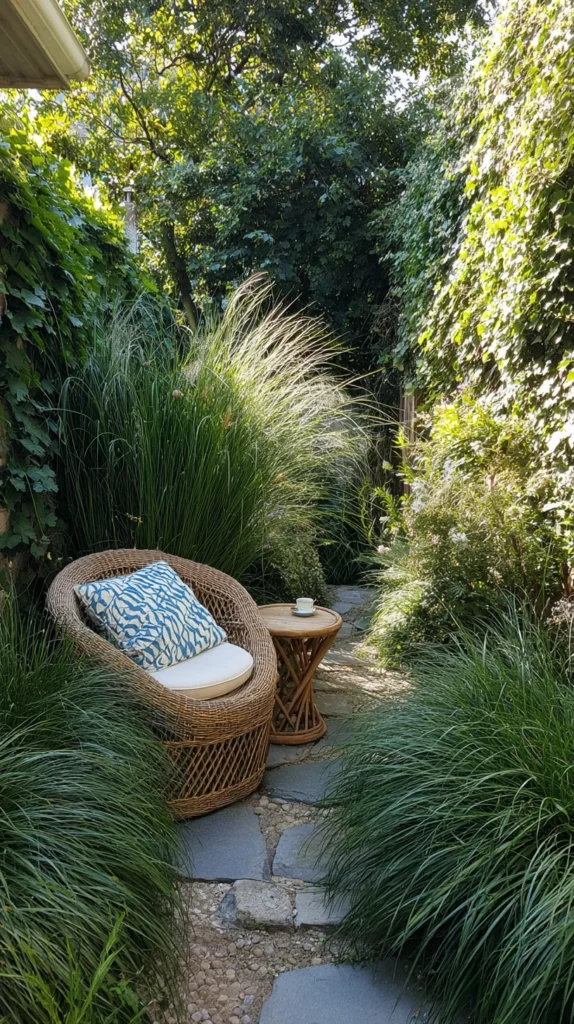
A reading nook concealed within a dense area of garden planting — accessed through a gap in a hedge, behind a screen of tall ornamental grasses, or at the end of a winding garden path that obscures the destination until the final moment — creates an outdoor reading space with a quality of secrecy and discovery that makes it feel genuinely precious and protected.
The sense of being hidden — of having found a private space within the larger garden that no casual observer would notice — is one of the most powerful and pleasurable qualities a reading nook can possess.
Create the concealment with dense planting of tall perennials, ornamental grasses, or a clipped hedge with a narrow entrance gap, and furnish the hidden interior with a simple weatherproof chair, a cushion, and a small table. The simplicity of the furnishing is part of the charm — the magic is in the concealment, not the decoration.
Pro Tip: Mark the entrance to a secret garden reading nook with a single distinctive plant or a small decorative object that only household members know is the marker for the hidden entrance.
A familiar marker prevents the entrance from being genuinely impossible to find on return visits — the goal is a nook that feels secret to the outside world while remaining easily accessible to those who know where it is. A completely unmarked entrance is charming in theory but frustrating in practice when garden growth obscures it slightly between visits.
14. Balcony Reading Nook
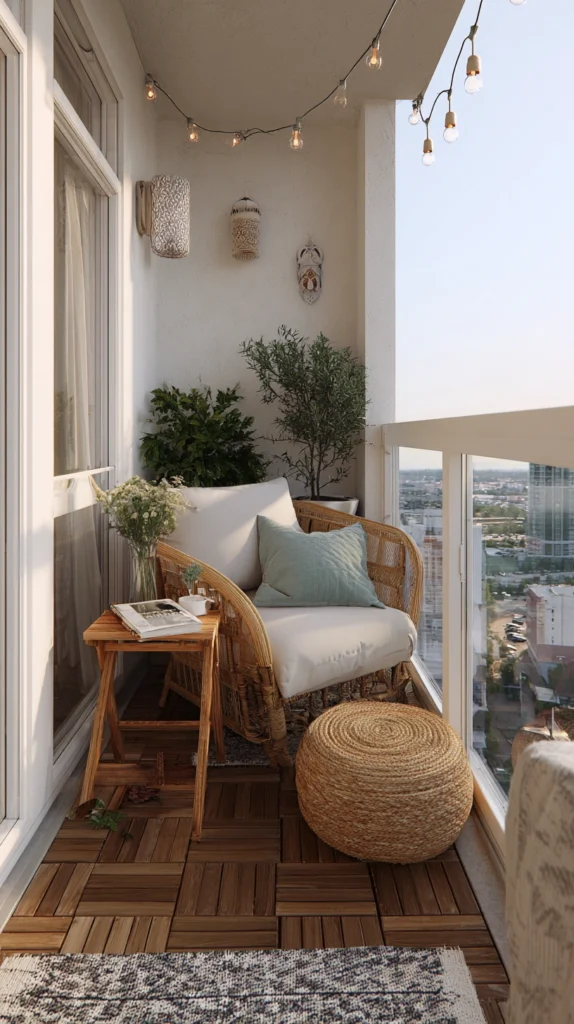
A small balcony — even one of only two or three square metres — transformed into a dedicated reading nook with a single comfortable chair, a small folding side table, a string of overhead lights, and a collection of potted plants creating a sense of enclosed green privacy creates an urban outdoor reading space of genuine charm and daily usability.
The balcony reading nook is the most accessible version of outdoor reading for apartment and urban dwellers — a private outdoor space that requires no garden and no significant construction budget to transform into a genuinely beautiful and regularly used reading environment.
The key is treating the small balcony space with the same design intention and material generosity as a full garden reading nook — investing in a genuinely comfortable chair, genuinely beautiful plants, and genuinely good lighting rather than treating the balcony as an overflow storage area with seating.
Pro Tip: Use tall, narrow potted plants — bamboo, tall grasses, climbing plants on a slim trellis panel — on a balcony reading nook to create vertical privacy screening without consuming the limited floor space that wide, spreading plants would require.
Vertical green screening on a small balcony creates the enclosed, private quality of a garden reading nook within a fraction of the floor area — transforming even the most overlooked urban balcony into a space that feels genuinely private and genuinely connected to the natural world.
15. Floating Deck Pond Reading Nook
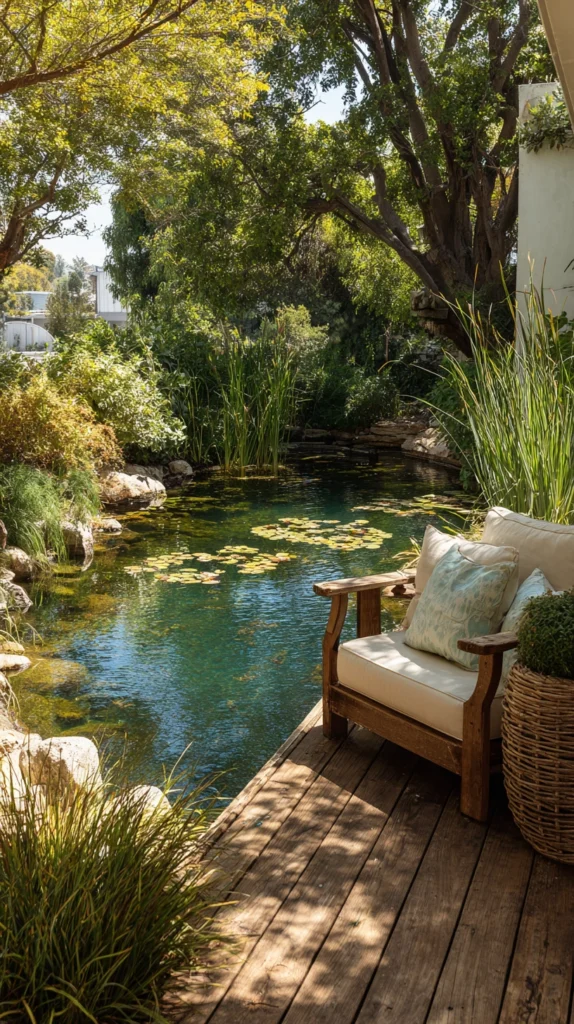
A small floating or waterside deck — built beside, over, or adjacent to a garden pond or water feature — creates an outdoor reading nook with the most genuinely restorative natural accompaniment available in any garden setting.
The sound of moving water, the reflections of light on the pond surface, the wildlife drawn to the water’s edge — a reading nook beside water creates a quality of peaceful, natural immersion that no other garden setting can replicate.
Build a simple timber deck platform extending over or beside the pond edge, add low timber railings on the open water sides for safety, furnish with a weatherproof chair and cushions, and allow the surrounding planting — water iris, reed, and waterside perennials — to grow up around the edges of the deck to create the sense of sitting within the waterside planting rather than simply beside it.
Pro Tip: Install the waterside reading deck at the lowest possible height above the water surface — just high enough to clear the water level with a small safety margin — for the most intimate connection between the reader and the pond.
A deck elevated significantly above the water surface loses the quality of waterside immersion that makes this reading nook location so distinctive. The closer to the water surface the deck sits, the more strongly the reader feels the calming influence of the water immediately beneath and around them.
Your Garden Deserves a Reading Nook
The best outdoor reading nook is not the most elaborately constructed or the most expensively furnished — it is the one that genuinely fits the garden, genuinely fits the reader, and genuinely gets used rather than admired occasionally and visited rarely.
Choose the idea that suits your space, your budget, and your actual reading habits. Build it with care, furnish it with comfort, and plant around it with generosity. Then take a book outside and discover what you have been missing every afternoon you spent reading indoors when you could have been here instead.