15 Cheap Fire Pit Ideas for a Cozy Backyard on Any Budget
A fire pit is the outdoor feature that does more for a backyard than almost anything else at any price point. It creates a gathering destination, extends the usable season into autumn and mild winter evenings, and generates the particular atmosphere of shared firelight that brings people together in a way that no other outdoor feature replicates.

The assumption that a good fire pit requires a significant budget is one of the most persistent and unnecessary myths in backyard design. Some of the most beautiful and most functional fire pits cost almost nothing — constructed from materials already available, salvaged from demolition, or purchased for a few dollars from a builder’s merchant. The fire itself is the feature. Everything else is simply its container.
Here are 15 cheap fire pit ideas that create a genuinely beautiful and functional backyard fire feature on any budget.
1. Simple Brick Ring Fire Pit
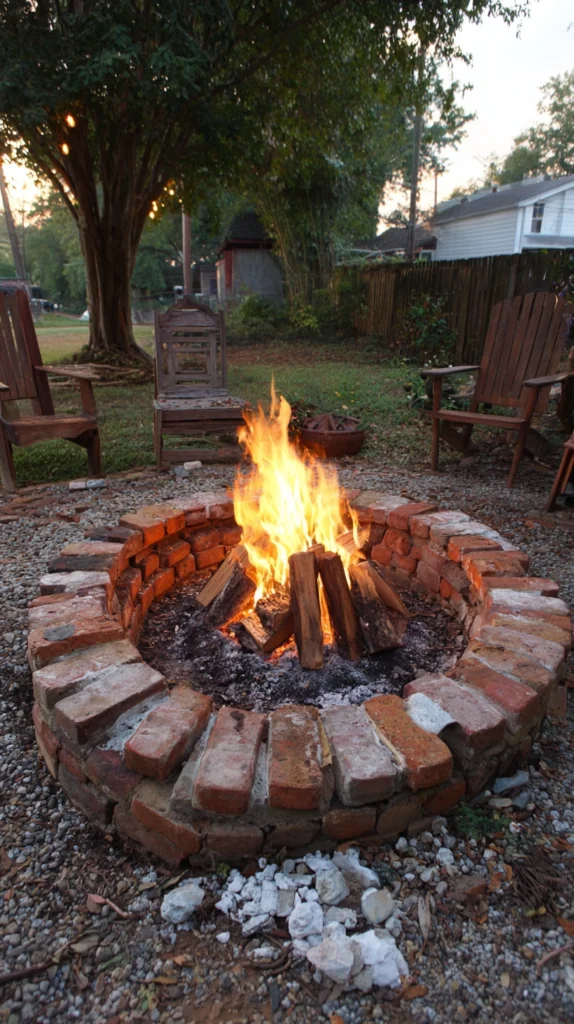
A circular ring of standard house bricks — arranged in a double-layer circle directly on a cleared level ground surface — is the cheapest, quickest, and most widely built DIY fire pit available.
Source reclaimed bricks from a demolition salvage yard or local online marketplace — old house bricks are almost always available free or for minimal cost, and their aged, varied character creates a more beautiful fire ring than new uniform bricks. Arrange in two concentric circles approximately 60 centimetres in diameter, stagger the joints between courses, and the fire pit is complete.
Pro Tip: Never use engineering bricks, concrete blocks, or any masonry containing trapped moisture for a fire pit. Bricks with trapped moisture can crack, split, and in extreme cases, explode when subjected to rapid heating. Use solid fired clay house bricks, which have the heat resistance and structural stability required for safe, reliable fire pit use.
2. Cinder Block Fire Pit
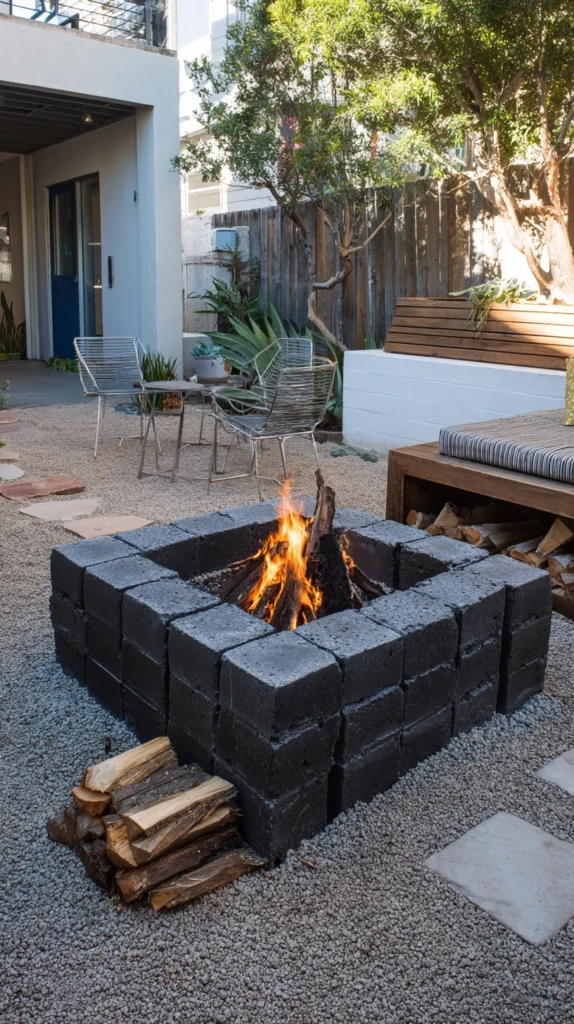
Standard cinder blocks stacked in a square configuration, two courses high, create a generous, sturdy fire pit requiring no mortar, no specialist tools, and no construction skills.
Stack the first course — four blocks per side — with the second course offset by half a block for stability. Leave one gap in the bottom course on the windward side for air intake. The result has a generous burning area, substantial heat-retaining walls, and a clean geometric form that looks deliberately designed.
Pro Tip: Paint the exterior faces of the cinder blocks with high-temperature exterior masonry paint before assembly. Dark charcoal, warm terracotta, or deep sage green all transform the utilitarian appearance of raw cinder blocks into a backyard feature of genuine visual appeal at minimal additional cost.
3. Washing Machine Drum Fire Pit
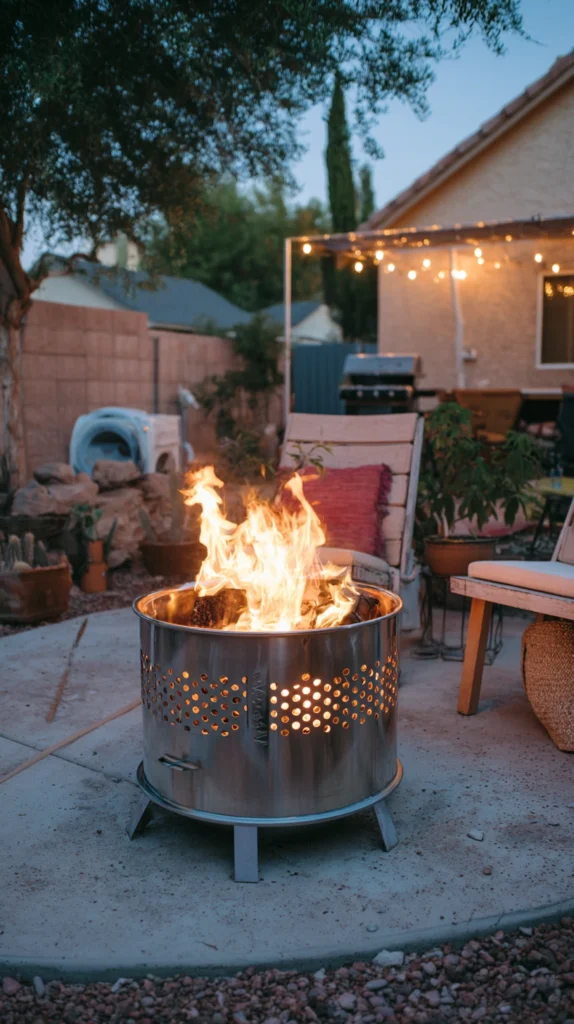
A redundant washing machine drum — the perforated stainless steel inner drum of a discarded appliance — creates one of the most effective and most visually interesting cheap fire pits available.
The perforations provide natural air intake and create a spectacular visual effect as firelight flickers through the holes onto the surrounding ground. Source one free from an appliance repair business or a community Freecycle group. Place on a non-combustible surface, and it is immediately ready to use.
Pro Tip: Elevate the drum on three or four short lengths of steel rebar rather than placing it directly on the ground. Elevation allows air circulation beneath the drum for significantly more efficient combustion — meaning less smoke, a hotter fire, and a more pleasant experience for everyone gathered around it.
4. Repurposed Wheel Rim Fire Pit
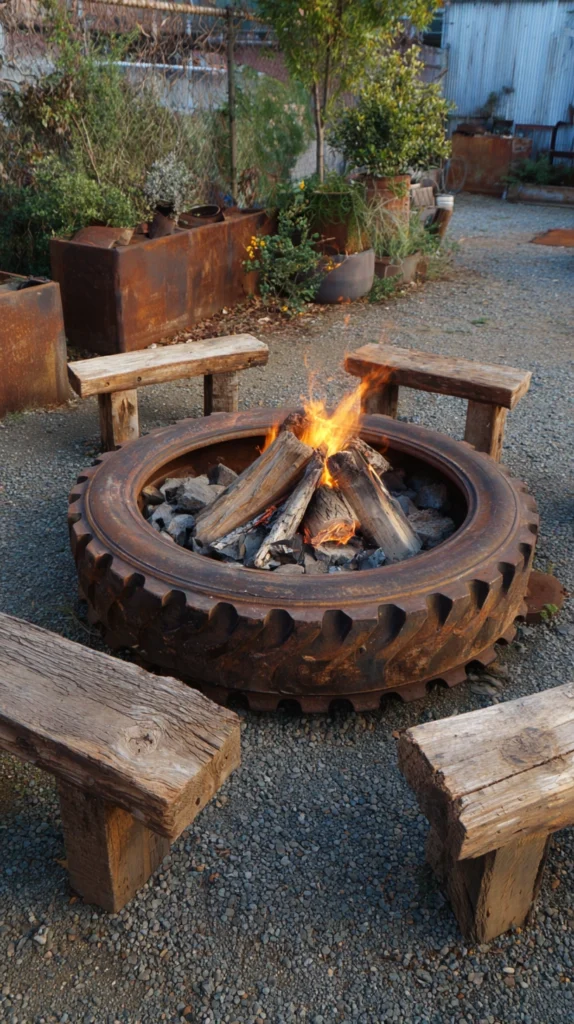
A large vehicle wheel rim — from a truck, tractor, or agricultural vehicle — creates a fire pit of genuine industrial character and considerable practical depth.
The deep bowl contains the fire completely, the steel construction withstands repeated fires indefinitely, and the distinctive form creates a completely individual backyard feature. Source large rims from vehicle breakers or online classifieds — most are available free or for a small charge. Clean thoroughly with a wire brush and place on a stable non-combustible surface.
Pro Tip: Remove any rubber or plastic components — valve stems, balance weights, tyre fragments — before use. Burning rubber and plastic produces toxic fumes that create an unpleasant and potentially harmful atmosphere. A thoroughly cleaned metal-only wheel rim burns cleanly and safely.
5. In-Ground Fire Pit
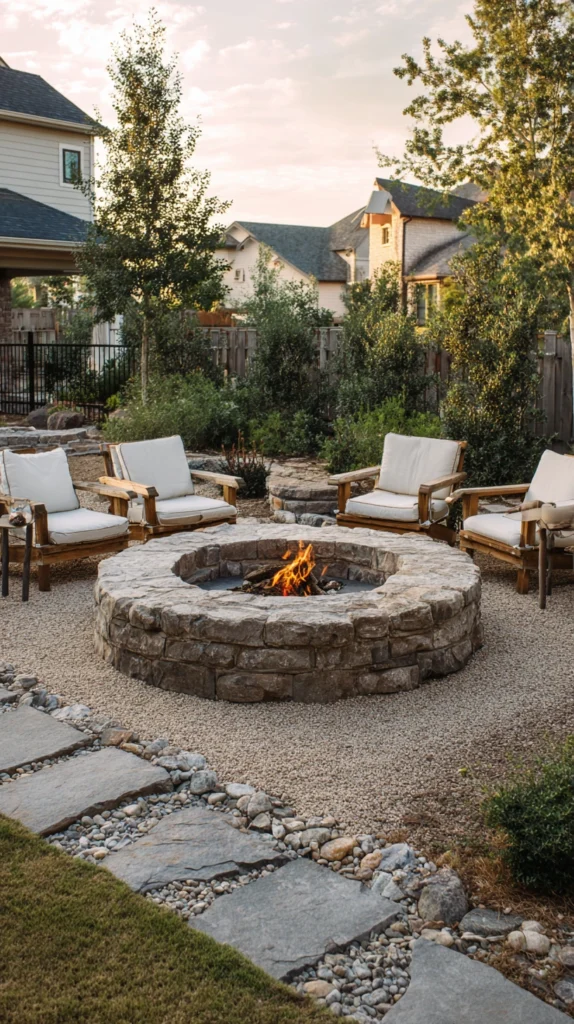
A circular hole excavated to approximately 30 centimetres depth, lined with a single course of fire bricks around the perimeter, creates the most permanent and most naturalistic fire pit at minimal material cost. The sunken position provides natural wind protection, keeps the fire safely below ground level, and creates an intimate gathering arrangement. Surround with flush paving or gravel for a fire pit that looks as though it has always been part of the garden.
Pro Tip: Ensure the location has adequate natural drainage before excavating. A fire pit in a poorly drained position fills with standing water after rain, making it unusable until it dries out and accelerating the deterioration of any masonry lining. Choose a naturally well-drained spot or install a sufficient gravel drainage layer at the base of the excavation.
6. Concrete Block Raised Fire Pit
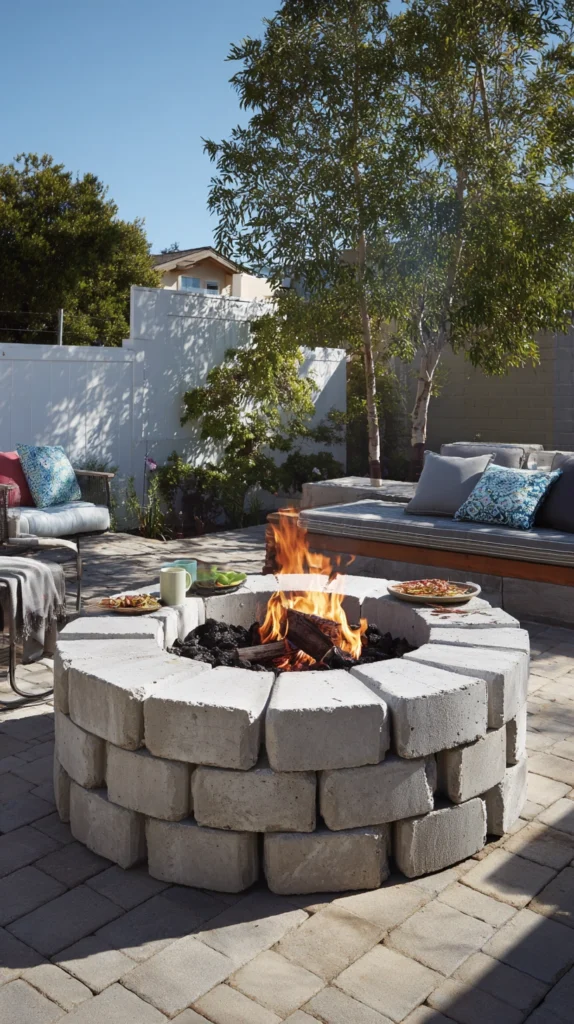
Landscape concrete blocks — the retaining wall blocks available from any garden centre — stacked in a circle or square to approximately 45 centimetres height create a raised fire pit with a flat top rim surface for resting drinks and plates during gatherings. The block height creates a natural integration with adjacent garden seating and the practical rim surface transforms a simple fire pit into a genuinely useful outdoor entertaining feature.
Pro Tip: Apply a coat of exterior masonry sealant to the interior faces before first use. Unsealed concrete blocks absorb moisture and the rapid heating of fire causes micro-cracking within the block structure over repeated use. A single coat of high-temperature sealant significantly extends the structural life of the fire pit.
7. Terracotta Pot Fire Pit
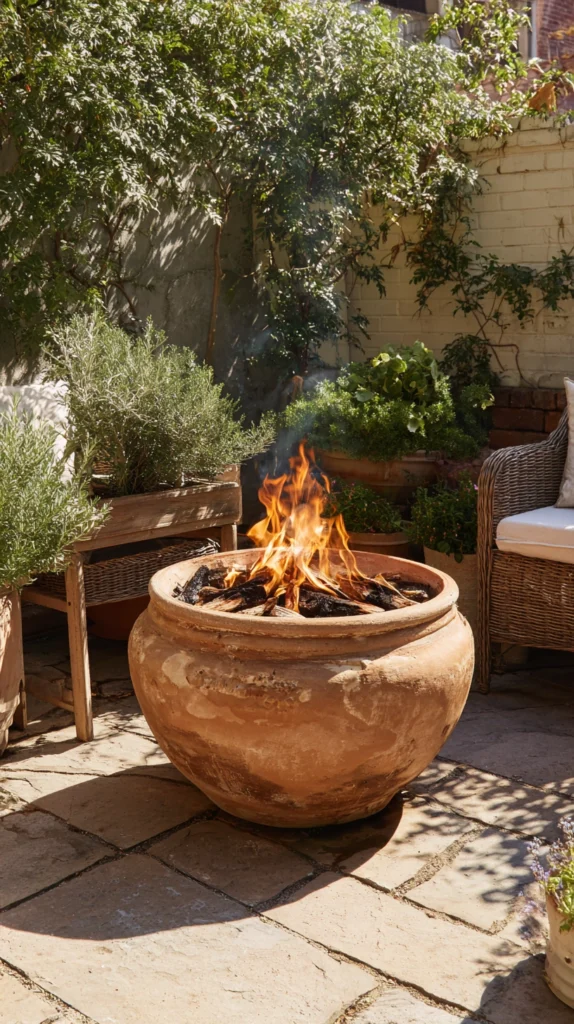
A large unglazed terracotta garden pot — 60 centimetres diameter or larger — used as a fire pit bowl creates one of the most charming inexpensive options for smaller outdoor spaces. Place on a stable non-combustible surface, fill the base with a layer of sand or gravel, and build a small fire within the pot. The terracotta absorbs and radiates heat gently and the natural earthy color creates a genuinely garden-appropriate fire feature.
Pro Tip: Use only unglazed terracotta — never glazed ceramic or decorative pottery. Glazed ceramic contains glass compounds in the glaze that expand at a different rate than the clay when heated, causing the glaze to crack and the pot to shatter under fire temperatures. Unglazed terracotta has sufficient thermal tolerance for small contained fires.
8. Metal Dustbin Fire Pit
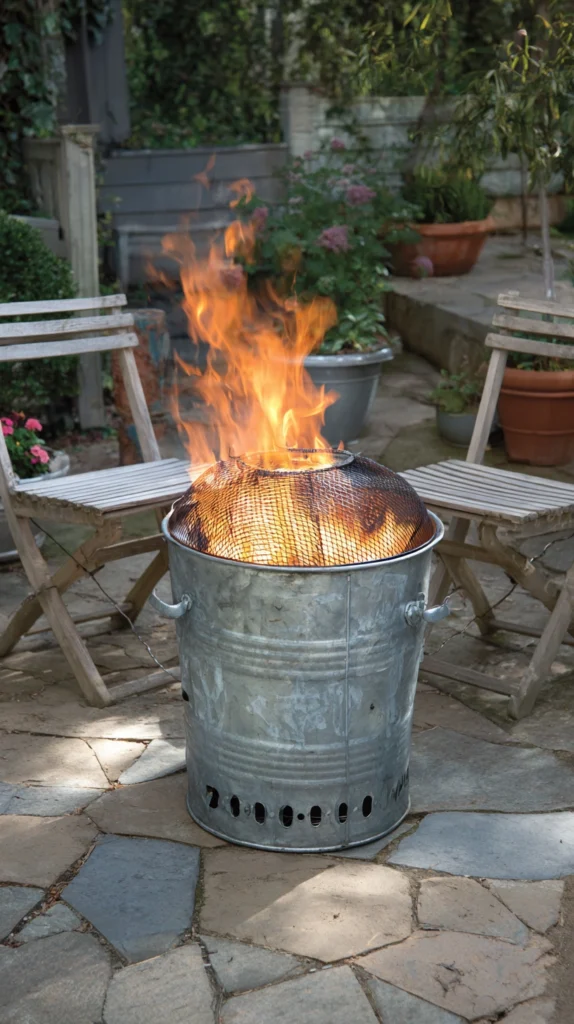
A large galvanised steel dustbin repurposed as a portable fire pit creates a surprisingly effective backyard fire feature at minimal expense. Drill or punch air intake holes around the lower third of the bin exterior for adequate combustion airflow and place on a non-combustible surface elevated slightly for additional air intake beneath. The portability allows the fire pit to be positioned wherever needed and stored under cover when not in use.
Pro Tip: Replace the dustbin lid with a circle of expanded metal mesh cut to the bin diameter as a spark guard.
The original solid lid suffocates the fire and provides no spark management. An expanded mesh guard allows heat and smoke to escape freely while containing sparks within the bin — the single most important safety feature for any contained domestic fire pit.
9. River Stone Fire Ring
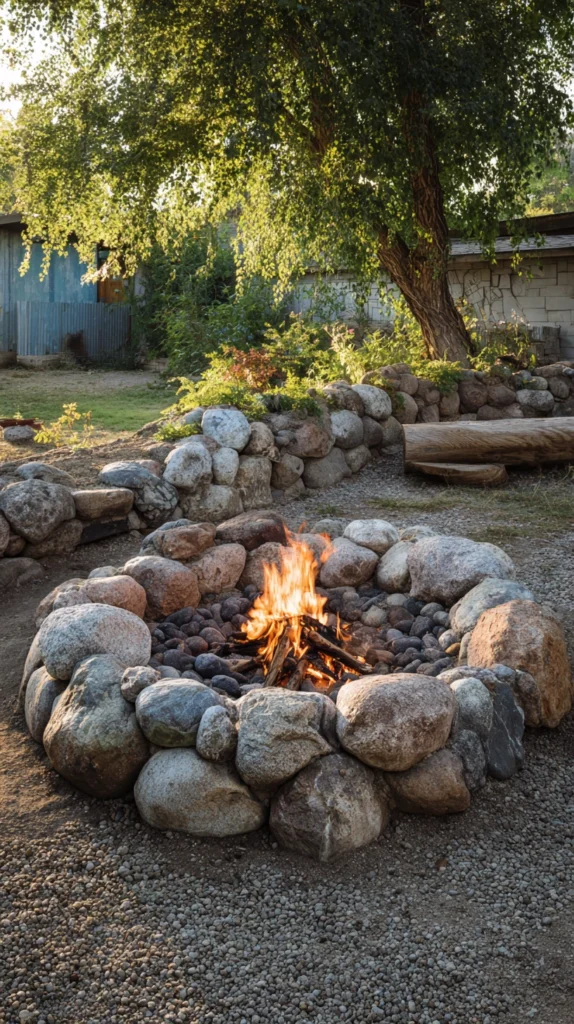
Large rounded river stones arranged in a double or triple layer circle of approximately 60 centimetres internal diameter create a fire ring of extraordinary natural beauty and completely organic material character.
River stone fire rings have been used throughout human history — their combination of complete simplicity and genuine effectiveness is as reliable now as it always has been. The natural variation in stone color and texture creates a fire ring of unhurried, genuine natural beauty.
Pro Tip: Never use stones collected from a riverbed that are still wet or recently submerged. Water-saturated stones contain trapped moisture that converts rapidly to steam when subjected to fire heat generating sufficient internal pressure to crack or explosively shatter the stone. Always use thoroughly dry stones that have been stored above ground for an extended period.
10. Salvaged Steel Barrel Fire Pit
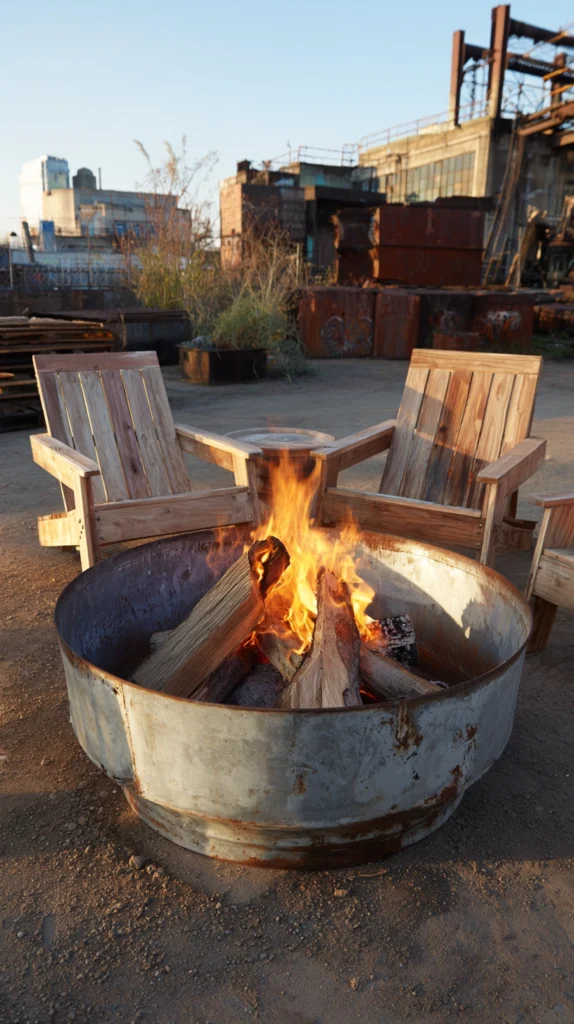
A salvaged steel barrel — a used water barrel or substantial steel cylinder cut in half horizontally — creates one of the most practical and durable cheap fire pit options available.
The deep bowl contains large fires safely, provides excellent heat reflection, and the substantial steel construction lasts indefinitely. Source steel barrels free or for minimal cost from local farms, industrial suppliers, or online classifieds. Cut in half with an angle grinder, file the cut edge smooth, and drill air intake holes around the lower perimeter.
Pro Tip: Confirm the previous contents of any salvaged steel barrel before use. Barrels previously used for petroleum products or agricultural chemicals may retain residues that produce toxic fumes when heated. Always source barrels with confirmed food-grade or water-storage history — never use a barrel of unknown or chemical-storage provenance, regardless of how thoroughly it appears to have been cleaned.
11. Concrete Pipe Section Fire Pit
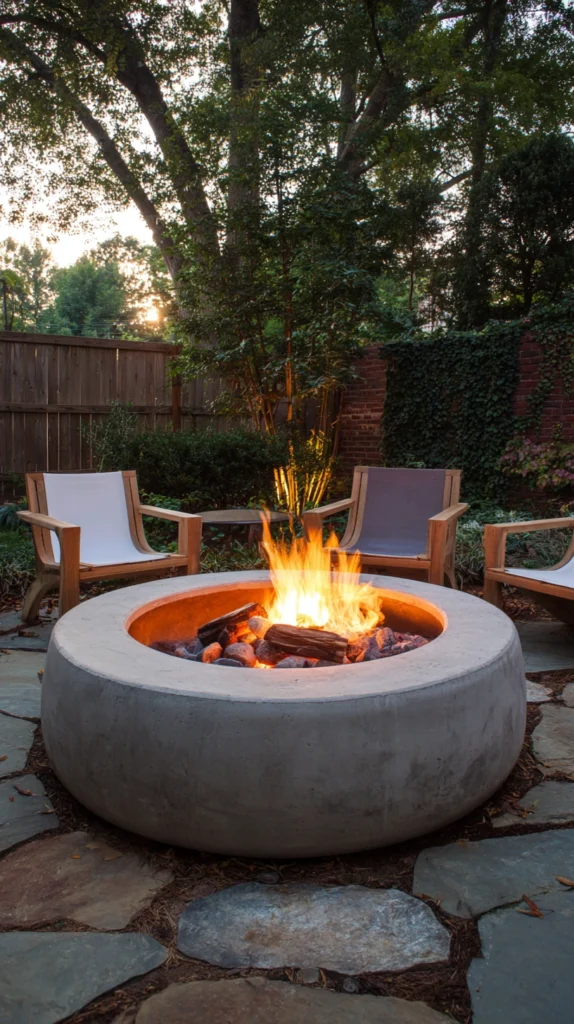
A short section of large diameter concrete drainage pipe — 60 to 90 centimetres in diameter, 30 centimetres in height — stood upright on a flat non-combustible surface, creating a ready-made fire pit surround of considerable solidity and simple geometric beauty. Concrete drainage pipe sections are available from builders’ merchants and construction suppliers at low cost and occasionally free from drainage contractors who have surplus off-cuts from site work.
Pro Tip: Line the interior base of the concrete pipe section with a layer of fire bricks laid flat before building a fire within it. The fire brick layer protects the concrete base from direct flame contact, provides a stable and clean combustion surface, and dramatically extends the life of the pipe section as a fire pit by preventing the direct thermal shock to the concrete that an unprotected base receives during every fire.
12. Gabion Basket Fire Pit
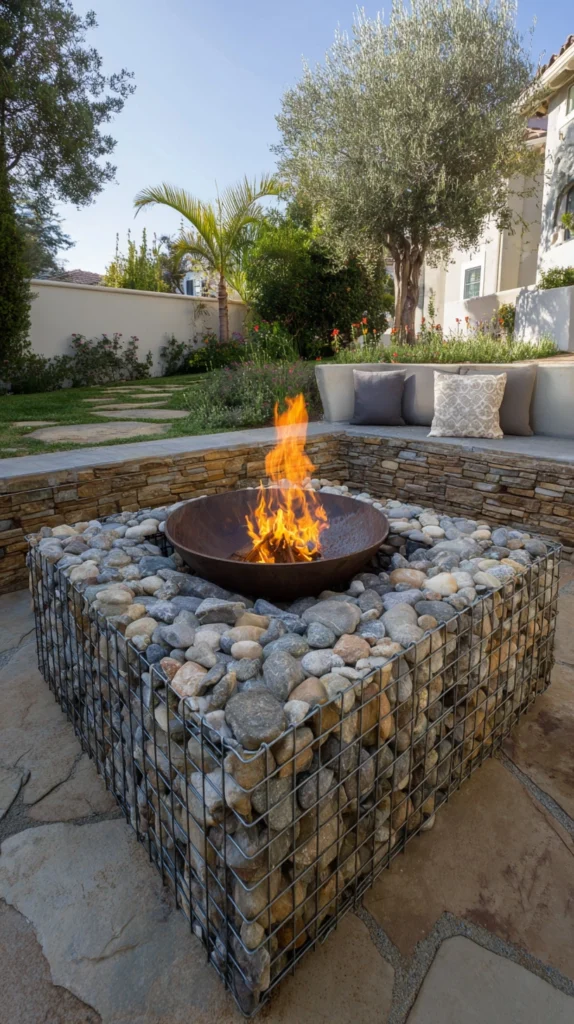
A small gabion basket — a wire mesh cage filled with stones — used as the structural wall of a raised fire pit creates a visually distinctive feature of considerable natural material beauty at very low cost. Fill the gabion cage with river stones, place a fire-safe steel bowl insert within the cage center, and the gabion fire pit creates a textural richness that suits both contemporary and naturalistic garden aesthetics with equal ease.
Pro Tip: Use a purpose-made steel fire bowl insert within the gabion structure rather than building the fire directly against the stone fill. A separate insert protects the wire mesh from direct flame contact — which would eventually weaken and corrode the wire — and allows the insert to be replaced independently if it eventually deteriorates without requiring the entire gabion structure to be rebuilt.
13. Flower Pot Stack Fire Pit
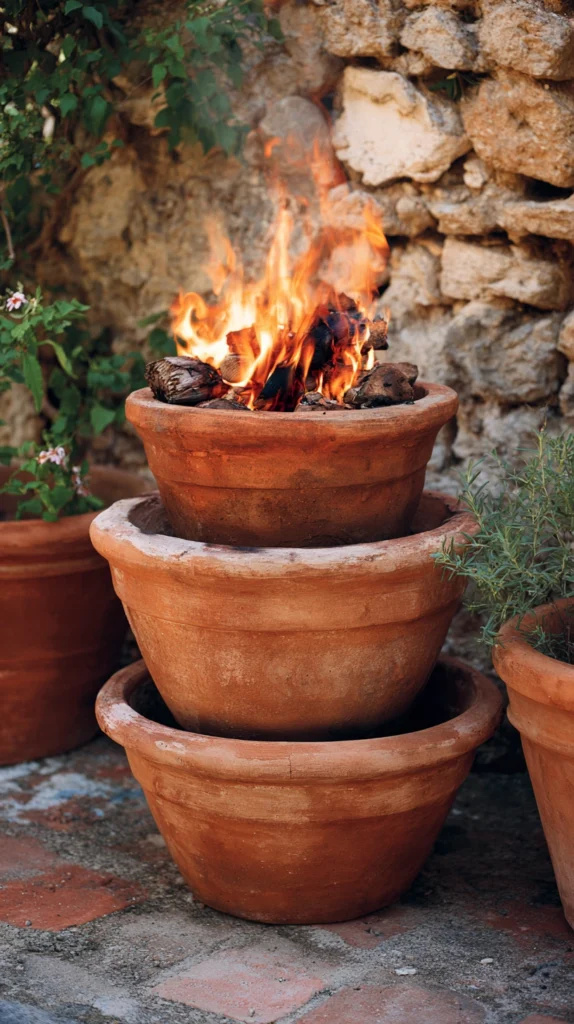
Two or three terracotta pots of decreasing size stacked concentrically — a large outer pot, a medium pot inside it, and the fire within the innermost — create a tiered fire pit of genuine charm and practical effectiveness.
The stacked configuration insulates the outer surfaces from the fire heat, creates a decorative tiered form, and allows the pit to be disassembled for compact off-season storage. Stack each smaller pot within the rim of the larger one below it, resting on a ring of small stones for air circulation.
Pro Tip: Fill the gaps between the stacked pots with coarse sand rather than leaving them empty. Sand-filled gaps insulate the outer pot from the heat of the inner fire pot — preventing temperatures that could cause cracking — and add thermal mass that moderates fire temperature and reduces the risk of sudden thermal shock to the pot material during use.
14. Reclaimed Manhole Cover Fire Stand
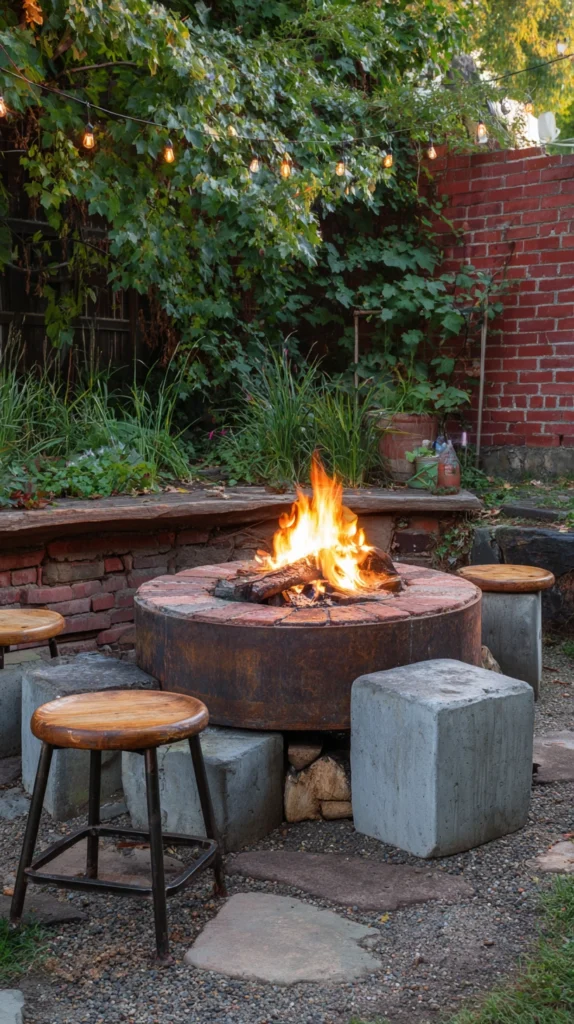
A reclaimed cast iron manhole cover — available from architectural salvage dealers for a very modest cost — used as the base and ember catcher for a simple raised fire stand creates a fire pit of industrial, utilitarian beauty and historical character.
Elevate the cover on four short sections of concrete block at approximately 20 to 30 centimetres height and build a simple brick ring on the cover surface to contain the fire. The cast iron absorbs and radiates heat effectively, and the decorative patterns cast into most covers create a base of unexpected visual interest.
Pro Tip: Season a cast-iron manhole cover fire base with a light coat of vegetable oil applied and burned off before first serious use. Unseasoned cast iron is prone to surface rust when repeatedly exposed to moisture from wood combustion and outdoor conditions.
A seasoned surface develops a protective layer that resists rust and extends the life of the fire base through many seasons of outdoor use.
15. Simple Dug Earth Fire Pit
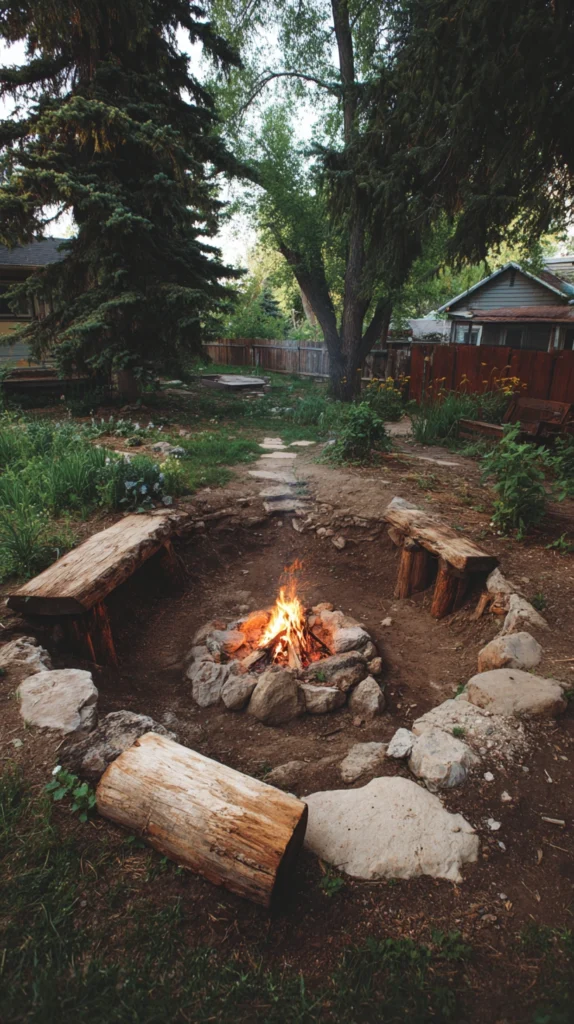
The simplest, oldest, and most completely free fire pit available — a hole dug in the earth approximately 30 centimetres deep and 60 centimetres in diameter, with the excavated soil mounded around the perimeter as a natural wind break — requires no materials, no tools beyond a spade, and no construction skill.
Surround with log rounds or flat stones for seating, and the most fundamental of all outdoor gathering spaces is immediately ready for use.
Pro Tip: Line the base with a single layer of fire bricks or flat stones before first use. An unlined earth base becomes waterlogged after rain, and damp earth beneath a fire creates significant smoke during lightning.
A flat stone or fire brick base provides a dry, stable combustion surface that improves fire lighting, reduces smoke, and keeps the pit usable even during periods of wet weather.
The Fire Is the Feature
The most beautiful fire pit in any backyard is the one that gets used — regularly, enthusiastically, and with the people you most want to gather with around a fire. It does not need to be expensive to be beautiful or elaborate to be effective.
Build the version that suits your budget and your space. Light it as often as you can. And enjoy the irreplaceable quality of firelight in the open air that no indoor fire and no outdoor lighting system has ever successfully replicated.